
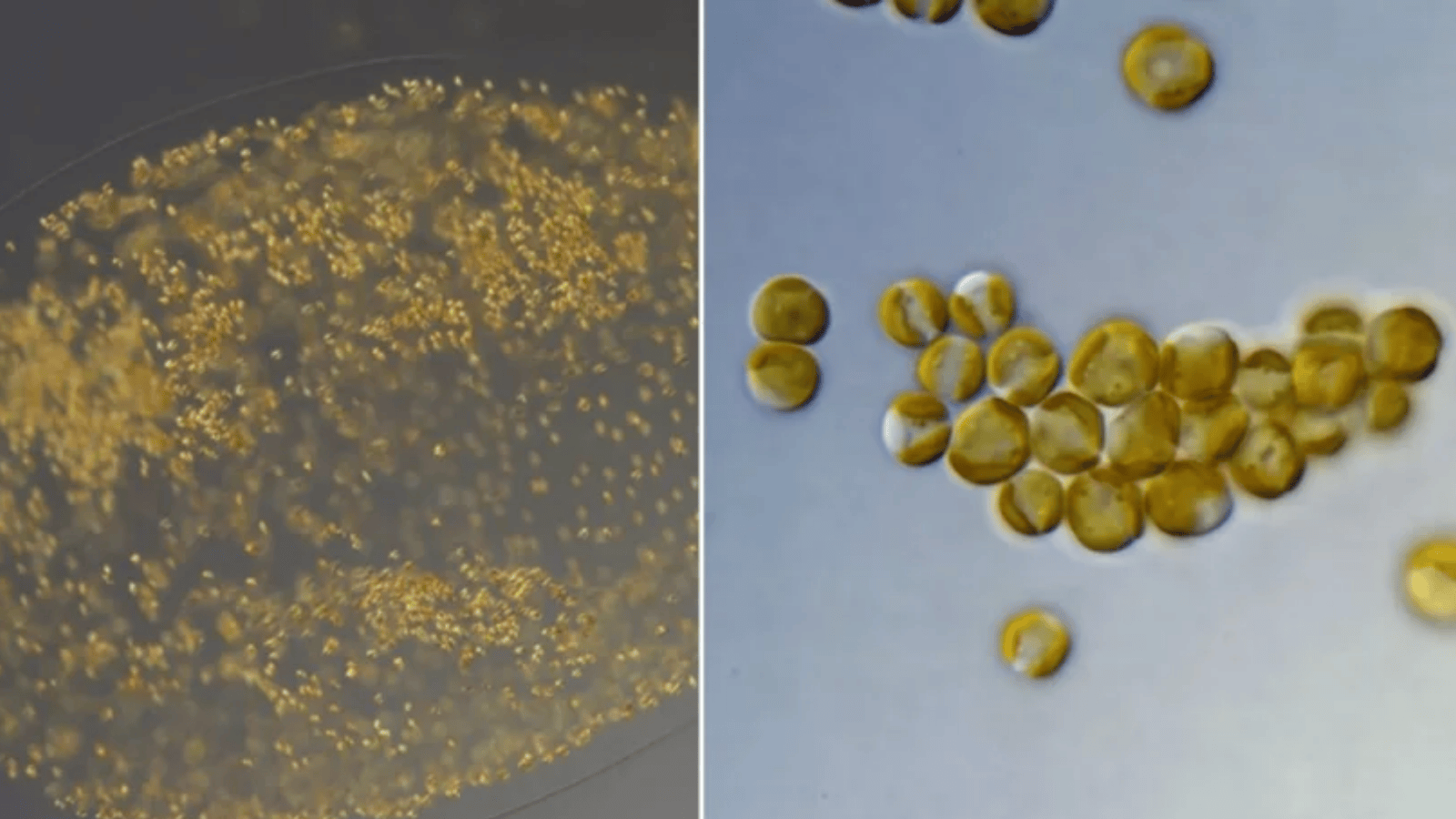
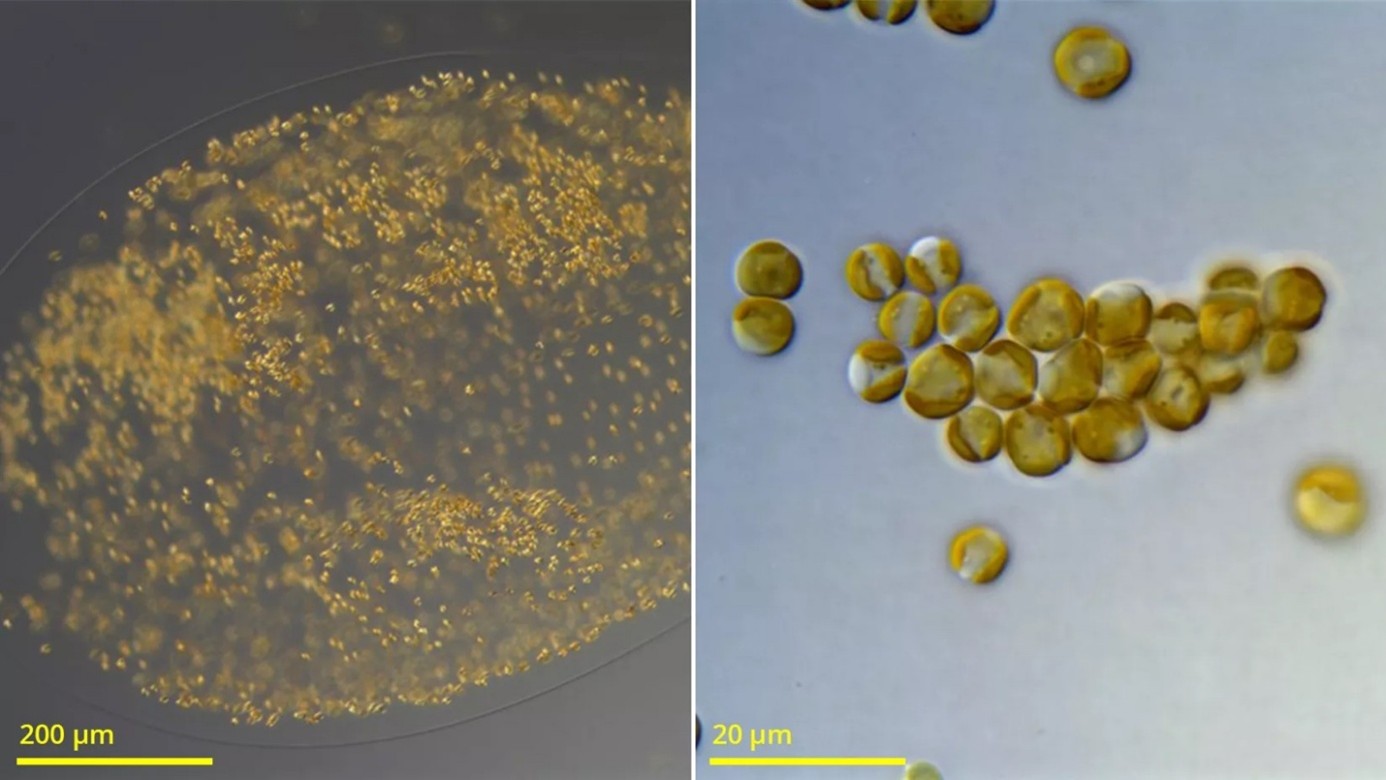
Phaeocystales, a group of bloom-forming marine algae, are gaining attention for their global reach and surprising adaptability. Found from the icy waters of the Southern Ocean to tropical seas, these nanoplankton can make up nearly 10% of the ocean’s plankton biomass. They drift as single cells or join forces into vast, jelly-like colonies that can stretch for hundreds of square kilometres – sometimes large enough to be seen from space.
When Phaeocystis forms blooms, its cells secrete a sticky, mucus-like matrix that floats just below the surface and can generate foamy layers along coastlines. These smelly, gelatinous blooms have disrupted tourism and clogged fishing nets and aquaculture equipment from the North Sea to the Mediterranean, with single events costing tens of millions of dollars. Yet, these same organisms play vital ecological roles: their flexibility allows them to thrive where other plankton cannot, from dim, nutrient-poor waters to frigid polar seas. They are also key players in the cycling of carbon and sulphur, helping regulate Earth’s climate by producing dimethyl sulphide (DMS) – a compound that influences cloud formation and atmospheric cooling.
Now, a team led by Andrew Allen, Ph.D. (J. Craig Venter Institute and Scripps Institution of Oceanography) and Mgr. Zoltán Füssy, Ph.D. (University of South Bohemia) has decoded the genetic secrets behind Phaeocystis’ success. Their study, published in Nature Communications, provides the most comprehensive genomic insight into the group to date.
By sequencing 13 strains of Phaeocystales, including high-quality reference genomes for three species, the researchers uncovered how these algae adapt to a wide range of conditions. The genomes reveal signs of mixotrophy – using both dissolved nutrients and live prey for nutrition – as well as adaptations to iron and vitamin B12 scarcity in polar regions. The team also found evidence of horizontal gene transfer and viral DNA insertions, showing that Phaeocystis evolution has been shaped by interactions with other marine microbes and viruses. Together, these discoveries highlight Phaeocystis as a remarkably versatile and influential group of algae – one whose genetic complexity and ecological reach make it a key piece in understanding the future of our changing oceans.
In addition to collaborators from České Budějovice, San Diego, and the US Department of Energy, Joint Genome Institute (JGI), the teams included researchers from the United States, The Netherlands, France, and Australia. This project was funded in part by National Oceanic and Atmospheric Administration grants NA15OAR4320071 and NA19NOS4780181, National Science Foundation grants NSF OCE-1756884 and NSF OCE-2224726, and the Simons Collaboration on Principles of Microbial Ecosystems (PriME) grant 970820.
For the article click here.
Image courtesy Ian Probert (Roscoff Culture Collection, France).


