
Courses to improve Collaboration in V4 Countries to learn about Cryptic fungi


Funded by Visegrad Grant
Three institutions with strong backgrounds in taxonomy, phylogenetics, and genomics of insect-related fungi bring together researchers to share expertise with each other and students. In a series of workshops organized in three V4 countries we will tighten collaborations and stimulate knowledge exchange. A citizen science campaign and lectures open to the general public will also be organized.
Project No. 22420237
Role of FSci in the project: Principal applicant
Project duration: 01 October 2024 - 31 March 2026
Total project cost: 37 878 EUR
Head of project: Danny Haelewaters, PhD
Previous events
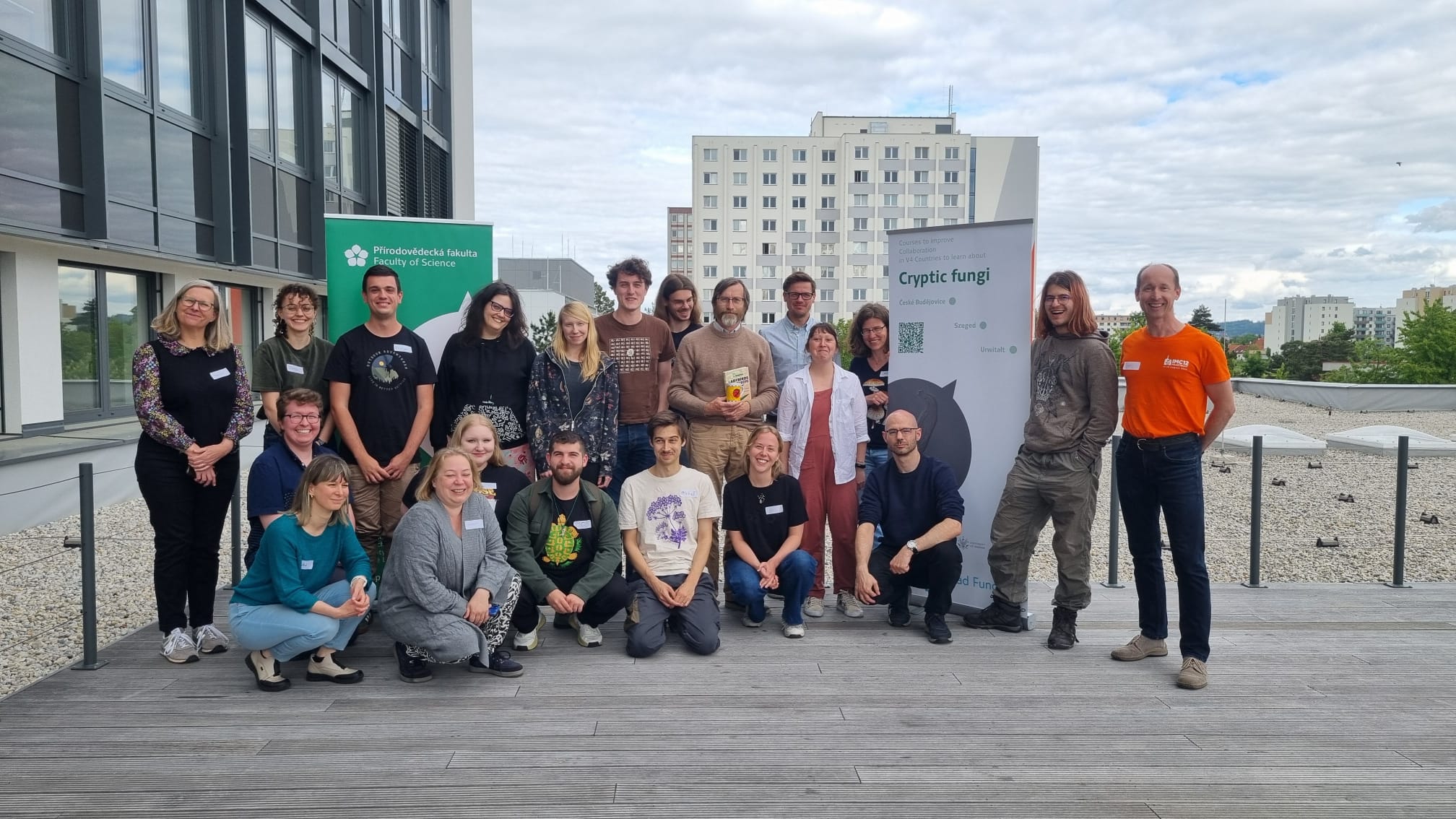
Citizen science campaign, workshop, and open lecture, České Budějovice, Czechia
19th to 21st of May 2025
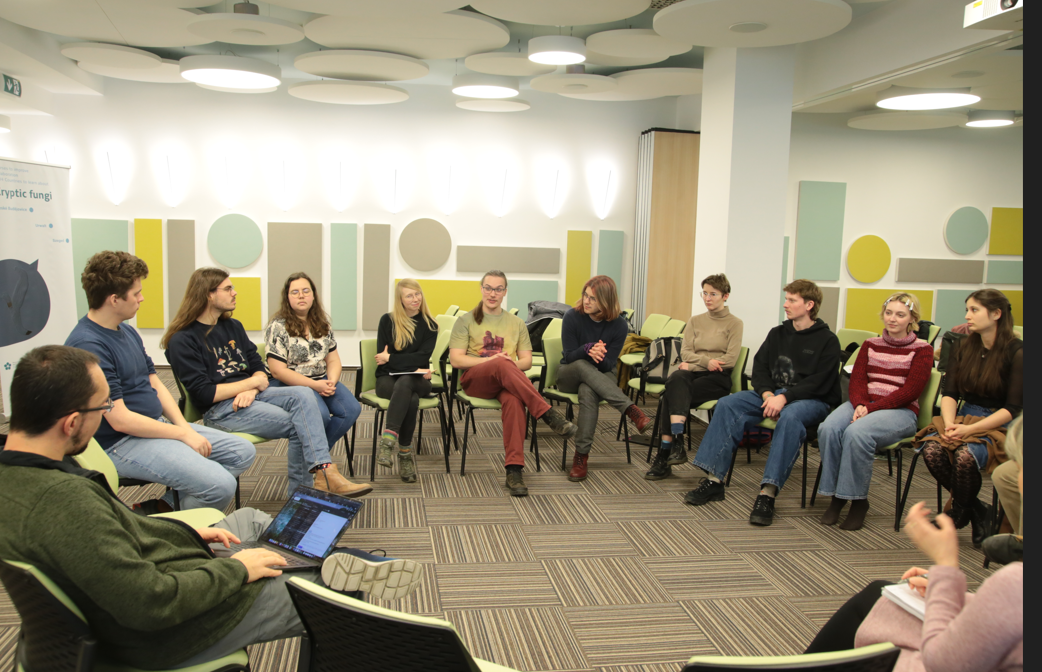
The workshop took place in České Budějovice as part of the project Courses to Improve Collaboration in V4 Countries to Learn About Cryptic Fungi, funded through Visegrad Grant No. 22420237 and organized by Danny Haelewaters, László Nagy, and Julia Pawłowska. It brought together participants from several countries for a public lecture, citizen science activities, and training sessions focused on insect-associated fungi and collaborative research. A brief overview of the key events and achievements is provided in the poster below.
Phylogenomics workshop and open lecture, Urwitałt and Warsaw, Poland
8th to 11th of December 2025
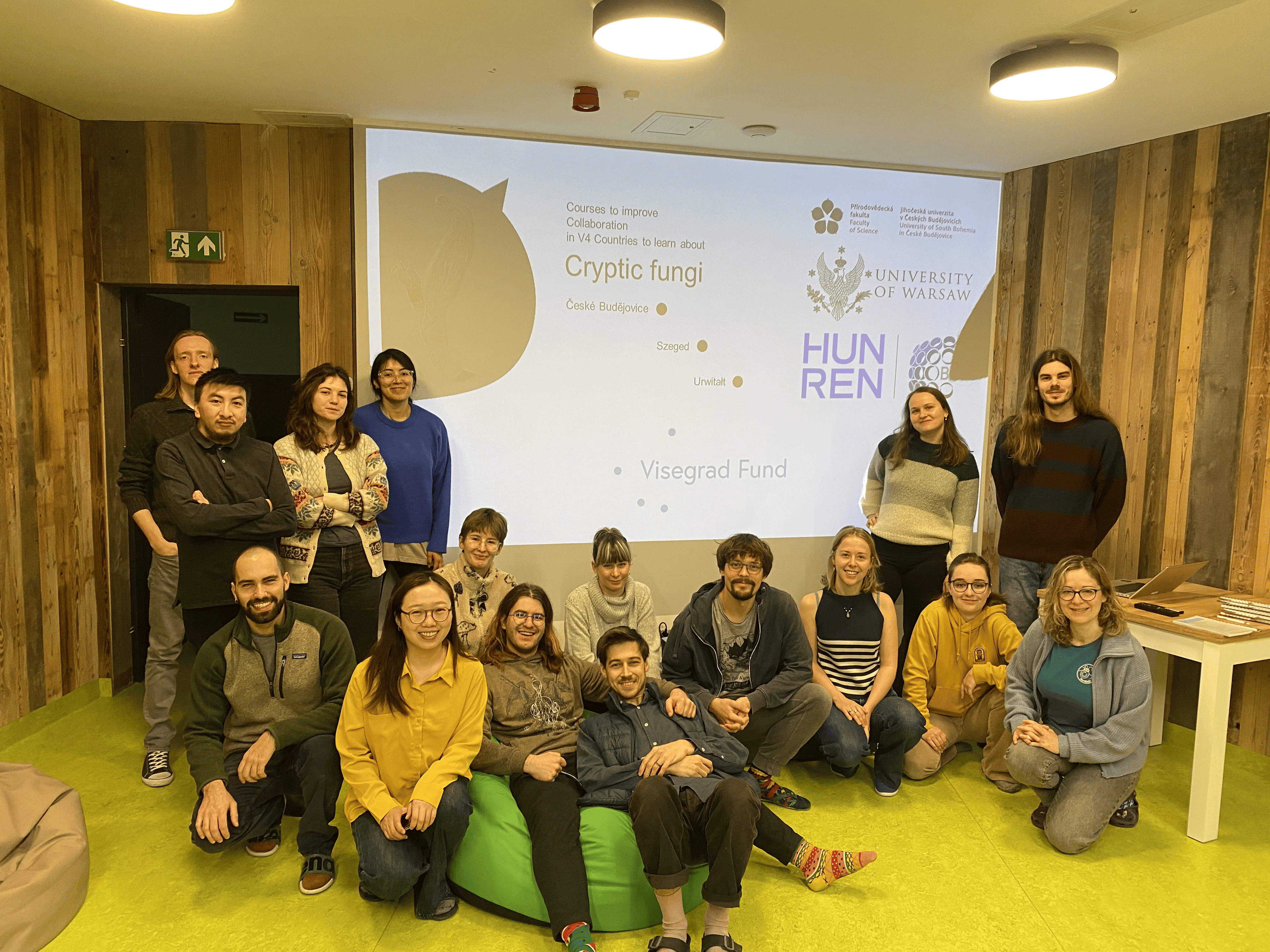
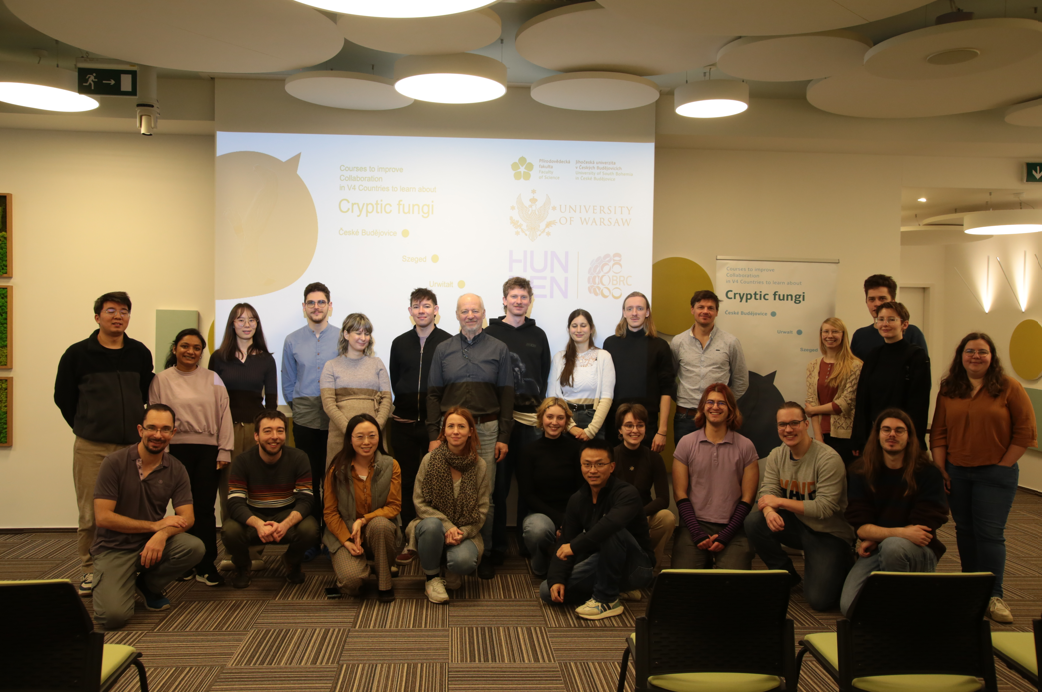
From December 8–11, 2025, a phylogenomics workshop was held in Urwitałt as part of the C4inV4 initiative, focused on strengthening collaboration among V4 countries and advancing research on cryptic fungi. The program combined inspiring open lectures by Danny Haelewaters and Anna Muszewska with intensive hands-on training led by Anna Karnkowska, supported by Beniamin Abramczyk and the organizing team. Participants also took part in field-based activities aimed at searching for and studying cryptic fungi, linking theoretical knowledge with practical biodiversity research. The workshop took place at the Mazurskie Centrum Bioróżnorodności i Edukacji “Kumak”, whose excellent facilities created an ideal environment for collaboration. The workshop brought together participants primarily from Hungary, the Czech Republic, and Poland, as well as from other European countries including Belgium and Spain, fostering a truly international exchange of expertise. The event was made possible through the dedicated support of Julia Pawłowska, Marta Tischer, Michał Gorczak, Michał Kochanowski, Igor Siedlecki, and Dorota Wiktorowicz, and was generously funded by the Visegrad Fund.
Illustrated summary of workshop
FUNGAL GENOMICS
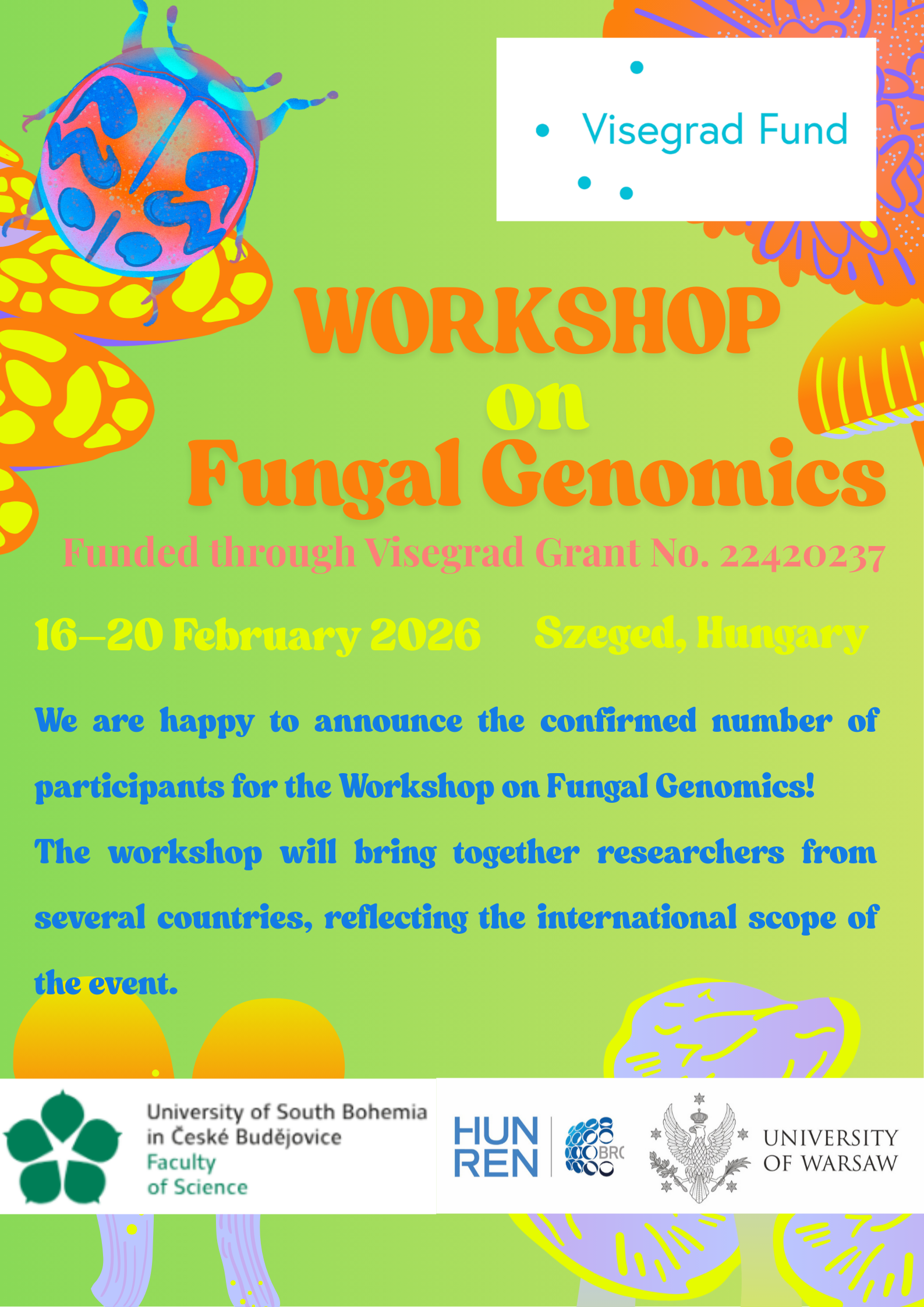
16 to 20 February 2026: Workshop on fungal genomics and open lecture, Szeged, Hungary
https://fb.me/e/7LFch4JtW
FUNGAL GENOMICS in Szeged, Hungary
Read about our latest papers:
- Biological knowledge shortfalls impede conservation efforts in poorly studied taxa—A case study of Laboulbeniomycetes
- Singleton-based species names and fungal rarity: Does the number really matter?
- https://www.youtube.com/watch?v=nnrrCY-IeBw
Polish partner (Julia Pawłowska):
University webpage: https://en.uw.edu.pl/
Faculty of Biology webpage: https://www.biol.uw.edu.pl/en/home-page/
Institute webpage: https://ibe.biol.uw.edu.pl/en/835-2/
Hungarian partner (László Nagy):
Institute webpage: https://www.brc.hu/en
Lab webpage: http://group.szbk.u-szeged.hu/sysbiol/nagy-laszlo-lab-index.html
Sources
de Groot MD, Christou M, Pan JY, Adriaens T, Maes D, Martinou AF, Roy HE, Verbeken A, Haelewaters D. Beetlehangers.org: harmonizing host–parasite records of Harmonia axyridis and Hesperomyces harmoniae. Arthropod-Plant Interactions 18(4): 665-679. https://doi.org/10.1007/s11829-023-10037-2
Haelewaters D, Matthews TJ, Wayman JP, Cazabonne J, Heyman F, Quandt CA, Martin TE. 2024. Laboulbeniomycetes as a case study for biodiversity shortfalls in poorly studied groups. Journal of Biogeography 51(1): 29-39. https://doi.org/10.1111/jbi.14725
Haelewaters D, Okrasińska A, Gorczak M, Pfister DH. 2020. Draft genome sequence of the globally distributed cockroach-infecting fungus Herpomyces periplanetae strain D. Haelew. 1187d. Microbiology Resource Announcements 9(6): e01458-19. https://doi.org/10.1128/MRA.01458-19
Fruiting bodies of Hesperomyces harmoniae (Laboulbeniales) on the integument of the invasive alien ladybird Harmonia axyridis Coccinellidae)


