

Archaeological xylotomy
Archaeological xylotomy is a method of microscopic wood identification that allows researchers to determine the tree species used in the production of prehistoric, ancient, and historical artefacts. The study of wood anatomy helps environmental archaeologists reconstruct how wood and trees were used in human communities, economy, trade, and everyday life. At the Laboratory of Archaeobotany and Palaeoecology at the University of South Bohemia, we apply this method to a wide range of archaeological finds – from the wood of Egyptian coffins at Abusir, through evidence of Roman viticulture in North Macedonia, to a ritual drum discovered in an abandoned village in Senegal. Every piece of wood preserves unique information about the relationship between humans and landscapes in the past.
Coffin Wood as Evidence of Trade and Funerary Beliefs in Ancient Egypt
Archaeobotanical identification of the wood used for coffins from the Abusir cemetery revealed that the ancient Egyptians employed not only local timber species, but also valuable imported wood from the eastern Mediterranean. Through microscopic analysis of wood anatomy, it was possible to identify species such as the Egyptian sycomore fig (Ficus sycomorus), tamarisk, and acacia, as well as cedar (Cedrus libani), which was imported from Lebanon and represented a prestigious material used for the manufacture of high-quality coffins and funerary equipment. The research therefore provided important insights not only into coffin-making technology, but also into long-distance trade, raw material availability, and the social status of the buried individuals. Thanks to archaeobotanical analysis, wooden coffins become a unique source of information about the economy, landscape, and religious beliefs of ancient Egypt.
- Beneš, J. (2022). Wooden objects and charcoal determination of finds, post-Old Kingdom contexts. In J. Krejčí, P. Brukner Havelková et al., The Mastaba of Werkaure II (Post-Old Kingdom strata): Tombs AC 26 and AC 32 (Abusir XXVII, pp. 319–321). Faculty of Arts, Charles University.
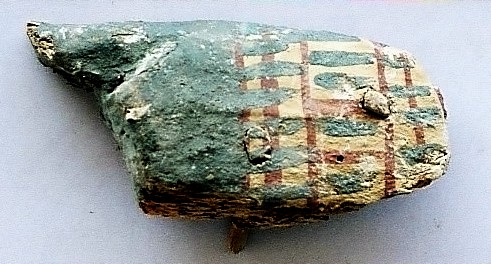
Fragment of a painted coffin from the mastaba of Werkaure, AC26, Egypt. Photo by J. Beneš.
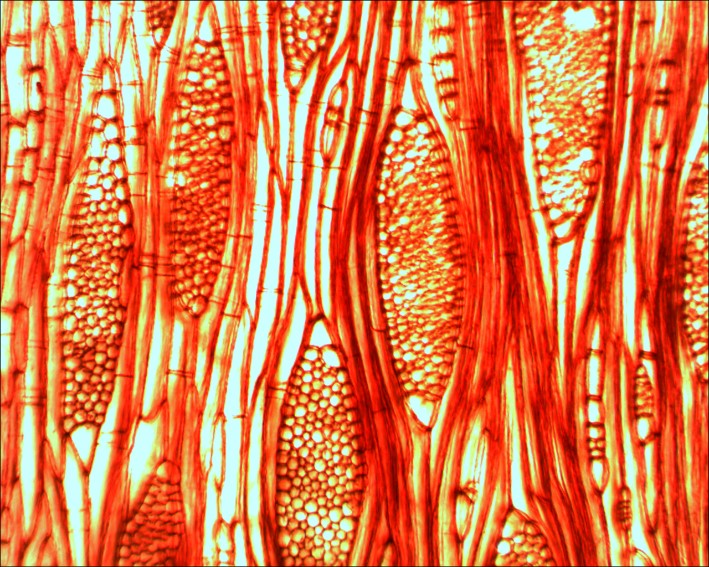
Microscopic image of a tangential section of sycomore fig (Ficus sycomorus), Egypt. Photo by J. Beneš./span>
Wood from a submerged landscape: archaeobotanical evidence of abandoned lakeshore settlements at Lake Ohrid
Archaeobotanical analysis of wood remains from the base of the Grašnica profile in the Ohrid Basin provided a unique insight into the landscape and settlement dynamics at the end of the Bronze Age in North Macedonia. The basal sediment layers contained worked wood fragments interpreted as the remains of destroyed pile-dwelling structures, or palafittes, once located along the shores of Lake Ohrid. Wood identification and palaeobotanical analyses demonstrated that local communities used timber species available in the surrounding environment and lived in a heavily human-shaped landscape characterised by open grazing areas, wetlands, and agricultural activity. Together with pottery finds and pollen evidence, the archaeobotanical results provided important evidence for dramatic environmental changes that may have related to a catastrophic seismic event and the flooding of part of the Ohrid lakeshore during the Late Bronze Age.
- Hošek, J., Verčík, M., Pokorný, P., Beneš, J., Komárková, V., Radoměřský, T., Atanasoska, N., Todoroska, V., & Ardjanliev, P. (2021). Geoarchaeological evidence on a Late Bronze Age earthquake, Ohrid Basin (North Macedonia). Journal of Quaternary Science, 36(6), 1003–1012. https://doi.org/10.1002/jqs.3325
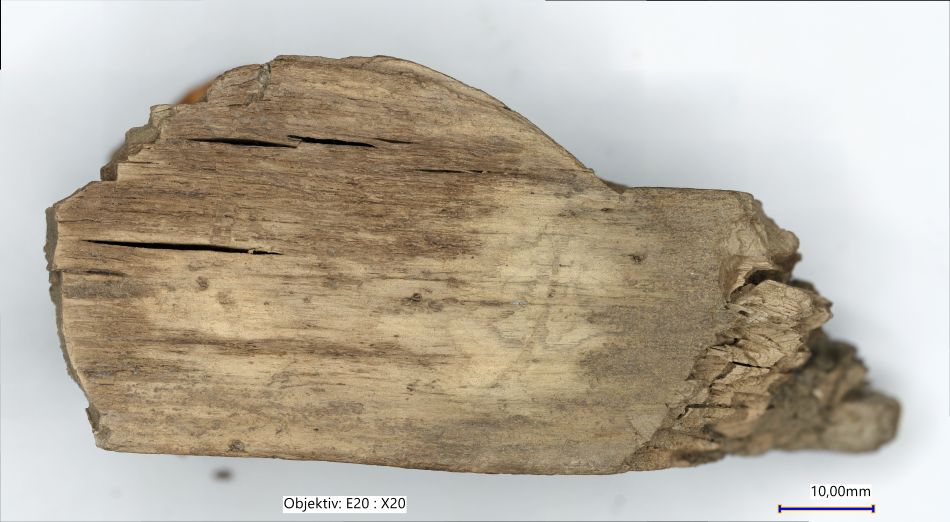
Fragment of worked wood from a depth of 500 cm, Late Neolithic period, Ohrid, Grašnica, made of juniper wood, North Macedonia. Photo by J. Beneš.
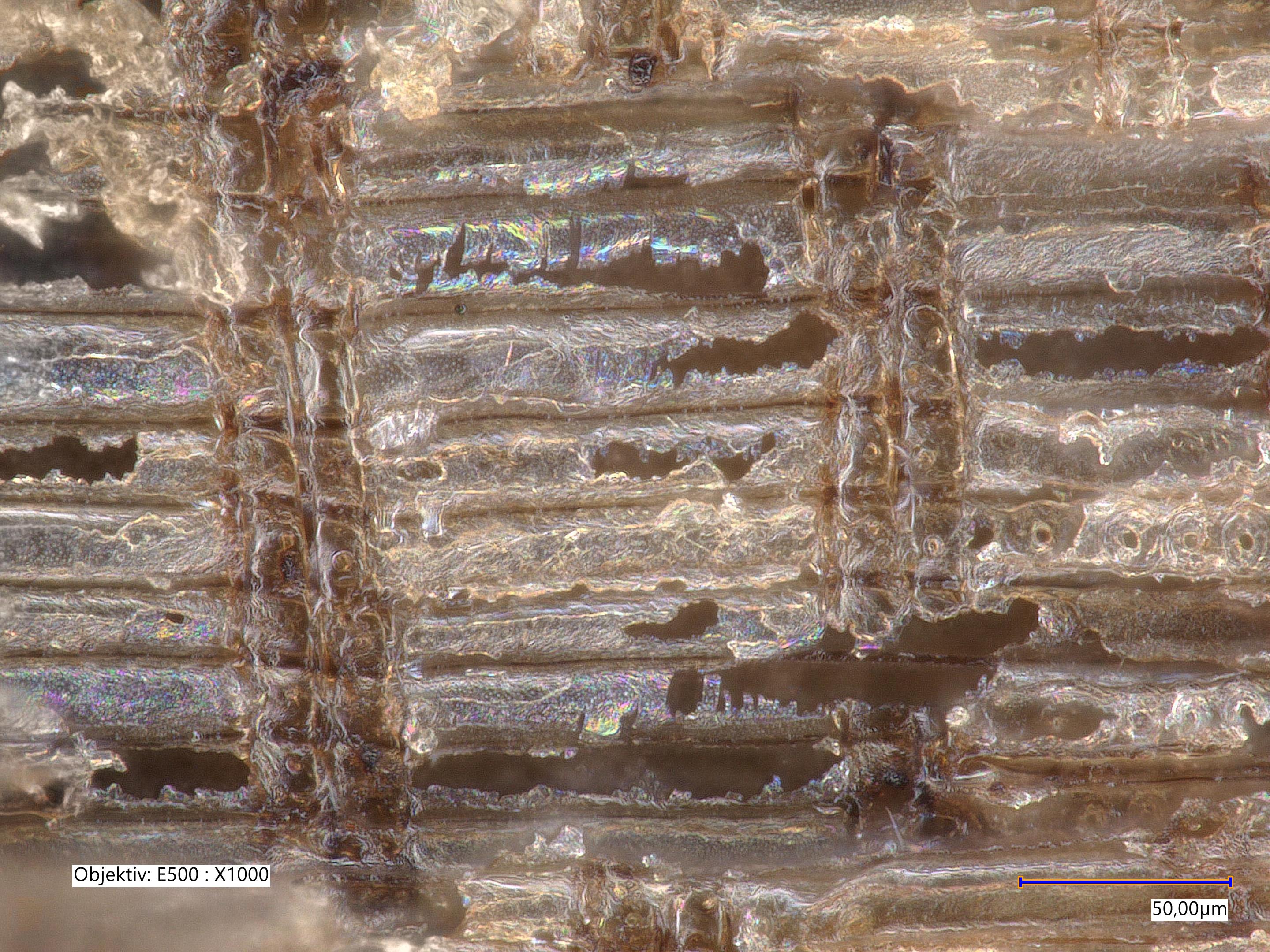
Microscopic image of a radial section of juniper (Juniperus communis), Ohrid, Grašnica. Photo by J. Beneš.
A drum from an abandoned Senegalese village
Archaeologists working in the abandoned village of Sibi Kili in Senegal’s Niokolo-Koba National Park discovered fragments of a large wooden drum lying in the landscape more than fifty years after the relocation of the local community. Xylotomic analysis identified the wood as Cordyla pinnata, a tree highly valued in West Africa for its acoustic qualities, durability, and cultural significance. Microscopic analysis of the wood anatomy demonstrated that the choice of material was far from accidental and reflected deep traditional ecological knowledge preserved by local communities. The research further revealed that the drum was not merely a musical instrument, but also an important medium of communication, ritual practice, and collective memory. In traditional Mandinka society, drums were used during funerals, initiation ceremonies, village gatherings, and communication with ancestral and spiritual worlds. The archaeological find therefore demonstrates that even fragile wooden artefacts can preserve remarkably powerful evidence of spiritual life, cultural identity, and long-term relationships between humans and their environment.
- Beneš, J., Manka, I., & Majerovičová, T. (2025). Echoes from an abandoned drum: Ethnoarchaeological insights into Cordyla pinnata and spiritual culture in South-eastern Senegal. Interdisciplinaria Archaeologica: Natural Sciences in Archaeology, 16(2), 175–185. http://dx.doi.org/10.24916/iansa.2025.2.5.
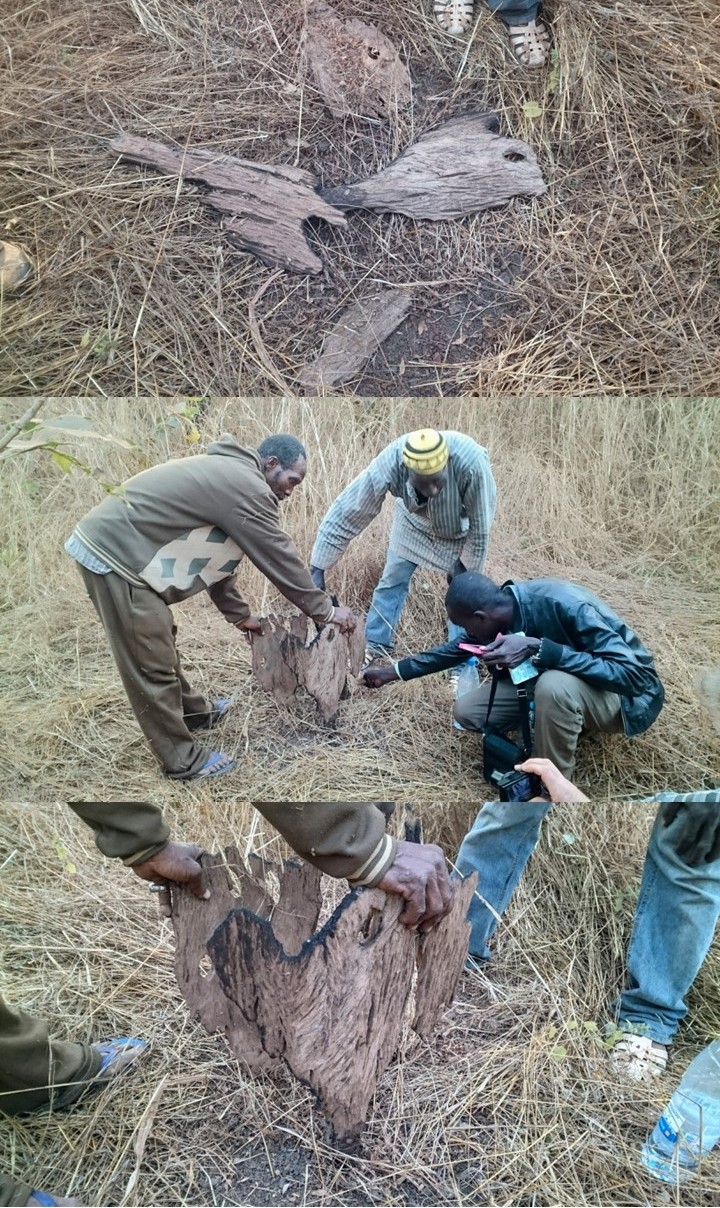
Discovery of fragments of a tantamba drum in 2018 in the abandoned village of Sibi Kili, Senegal. Photo by J. Beneš.
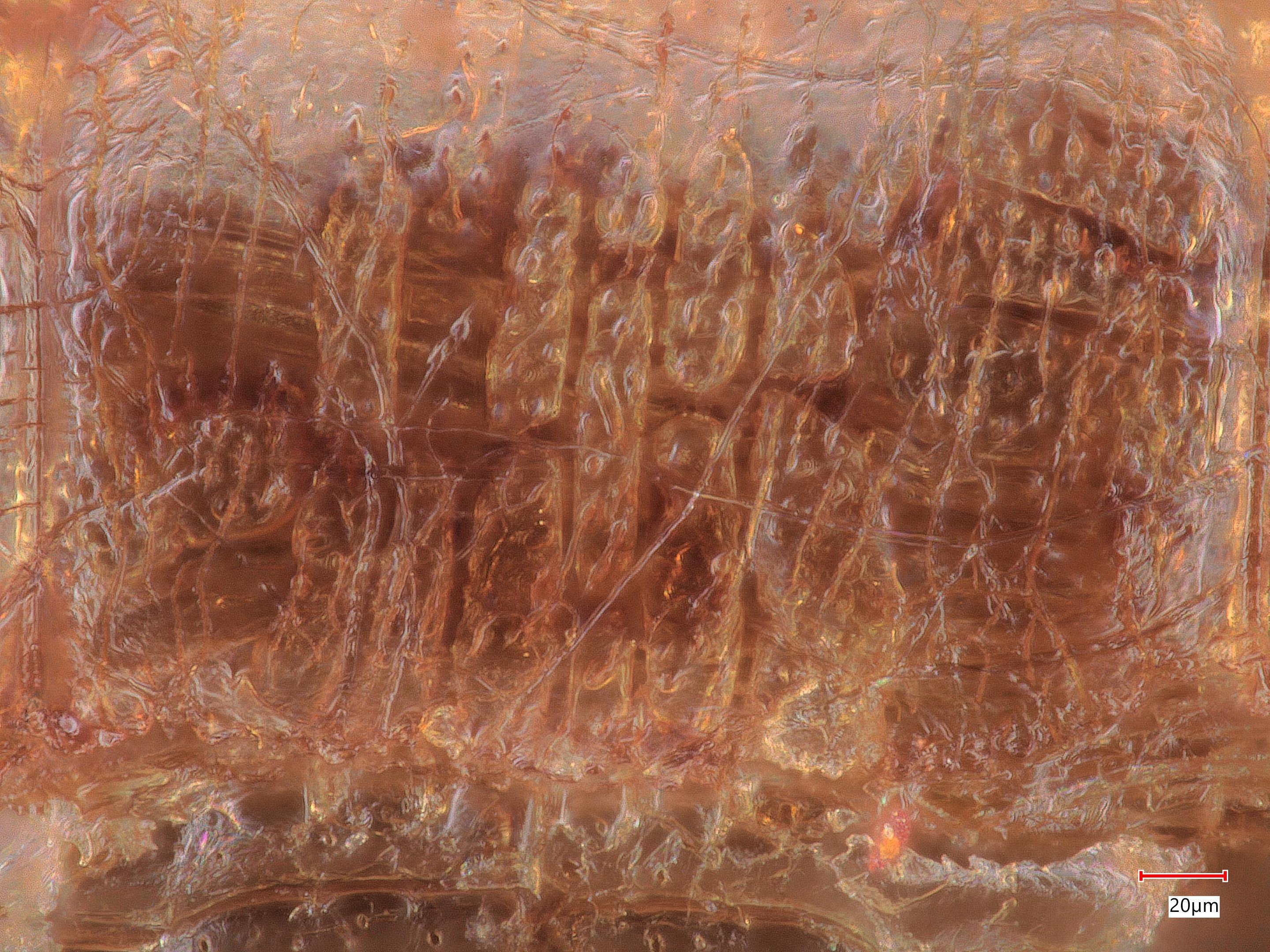
Radial section of drum wood from the “wild mango tree” (Cordyla pinnata), Sibi Kili, Senegal. Photo by J. Beneš.
What can archaeologists expect from archaeological xylotomy?
- identification of wood species used for the manufacture of archaeological artefacts and structures,
- insights into woodland management practices and the exploitation of timber resources,
- identification of technological procedures and craft traditions,
- investigation of the long-term relationships between people, wood, trees, and material culture.
Not every wooden find is suitable for archaeological xylotomy. The best results are obtained from well-preserved wood, particularly from either very dry or permanently waterlogged environments, such as wells, peat bogs, and water-saturated sediments (in the latter case, conservation by freeze-drying is required; LAPE is equipped to perform this procedure for small wooden artefacts). Under favourable conditions, archaeological xylotomy can reveal the origin of the wood species used, the ways in which timber was processed, and changes in the exploitation of trees and wood through time, thereby providing information that cannot be obtained by other archaeological methods.


