

Anthracology - analysis of wood and charcoal
The analysis of plant macroremains of wood is carried out by the method of anthracology, which is applied to both unburned and burned fragments. In recent times, a branch of research into charred wood fragments has emerged in archaeobotany, which bears the collective name of anthracology.
The determination of charcoal and fresh wood remains ranks among the standard methods of archaeobotany. Such finds constitute a remarkable percentage of archaeological features and contexts. They inform us above all about the fuel composition which was used in the environment of the site. The analysis of larger assemblages of charcoal permits the reconstruction of deforestation processes and enables us to postulate the character of the wood around the site. The determination of charcoal from fire burial places also highlights some specific uses of wood in a cultural context. The analysis of fresh wood from medieval sites provides valuable data about handicraft production. In specific cases xylotomical analysis contributes to an understanding of wooden building structures.
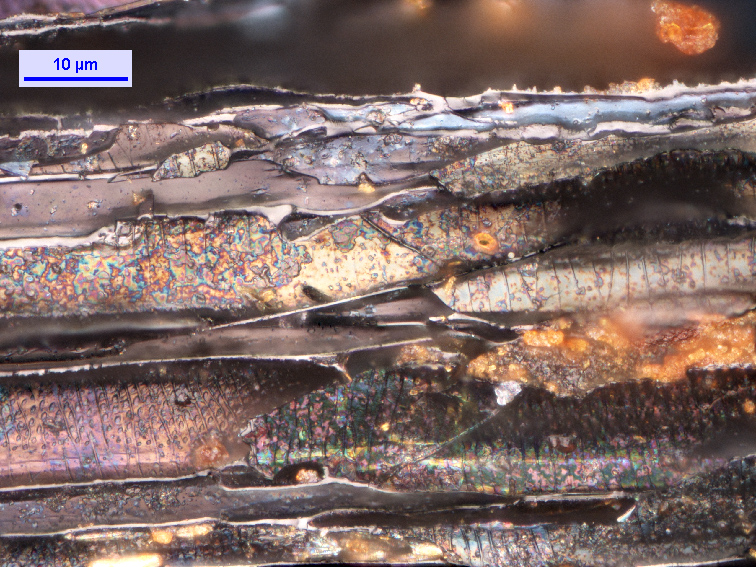
Longitudinal section of linden (Tilia sp.) charcoal. Photo by J. Beneš.
What data sets are suitable for analysis?
More than 100 determined individual fragments which allow statistical evaluation, e.g. an assemblages is appropriate for environmental reconstruction. There is a qualitative difference between the charcoal obtained by workers during an archaeological excavation and fragments obtained from the floating procedure. Common experience shows that floated material comprises a richer spectrum of wood species. From the point of view of taxonomy, it is usually only possible to identify samples at the level of the botanical genus (it is very difficult to determine a botanical species). For example, the genus fir (Abies) is only represented in our ecological conditions by one species Abies alba. Although some trees can be classified into a botanical species, it is very difficult. For the presentation of the results to the archaeological public, the term type of wood is used, but understood more technologically.
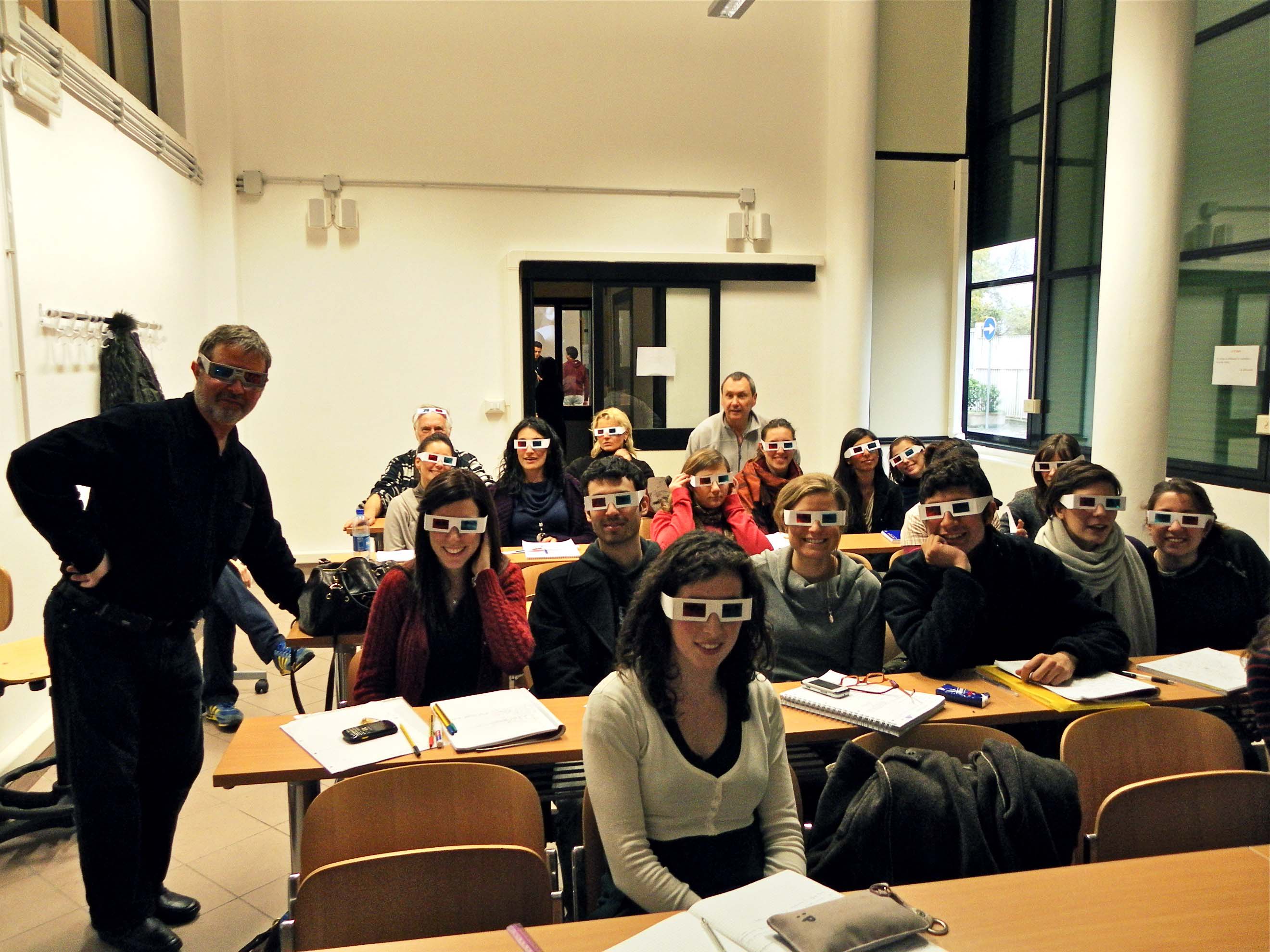
Jaromír Beneš's (left) 3D microphotography seminar at the University of Rome La Sapienza. Photo by L. Sadori.
Anthracology reveals local grapevine cultivation and wine production
Anthracological analysis of charcoal remains from the Roman-period (3rd - 4th century AD) Macedonian site of Petkina Niva provided direct evidence for local grapevine cultivation. Charcoal fragments of grapevine (Vitis vinifera) were identified among the analysed samples, together with other tree and shrub species characteristic of a culturally shaped Roman landscape. The presence of grapevine wood is particularly significant, as it indicates that grapevines were not merely imported in the form of fruits or wine, but were cultivated directly in the vicinity of the settlement. Combined with the discovery of grape pips and the chemical identification of pine tar in a storage vessel, the anthracological results represent one of the key lines of evidence for local wine production in the Ohrid region during the Roman period.
- Tušlová, P., Beneš, J., Budilová, K., Komárková, V., Brychová, V., Juřičková, L., Kovačiková, L., Bouby, L., Ivorra, S., & Ardjanliev, P. (2025). A multidisciplinary approach to environmental reconstruction and viticulture at Roman St. Petkina Niva in the Ohrid Region, North Macedonia. Environmental Archaeology. Advance online publication. https://doi.org/10.1080/14614103.2025.2576826
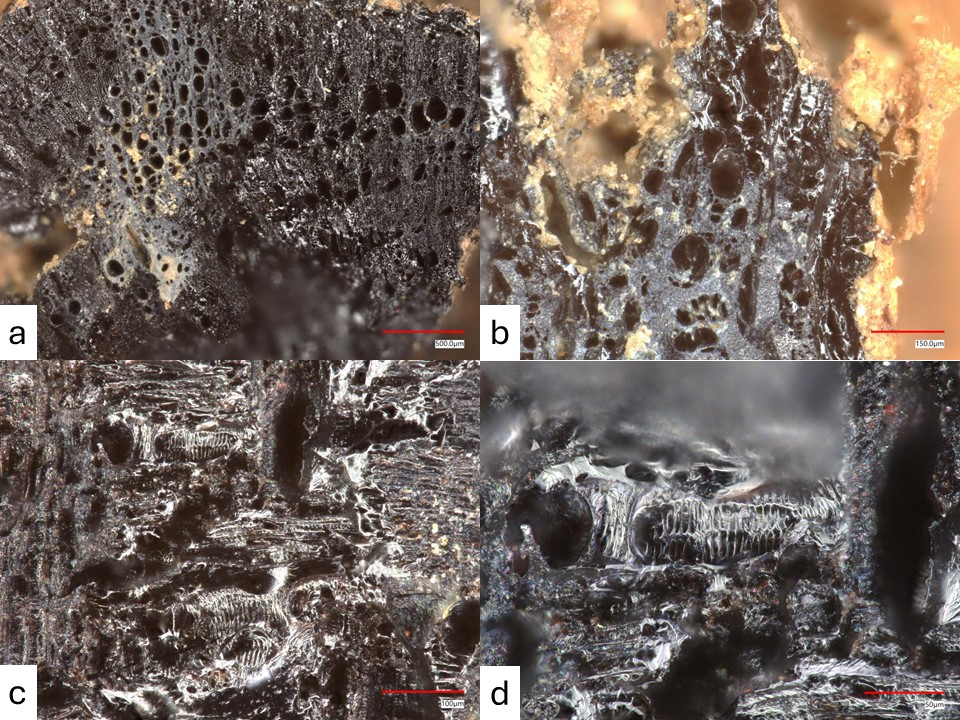
Microscopic images of grapevine charcoal remains from Petkina Niva (North Macedonia, 3rd - 4th century AD), Photo J. Beneš


