Archaeological Palynology
Archaeological palynology uses the study of pollen grains to investigate past environments and human life. Pollen is deposited in the sediments of lakes, wetlands, wells, cesspits, and other archaeological features, where it can survive for thousands of years. Each pollen grain represents a tiny record of the plants that once grew nearby, and together they form a unique archive of landscape change.
Through pollen analysis, archaeologists can reconstruct ancient forests, the emergence of agricultural landscapes, evidence of grazing, crop cultivation, and everyday human activities. At LAPE, we apply archaeological palynology to research topics spanning the period from the Palaeolithic to the modern era.
The Story Hidden Beneath the Velký Mamuťák Rock Shelter
The Velký Mamuťák rock shelter in the Bohemian Paradise has provided one of the best-preserved records of woodland development in Central Europe. Pollen analyses have shown that forests were not merely a backdrop to human history. Mesolithic hunter-gatherers used the surrounding landscape more intensively than previously assumed, while evidence of grazing and other economic activities becomes increasingly visible during later prehistory. The research demonstrates that the present-day appearance of Central European forests is the result of a long-term coexistence between people and nature.
- Ptáková, M., Pokorný, P., Šída, P., Novák, J., Horáček, I., Juřičková, L., Meduna, P., Bezděk, A., Myšková, E., Walls, M. & Poschlod, P. 2020: From Mesolithic hunters to Iron Age herders: a unique record of woodland use from eastern central Europe (Czech Republic). Vegetation History and Archaeobotany 30, 213–232.
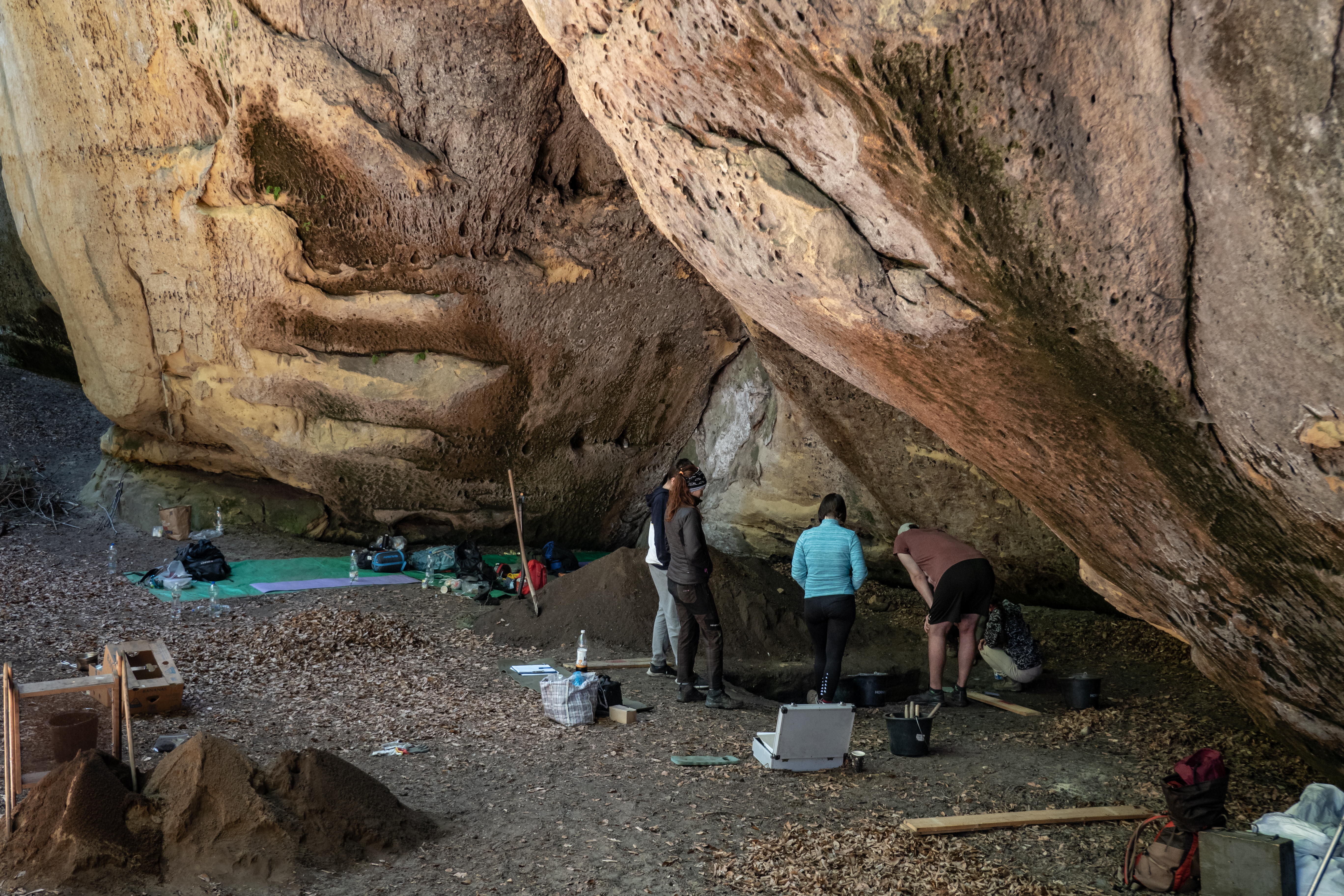
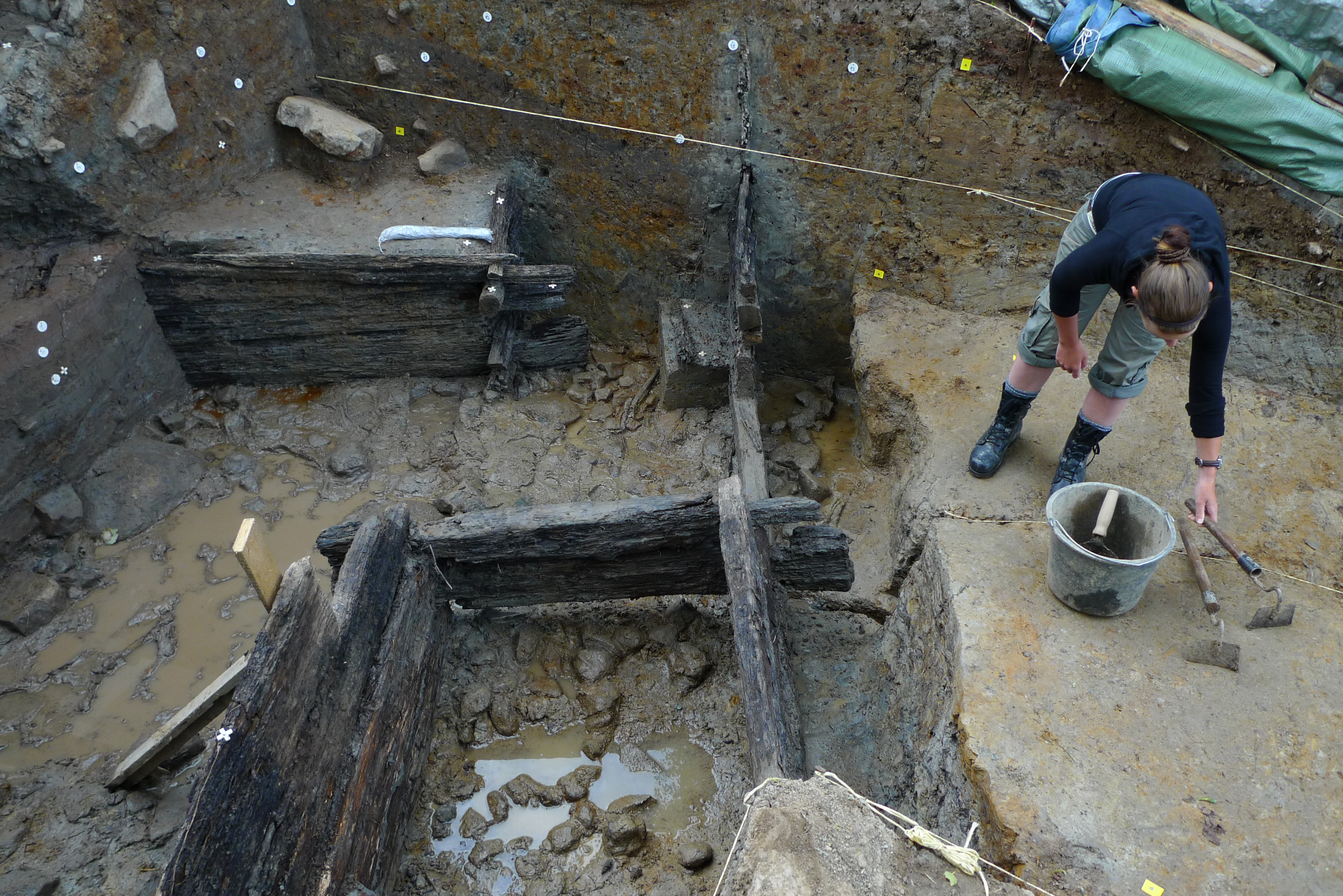
The Velký Mamuťák rock shelter during archaeological excavation. Its thick sedimentary deposits preserve organic remains exceptionally well, including pollen grains that allow the reconstruction of the surrounding landscape over thousands of years. Photo by P. Pokorný.
Could Ancient Hunter-Gatherers Transform Nature?
For a long time, Mesolithic hunter-gatherers were thought to be virtually invisible within the natural environment, and European forests were believed to have developed without significant human influence before the advent of agriculture. Modern archaeological palynology, however, presents a far more complex picture.
Research at the former lakes Švarcenberk and Velký Tisý in South Bohemia demonstrated that pollen analysis can detect human presence even where archaeological finds are initially absent. Pollen grains of plants associated with human activity, together with increased amounts of microscopic charcoal, led to the hypothesis of intensive Mesolithic occupation around the lake. Subsequent archaeological investigations confirmed this prediction through the discovery of numerous Mesolithic sites.
Equally surprising results came from the Broumov region. Its sandstone landscape was long regarded as an almost untouched wilderness where forests developed largely through natural processes. Detailed pollen analyses and other palaeoecological methods, however, revealed repeated human disturbances throughout the Holocene. Even seemingly remote and inaccessible areas were shown to bear evidence of long-term human presence, the use of fire, and later forest grazing.
- Pokorný, P., Bobek, P., Šída, P., Novák, J., Ptáková, M. & Walls, M. 2022: Managing wilderness? Holocene-scale, human-related disturbance dynamics as revealed in a remote, forested area in the Czech Republic. The Holocene 32(6), 584–596.
- Pokorný, P., Šída, P., Chvojka, O., Žáčková, P., Kuneš, P., Světlík, I. & Veselý, J. 2010: Palaeoenvironmental research of the Schwarzenberg Lake, southern Bohemia, and exploratory excavations of this key Mesolithic archaeological area. Památky archeologické CI, 5–38.
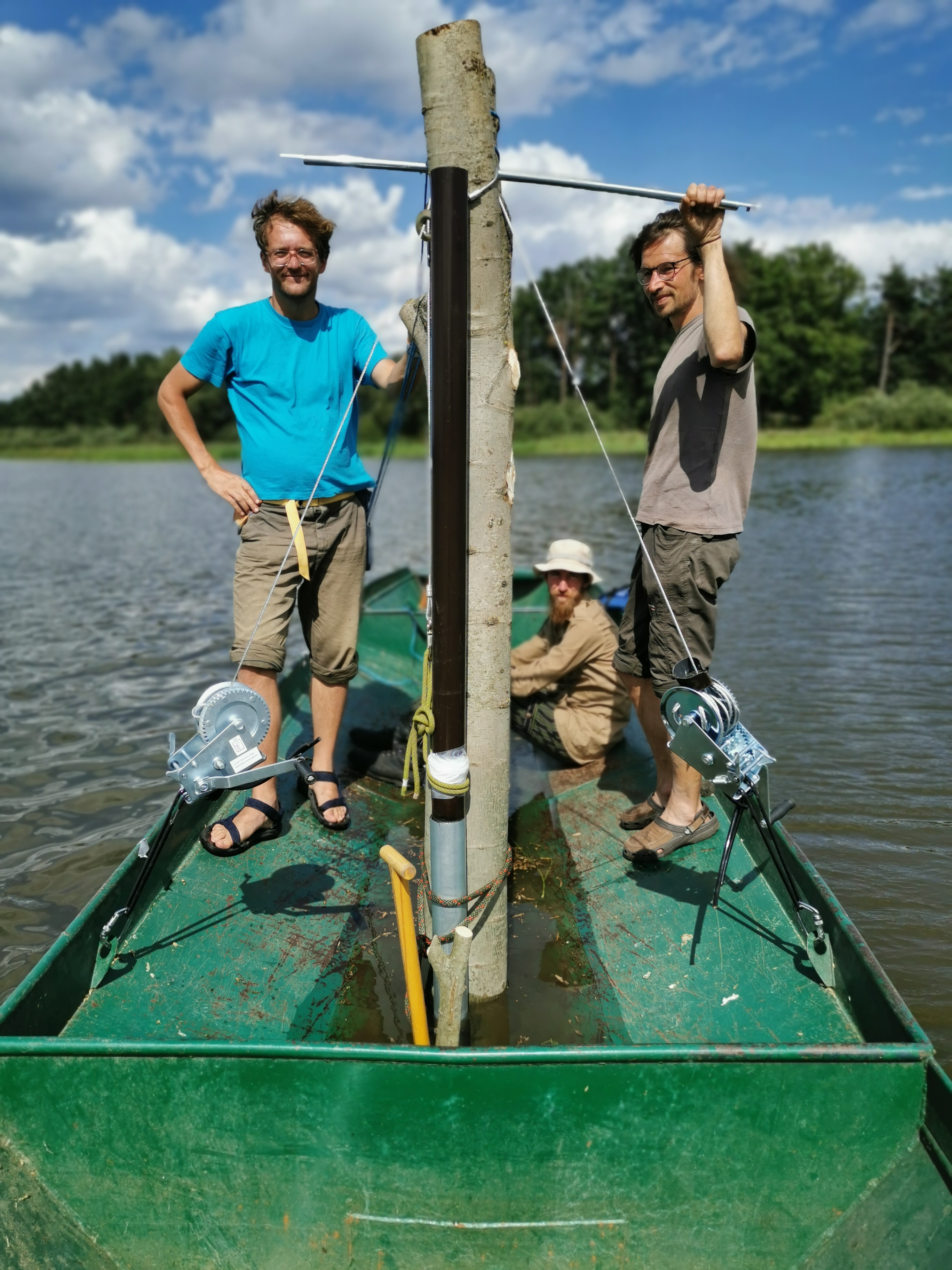
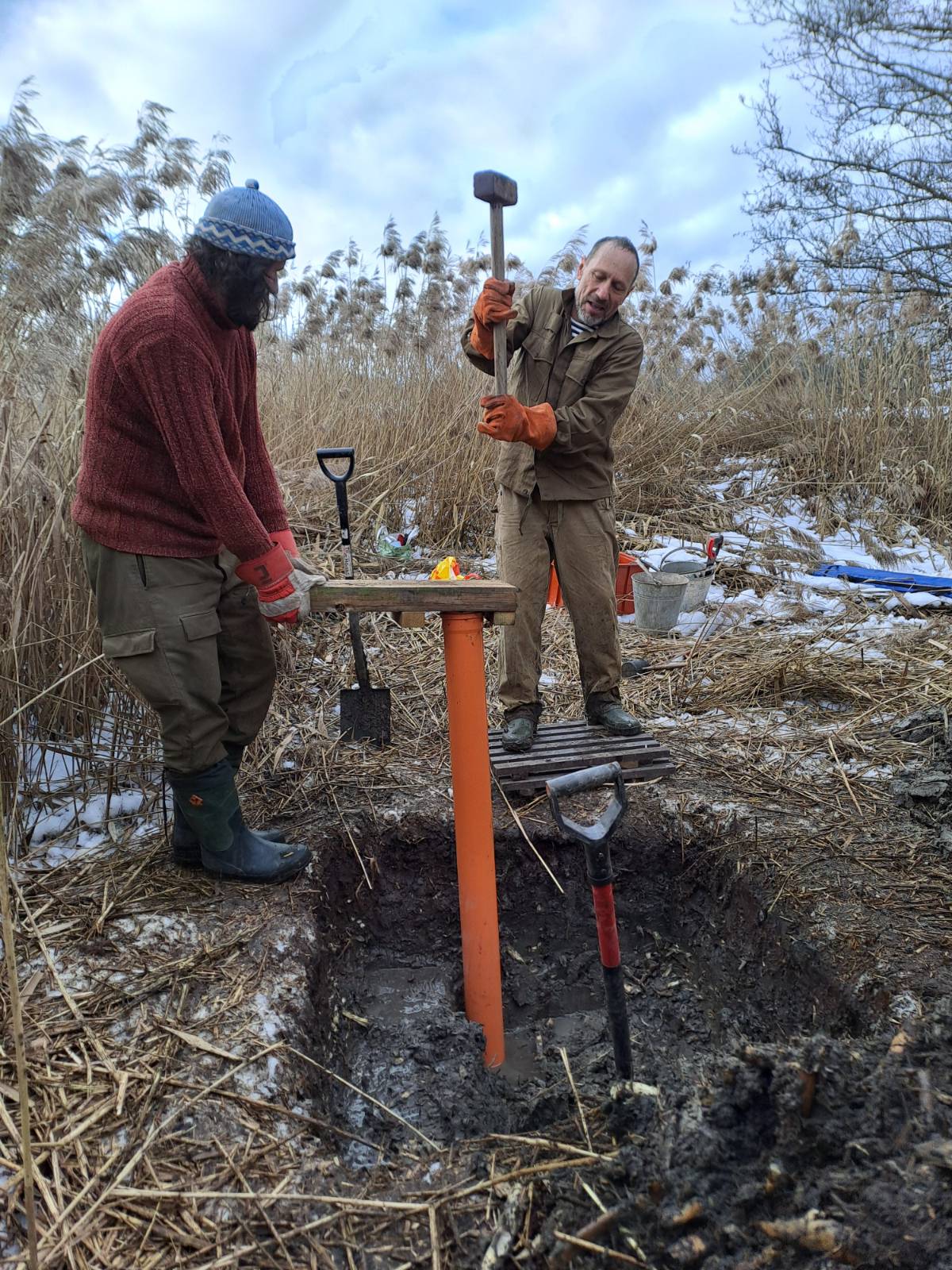
Sampling sediments beneath the surface of the present-day Velký Tisý fishpond in the Třeboň Basin. More than ten metres of sediment form a unique archive of landscape development from the end of the last Ice Age to the present. Among other things, they preserve evidence of the activities of Mesolithic hunters, gatherers, and fishers who once lived along the shores of the former lake. Photo by P. Pokorný.
How Did the Landscape of Fields, Boundaries, and Roads Develop?
Today’s agricultural landscape is the product of many generations of land use. Pollen analyses make it possible to trace the emergence of fields, pastures, and other elements of the cultural landscape, as well as changes in the intensity of agricultural activity. Combined with archaeological, historical, and geographical data, they can be used to reconstruct the origins of historical field systems and explain why individual regions developed distinctive landscape patterns. The evidence shows that the organization of fields was shaped not only by natural conditions but also by social relationships.
- Fanta, V., Beneš, J., Zouhar, J., Rakava, V., Šitnerová, I., Janečková Molnárová, K., Šmejda, L. & Sklenička, P. 2022: Ecological and historical factors behind the spatial structure of the historical field patterns in the Czech Republic. Scientific Reports 12, 8645.
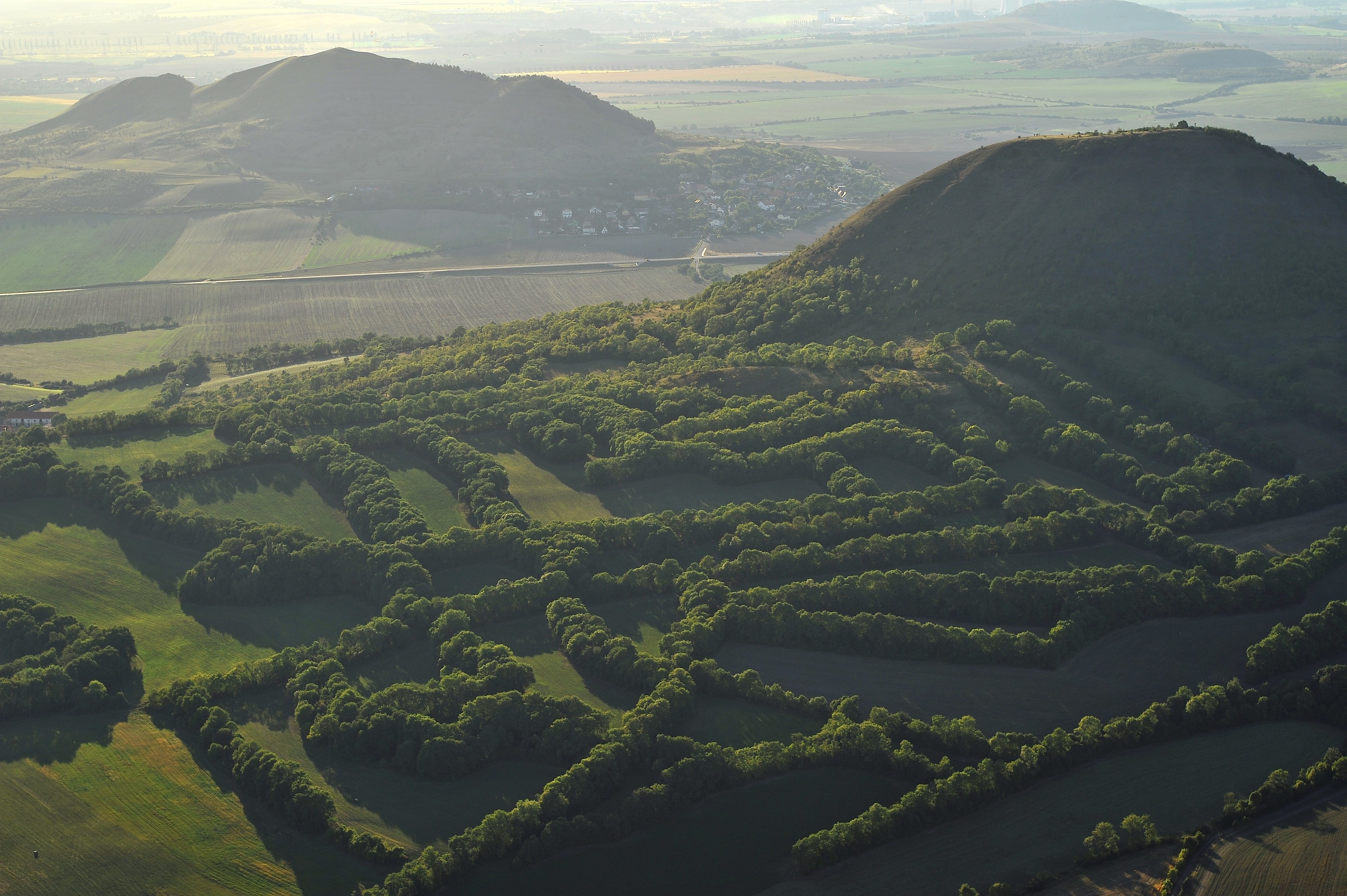
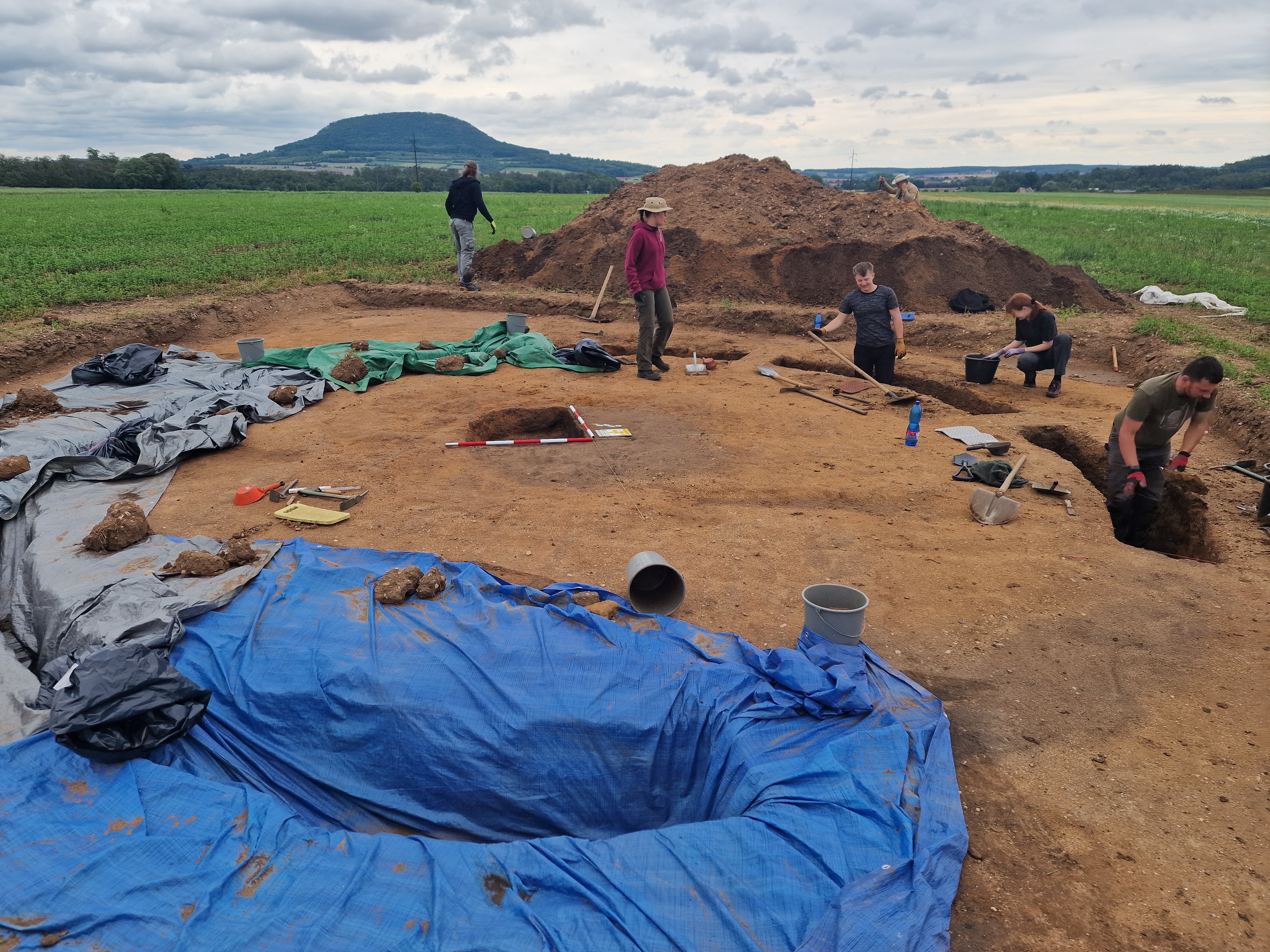
Ancient field systems beneath Oblík Hill in the České středohoří Mountains. Photo by P. Pokorný.
The Wetland Mystery: Millet and a Human Fingernail from the Bronze Age
Wetlands are among the most valuable archives of the past. An exceptional example comes from the Zahájí site in Central Bohemia, where thousands of millet grains were discovered together with a human fingernail, both dating to the Middle Bronze Age. Pollen analyses helped reconstruct the local environment and showed that the deposit was associated with a shallow water body within a wetland. Combined with other scientific methods, the research provided a detailed picture of the surrounding landscape and the circumstances behind this remarkable find.
- Dreslerová, D., Vondrák, D., Hošek, J., Brychová, V., Hunt, H. & Pokorný, P. 2025: Multi-proxy investigation of a unique Bronze Age deposit of broomcorn millet and human remains at a bog site in Bohemia, Czech Republic. Quaternary International 741, 109898.
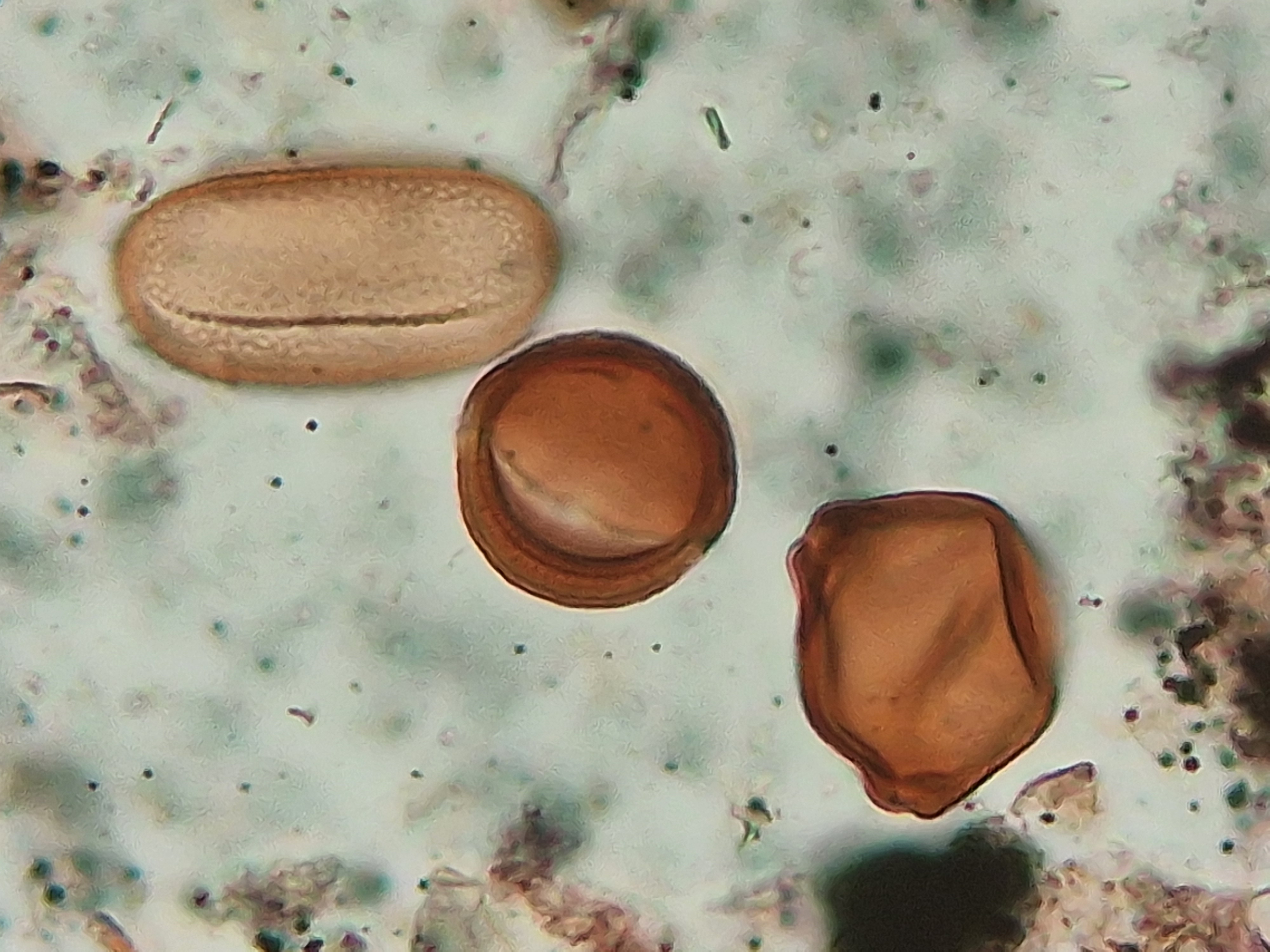
Pollen grains of sainfoin, mugwort, and birch under the microscope. This sample from Zahájí provides evidence for the persistence of steppe vegetation during the Middle Holocene, a period when forests were expanding rapidly across Central Europe. Photo by P. Pokorný.
What Can Pollen Tell Us About Life in a Medieval Town?
Pollen grains are often exceptionally well preserved in wells, cesspits, and other urban archaeological features. Research in medieval Prague and České Budějovice has revealed which plants grew around town walls, in courtyards, along roads, and on waste ground. Pollen spectra have documented the effects of intensive human activity and the transformation of urban environments over the centuries. Archaeological palynology thus provides a unique glimpse into everyday life in historical towns in ways that conventional archaeological finds alone cannot.
- Beneš, J., Kaštovský, J., Kočárová, R., Kočár, P., Kubečková, K., Pokorný, P. & Sterec, P. 2002: Archaeobotany of the Old Prague Town defence system, Czech Republic: archaeology, macro-remains, pollen and diatoms. Vegetation History and Archaeobotany 11, 107–119.
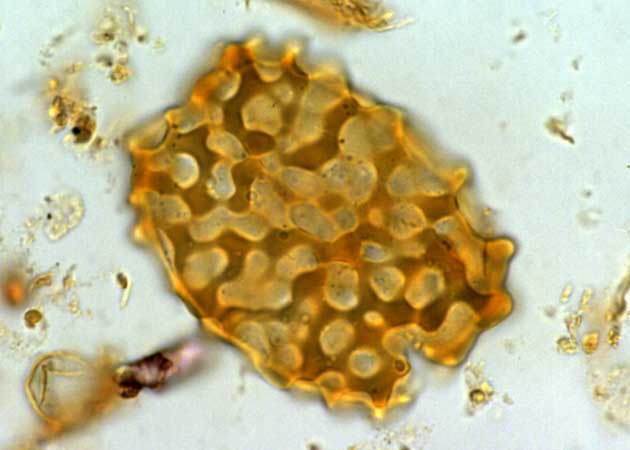
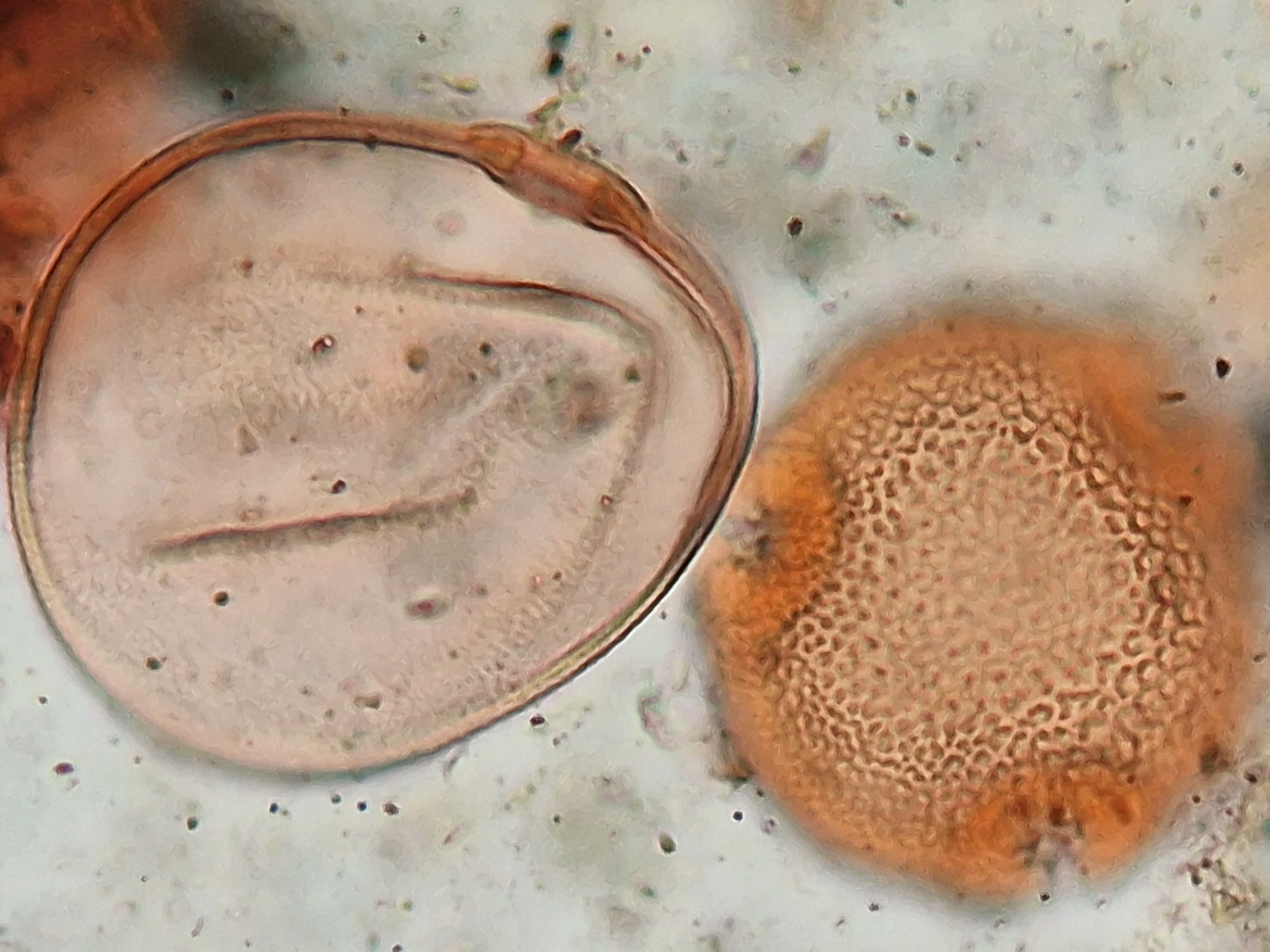
Waterlogged samples from medieval towns often preserve not only pollen but also other fascinating microscopic remains, such as this egg of the intestinal roundworm.
What Can Archaeologists Expect from Pollen Analysis?
- reconstruction of past landscapes surrounding archaeological sites,
- identification of forests, pastures, fields, and other vegetation types,
- evidence for agriculture and grazing,
- detection of deforestation and other human impacts on the environment,
- understanding of the long-term relationship between people and landscapes.
Not every sediment is suitable for pollen analysis. The best results come from deposits formed in wet environments, where pollen grains are well preserved. When conditions are favourable, archaeological palynology provides a unique perspective on past landscapes and supplies information that cannot be obtained by other means.