Phytolith and Starch Grain Analysis
Phytoliths and starch grains are microscopic particles invisible to the naked eye. They are capable of persisting in soils or on artifact surfaces for many thousands of years. They are sometimes referred to as plant microremains.
The opal phytoliths under study are composed of silicon dioxide. They are essentially microscopic "stones" of various shapes formed within plant tissues. Following plant decomposition, we are able—to a certain extent—to deduce the original anatomy of the plant from the shape of the phytolith (the so-called morphotype). This anatomy can be specific to different parts of the plant body, sometimes to specific families or subfamilies, and, in exceptional cases, even to particular species. However, not all families produce phytoliths.
Starch grains are composed of a mixture of amylose and amylopectin. They are stored in plants as an energy source, primarily in seeds and vegetative organs with a storage function (rhizomes, tubers, etc.). Generally, grains from different plants (and their organs) vary in shape and size. However, precise identification depends on the availability of reference collections from modern (recent) plants.
The Diverse Diet of Farmers from a Pile-Dwelling Settlement Near Lake Ohrid, Macedonia
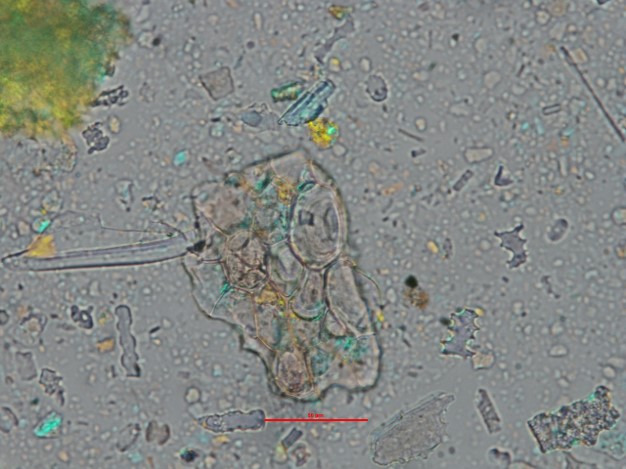
Although the Neolithic period is generally assumed to feature a heavy reliance on the cultivation and consumption of cereal crops, samples taken from charred food crusts on a ceramic baking pan from the Ustie na Drim settlement revealed the presence of starch grains corresponding to the underground organs of lilies and cattails, acorns, and wild grass seeds. The recovered phytoliths originate from dicotyledonous plants. Chemical analyses further indicated that these plants were likely baked together with meat.
- Beneš J., Todoroska V., Kučera L., Budilová K., Kovárník J., Pavelka J., Atanasoska N., Bumerl J., Florenzano A., Majerovičová T., Vondrovský V., Ptáková M., Bednář P., Richtera L. (2021). What about Dinner? Chemical and Microresidue Analysis Reveals the Function of Late Neolithic Ceramic Pans. Molecules. 26(11):3391. https://doi.org/10.3390/molecules26113391
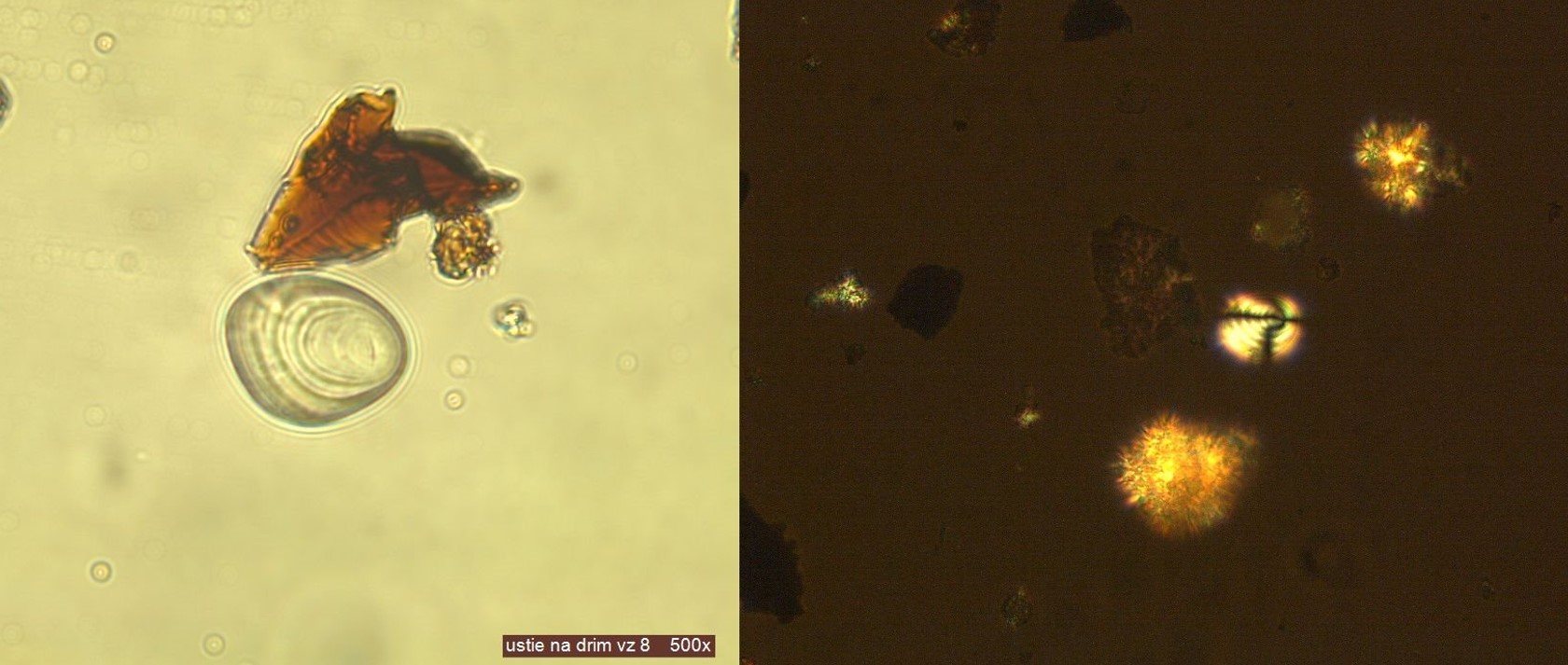
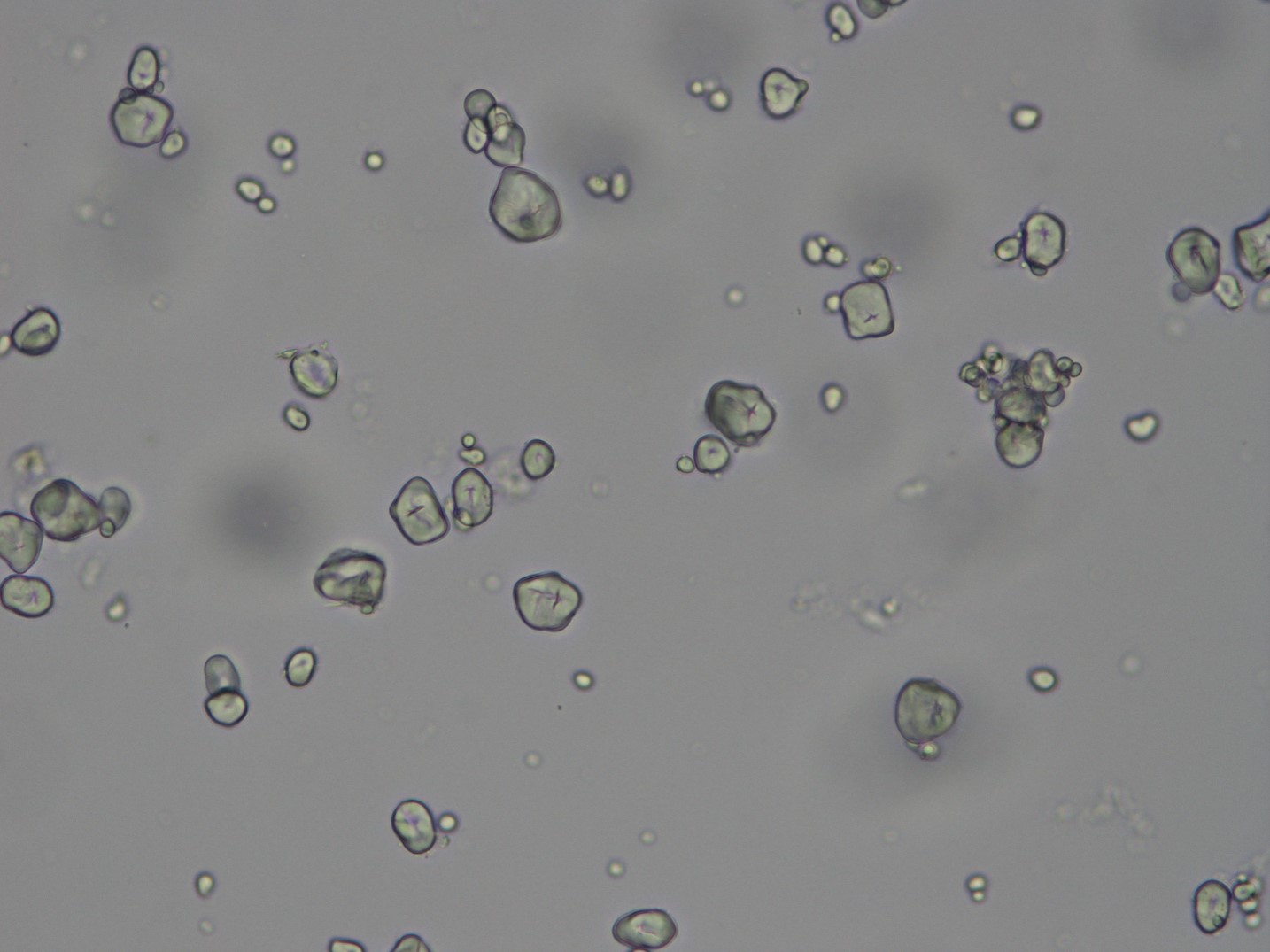
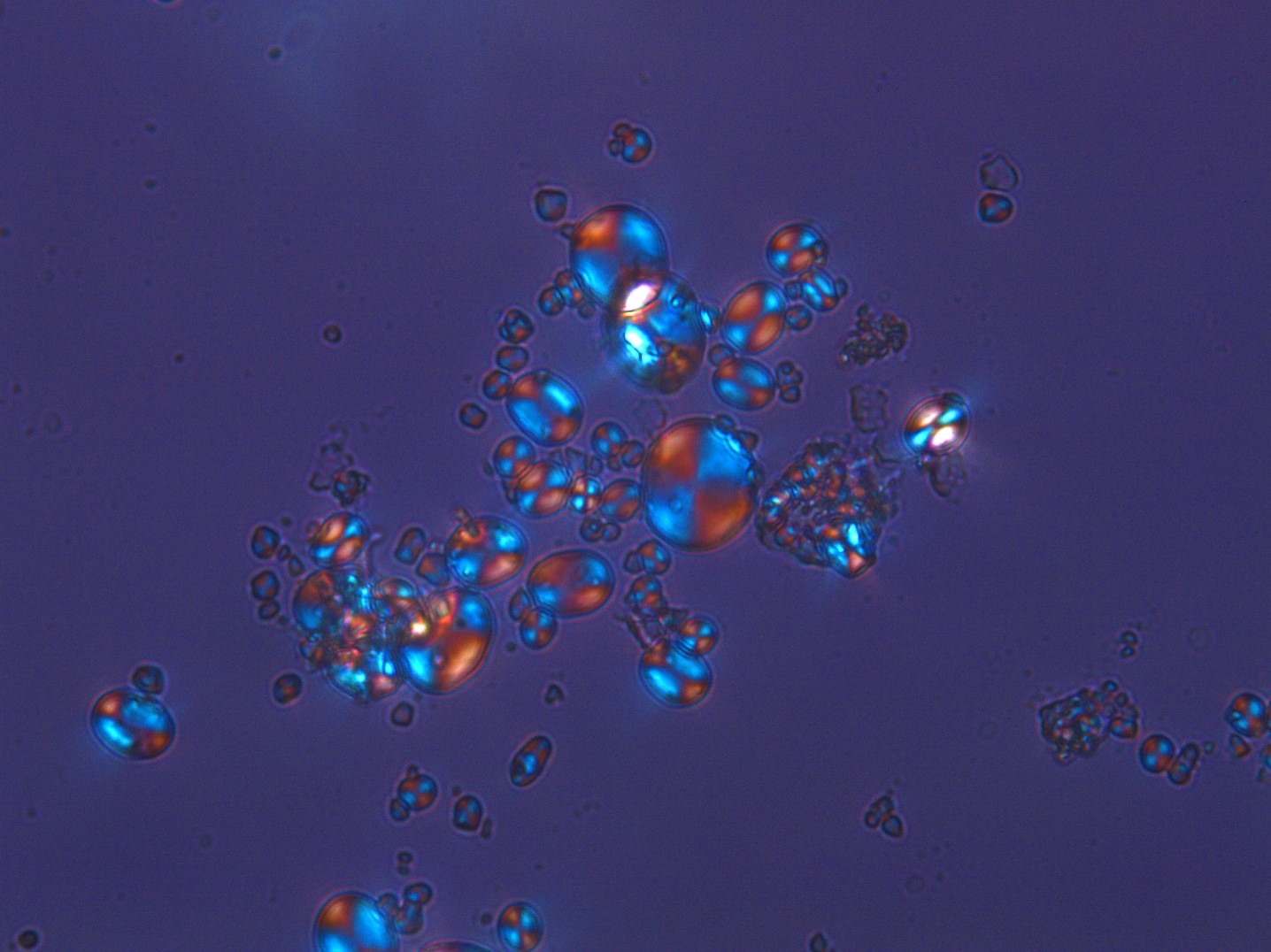
Starch grain from an underground organ of liliaceae in lower and polarized light (right). A typical feature for recognizing starch grains is a cross visible in polarized light, the so-called extinction cross. Another feature is visible lamellae. Magnification 500x, without scale. Determined by J. Kovárník, photo by K. Budilová.
Starch Grains Revealed the Contents of a Ninth-Century BCE Bronze Vessel from Kladina
The Laboratory of Archaeobotany and Palaeoecology (LAPE) has played a pioneering role in introducing starch grain analysis into Czech archaeobotany and applying this method to the study of prehistoric and historical food remains (Kovárník – Beneš 2018). A notable example is the investigation of a luxurious ninth-century BCE bronze vessel discovered near Kladina in eastern Bohemia (Jílek et al. 2021). Starch grain analysis, carried out at LAPE, identified thermally and enzymatically modified starch grains of broomcorn millet (Panicum miliaceum). Together with chemical and palynological analyses, these findings supported the interpretation that the vessel had contained a millet-based herbal beverage, probably representing one of the earliest pieces of evidence for millet beer production in Europe.
- Jílek, J., Golec, M., Bednář, P., Chytráček, M., Vích, D., Zavoral, T., Mírová, Z., Petr, L., Kovárník, J., Milo, P., & Kučera, L. (2022). The oldest millet herbal beer in Europe? The ninth century BCE bronze luxury bucket from Kladina, Czech Republic. Archaeometry, 64, 454–467. https://doi.org/10.1111/arcm.12711
- Kovárník, J., & Beneš, J. (2018). Microscopic Analysis of Starch Grains and Its Application in the Archaeology of the Stone Age. Interdisciplinaria Archaeologica – Natural Sciences in Archaeology, 9(2), 157–168. https://doi.org/10.24916/iansa.2018.2.2
Buried Houses and Grinding Tools from the Late Bronze Age in Březnice near Bechyně
Phytolith and starch grain analysis was also applied to the fills of ditches (troughs) and a grinding stone from the Březnice site. The phytolith assemblages corresponded with the overall interpretation of the fills, which are considered to be household refuse buried alongside everyday items. The phytolith spectra appeared rich, containing phytoliths from cereals, wild grasses, and dicotyledonous plants. The grinding stone (saddle quern), analyzed using multiple methods, bore traces of grinding both plant and animal products, and is therefore considered a multifunctional tool. During this period, broomcorn millet (Panicum miliaceum) emerged for the first time as an important crop, and its presence was also detected through phytolith analysis.
- Šálková, T., Kovárník, J., Majer, A., Novák, J., Pavelka, J., Strouhalová, B., Vobejda, L., Šťastný, O., Kuna, M., & Chvojka, O. (2025). Waste management and waste disposal detected by combination of analytical methods: Late Bronze Age Březnice settlement site (South Bohemia). Archaeological Prospection, 32(3). https://doi.org/10.1002/arp.1973
Cereals Everywhere You Look – The Case of the Neolithic Settlement of Vrbjanska Čuka in North Macedonia
Three seasons of fieldwork at this settlement yielded a wealth of knowledge about the life of one of the first agricultural communities on our continent. The sediments proved to be extremely rich in phytolith content, and residues from cereal processing in particular were present in nearly all archaeological contexts. Starch grains from grasses, legumes, and oak were recovered from the grinding stones.
- Beneš, J., Naumov, G., Majerovičová, T., Budilová, K., Bumerl, J., Komárková, V., Kovárník, J., Vychronová, M., Juřičková, L. (2018). An archaeobotanical onsite approach to the neolithic settlements at the southern Balkans: the case of Vrbjanska Čuka, a tell site in Pelagonia, Republic of Macedonia. Interdisciplinaria archaeologica 9(2):121-145. https://doi.org/10.24916/iansa.2018.2.1

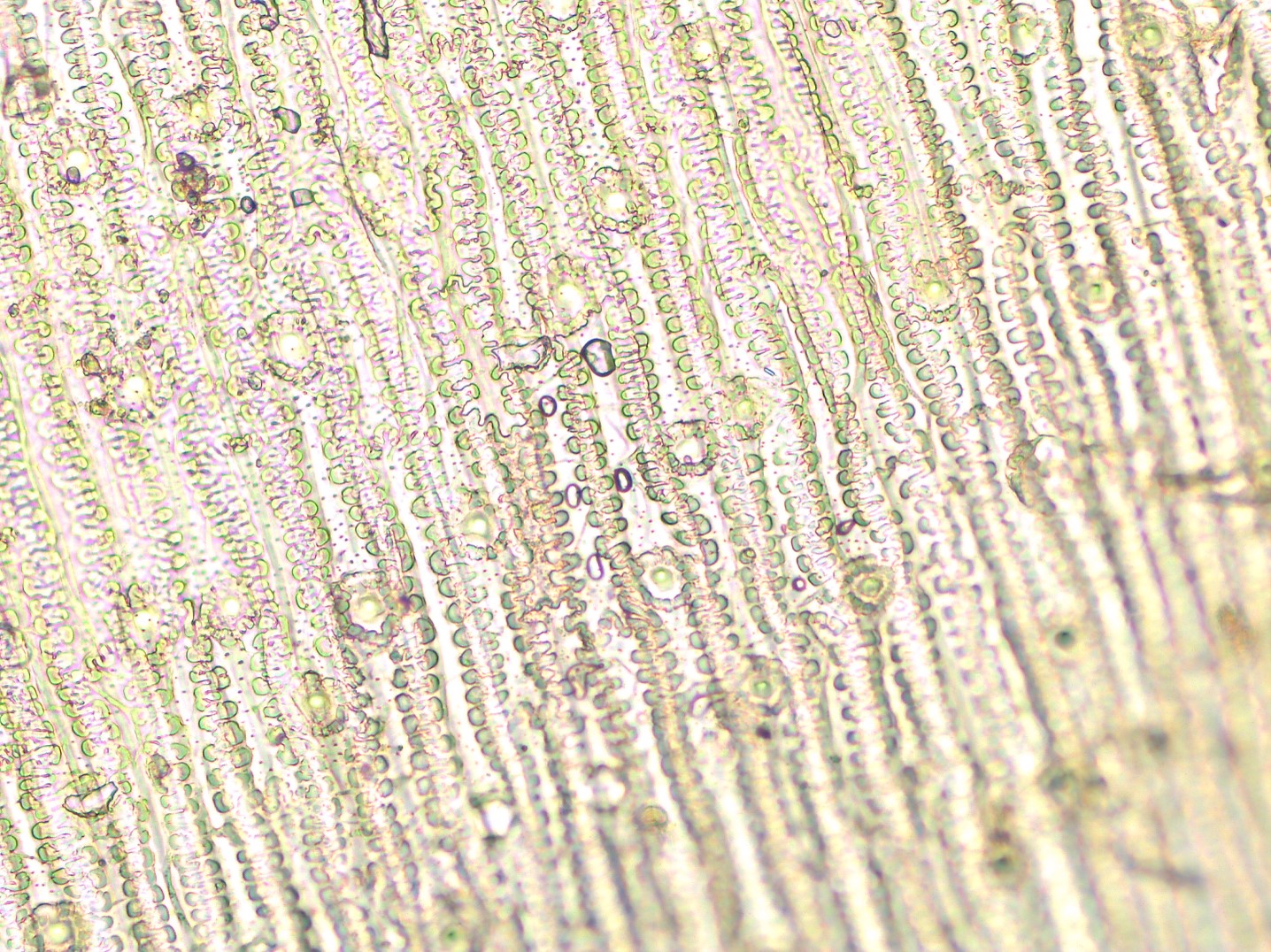
Phytoliths from Vrbjanska Čuka.
What are these analyses used for?
- Detecting decomposed plant material at archaeological sites wherever the storage, processing, or waste deposition of crops is expected (storage and other pits, features, vessel fills, archaeological strata).
- Obtaining direct evidence of plant-based diets through the analysis of dental calculus and the phytoliths and starch grains trapped within it.
- Gathering information about harvested and processed plants through the analysis of residues from the surfaces of stone tools.
- Reconstructing local natural environments, as phytolith analysis in particular frequently yields such data, making it highly valuable in paleoecology as well.
Further Research at LAPE:
Several Bachelor’s and Master’s theses focused on phytolith analysis applied to archaeological sediments have been produced in our laboratory. In her Bachelor’s thesis, Michaela Severová (Jirsová, 2015) examined the fill and formation processes of a medieval storage pit from the Vestec near Chrudim site. Kristýna Budilová (2019) processed phytoliths from the fills and artifacts of a Neolithic pit complex near Radčice in South Bohemia; in her Master’s thesis (2023), she also focused on various contexts within the Vrbjanska Čuka settlement in North Macedonia. In her ongoing doctoral dissertation, she further investigates the prehistoric use of wild plants through the lens of phytolith and starch grain analyses. Additionally, Michal Hejcman (2025) completed a Bachelor’s thesis exploring phytoliths in soils with diverse land-use histories across settlement areas in Senegal, West Africa.