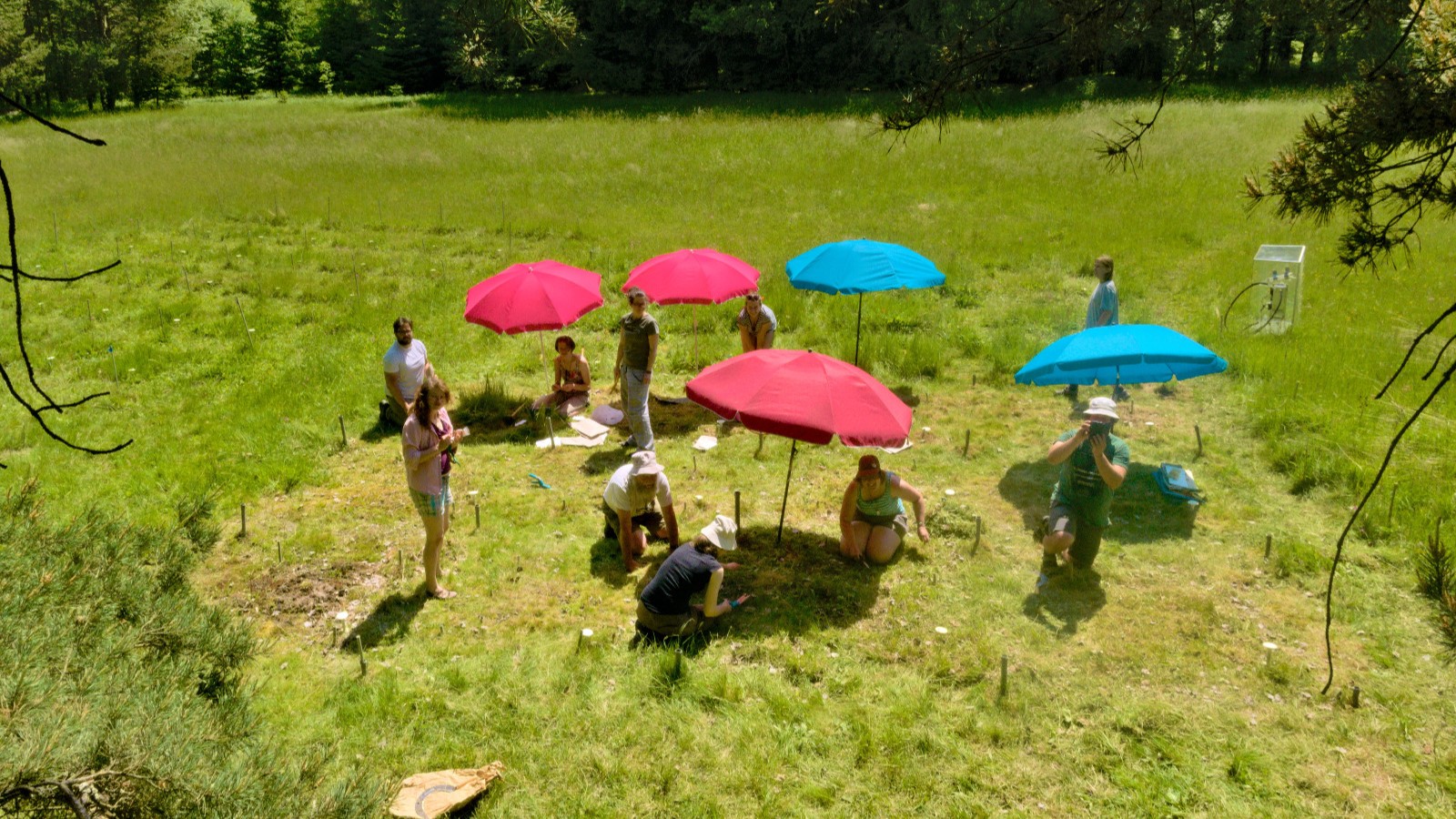
In early April, the Wiley publishing house distributed certificates for highly cited articles in its journals. The Functional Ecology Group is represented among the top ten most cited publications for 2024 in three journals (Global Ecology and Biogeography and Journal of Ecology). This achievement confirms that the research conducted at our faculty is world-class and fundamentally influences the direction of contemporary ecology.
A unified framework for partitioning the drivers of stability of ecological communities
A methodological framework for studying ecosystem stability
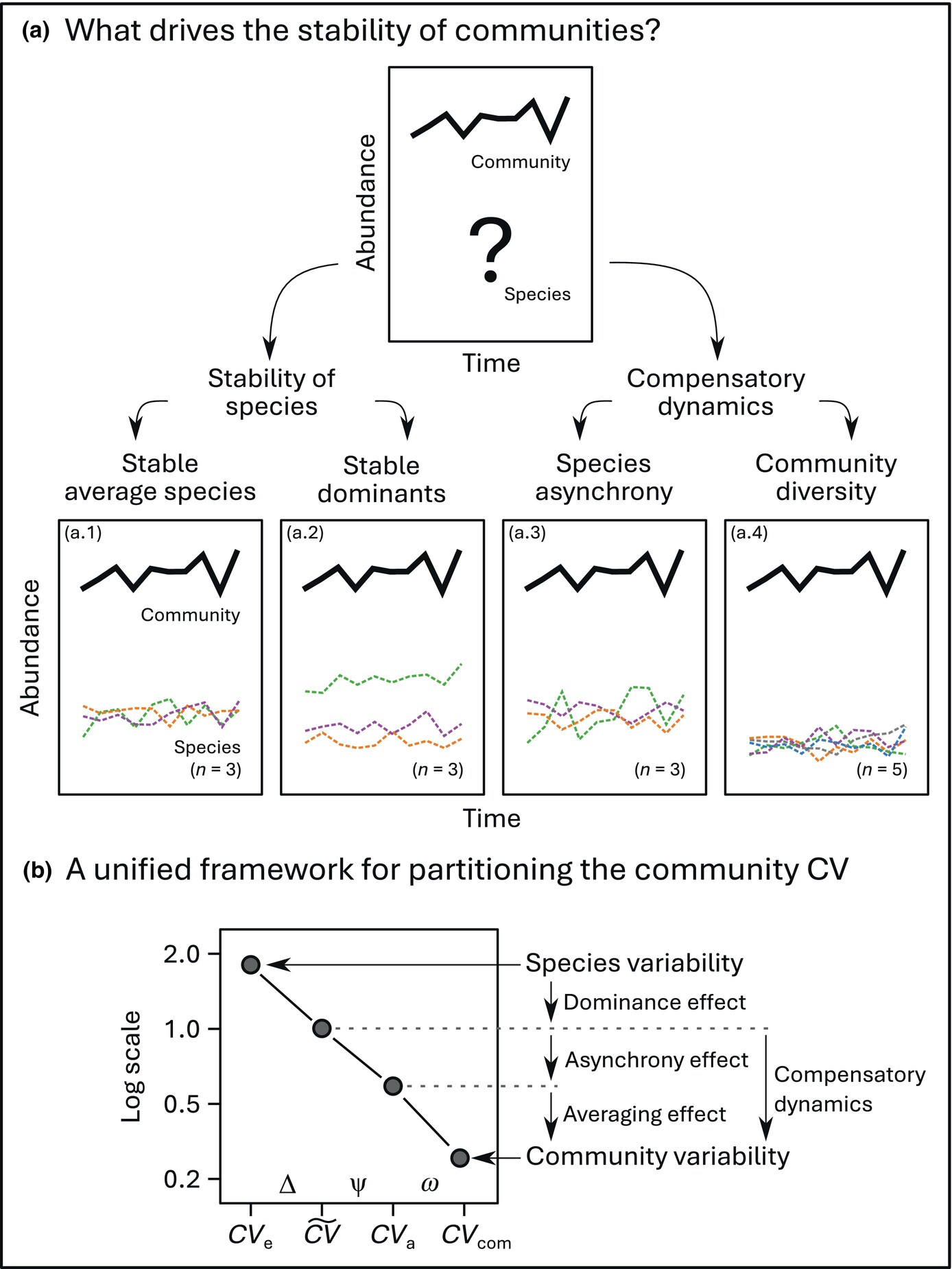
In this paper, the Functional Ecology Group presents a unified theoretical framework that allows for the differentiation and quantification of the effects of species richness, the dominance of certain species, and the mutual temporal interplay (synchrony) of individual species. This approach provides a tool for more reliable predictions of how ecosystems will respond to current environmental changes. The entire author team consists of people who currently work or have previously worked in the Functional Ecology Group.
Segrestin et al. in Global Ecology and Biogeography: A unified framework for partitioning the drivers of stability of ecological communities. https://doi.org/10.1111/geb.13828
Biodiversity promotes resistance but dominant species shape recovery of grasslands under extreme drought
The role of biodiversity in the resistance of grasslands to drought
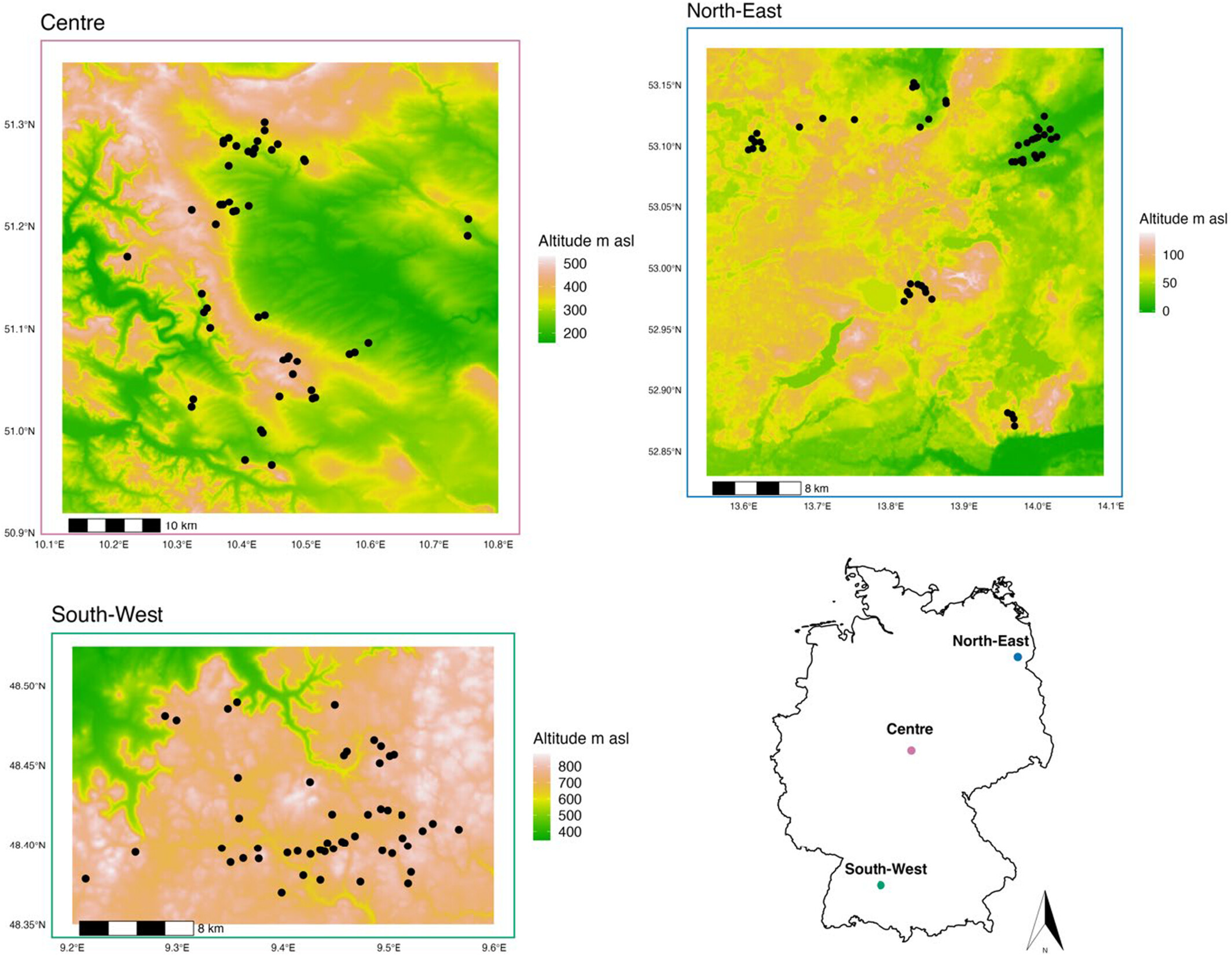
Based on an eleven-year monitoring of grasslands, the study analyzes how different components of biodiversity influence the response of vegetation to extreme drought. The results show that while species-rich communities better resist the lack of precipitation itself, communities dominated by fast-growing species exhibit a higher capacity for subsequent recovery. The work emphasizes the importance of a diverse landscape mosaic for maintaining ecosystem functions during periods of climate extremes. The Functional Ecology Group contributed to the publication of the international team primarily through data analysis methodology, and the entire project was initiated by Francesco de Bello.
Bazzichetto et al. (including J. Lepš, F. de Bello) in Journal of Ecology: Biodiversity promotes resistance but dominant species shape recovery of grasslands under extreme drought. https://doi.org/10.1111/1365-2745.14288
ReSurveyEurope: A database of resurveyed vegetation plots in Europe
A database for monitoring vegetation changes across Europe
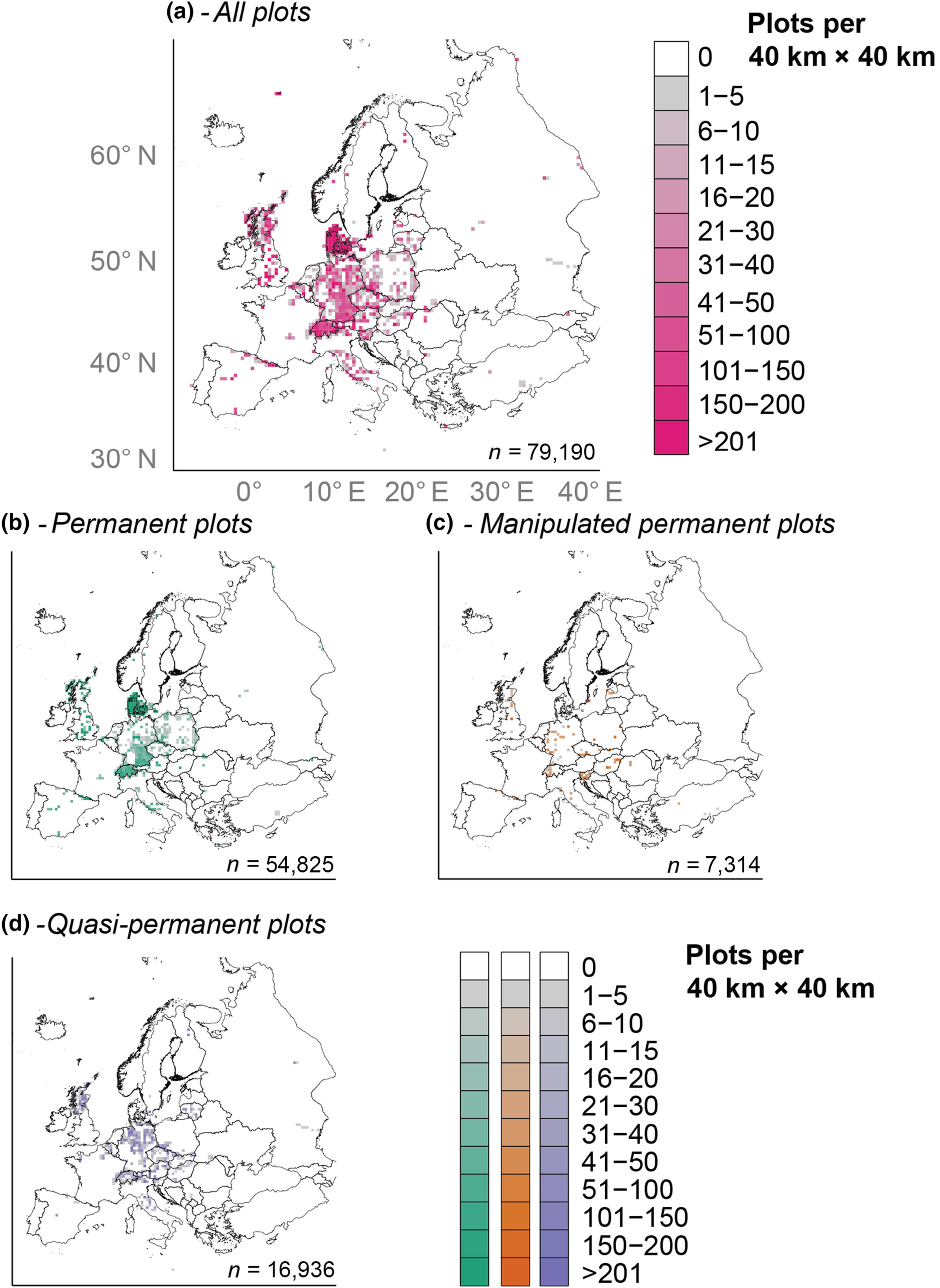
The article introduces the ReSurveyEurope initiative, which collects data from repeated vegetation surveys across the entire continent. The database contains hundreds of thousands of observations from permanent plots, with the oldest records dating back to the beginning of the 20th century. This unique data source enables scientists to track long-term transformations of European flora under the influence of climate change and human activity with high precision.
Knollová et al. (including F. de Bello, J. Lepš, O. Mudrák) in Journal of Vegetation Science: ReSurveyEurope: A database of resurveyed vegetation plots in Europe. https://doi.org/10.1111/jvs.13235
Photogallery