
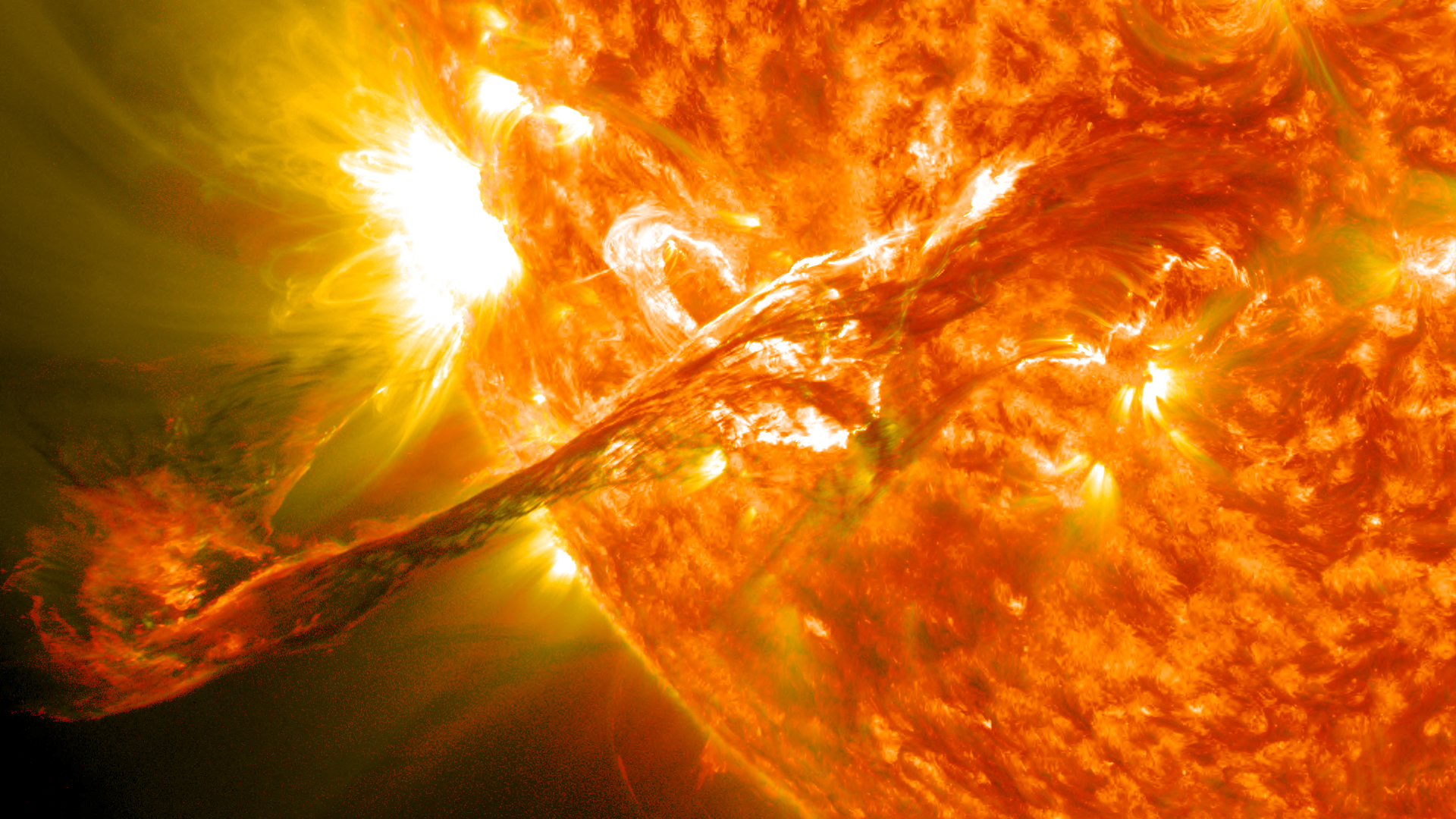
This project aims to establish a close research collaboration between several leading European and South American research institutes specialized in solar physics and to gain new paradigmatic insights into the dynamic processes in the solar atmosphere, through a systematic exchange of researchers and knowledge and joint research efforts using existing data and facilities, including innovative data analysis techniques based on machine learning approaches. The expected scientific impact is a significant advancement in our knowledge of key physical processes occurring in the solar atmosphere, including breakthroughs in unraveling the mechanism of coronal heating, transformational advances in our understanding of impulsive energies such as solar flares and CMEs, significant advances in MHD wave theory, and the first application of machine learning techniques to the study of wave processes in the solar atmosphere.
The project includes four scientific work packages that address specific key challenges in modern solar physics and heliophysics: quasi-periodic pulsations in solar flares, wave heating and coupling to the lower atmosphere, the development of three-dimensional CME morphology, kinematic oscillations of coronal mass exclusion, and a work package for communication and dissemination. Expected economic and technological impacts include gaining direct experience in the analysis of complex oscillatory processes, experience in the design and application of machine learning techniques for pattern recognition, new technologies for the analysis of oscillatory processes, and input parameter diagnostic techniques for space weather prediction models, the establishment of facilities for knowledge exchange with foreign partners with local industries, and the training of highly skilled professionals in numerical modeling and data analysis. The expected societal impact is to strengthen research links between the European and US research communities, to improve public awareness of modern solar and heliophysics research and development issues, and to motivate school students to pursue scientific careers.
COORDINATOR
KATHOLIEKE UNIVERSITEIT LEUVEN, Belgium
Contact: Tom Van Doorsselaere,
BENEFICIARIES
JIHOCESKA UNIVERZITA V CESKYCH BUDEJOVICICH, Czechia
Contact: Petr Jelínek,
UNIVERSITAET GRAZ (GRA), Austria
Contact: Astrid Veronig,
MAX-PLANCK-GESELLSCHAFT ZUR FORDERUNG DER WISSENSCHAFTEN EV, Germany
Contact: Pradeep Chitta,
ASSOCIATED PARTNERS
CONSEJO NACIONAL DE INVESTIGACIONES CIENTIFICAS Y TECNICAS, Argentina
Contact: Andrea Costa,
UNIVERSIDAD NACIONAL DE COLOMBIA, Colombia
Contact: Santiago Vargaz Dominguez,
UNIVERSITY OF NORTHUMBRIA AT NEWCASTLE, United Kingdom
Contact: James McLaughlin,
THE UNIVERSITY OF WARWICK, United Kingdom
Contact: Valery Nakariakov,
ASTRONOMICAL INSTITUTE, ACADEMY OF SCIENCES, Czechia
Contact: Miroslav Barta,
WP1: Quasi-periodic pulsations in solar flares
WP2: Wave heating and connection to the lower atmosphere
WP3: Evolution of three-dimensional CME morphology
WP4: Kinematic oscillations of coronal mass ejections
WP5: Communication & dissemination
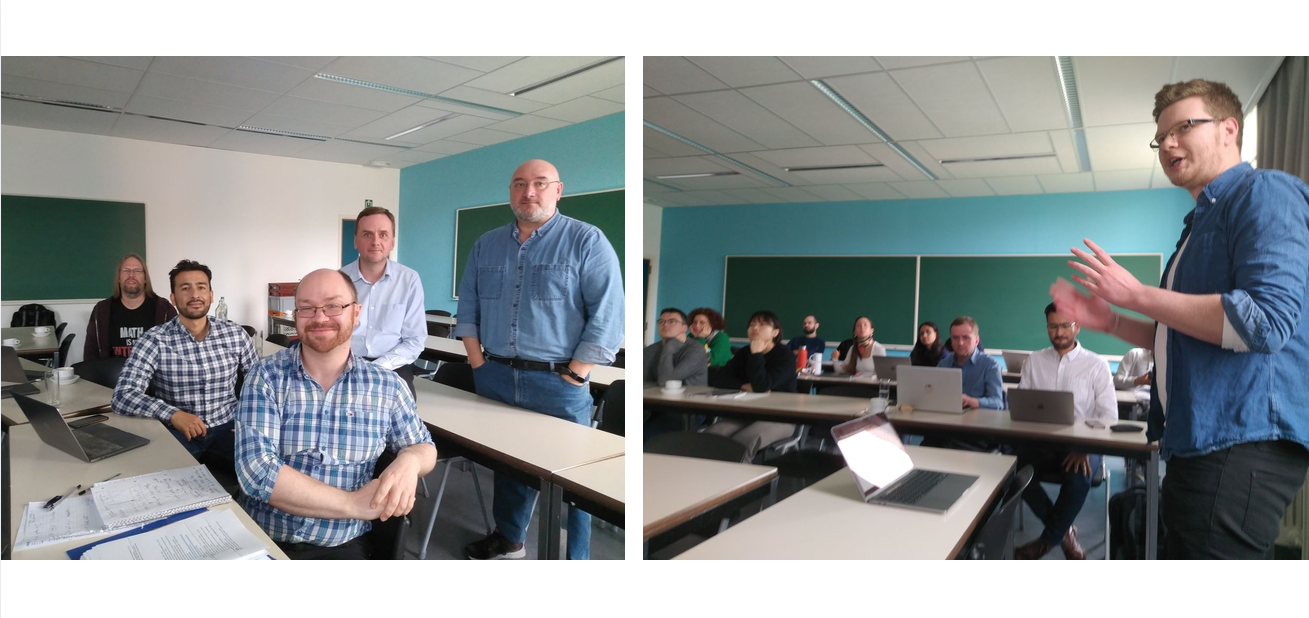
1. The DynaSun kick-off meeting, KU Leuven, Belgium, 25-26 March 2024.
Programme DynaSun kick-off.PDF
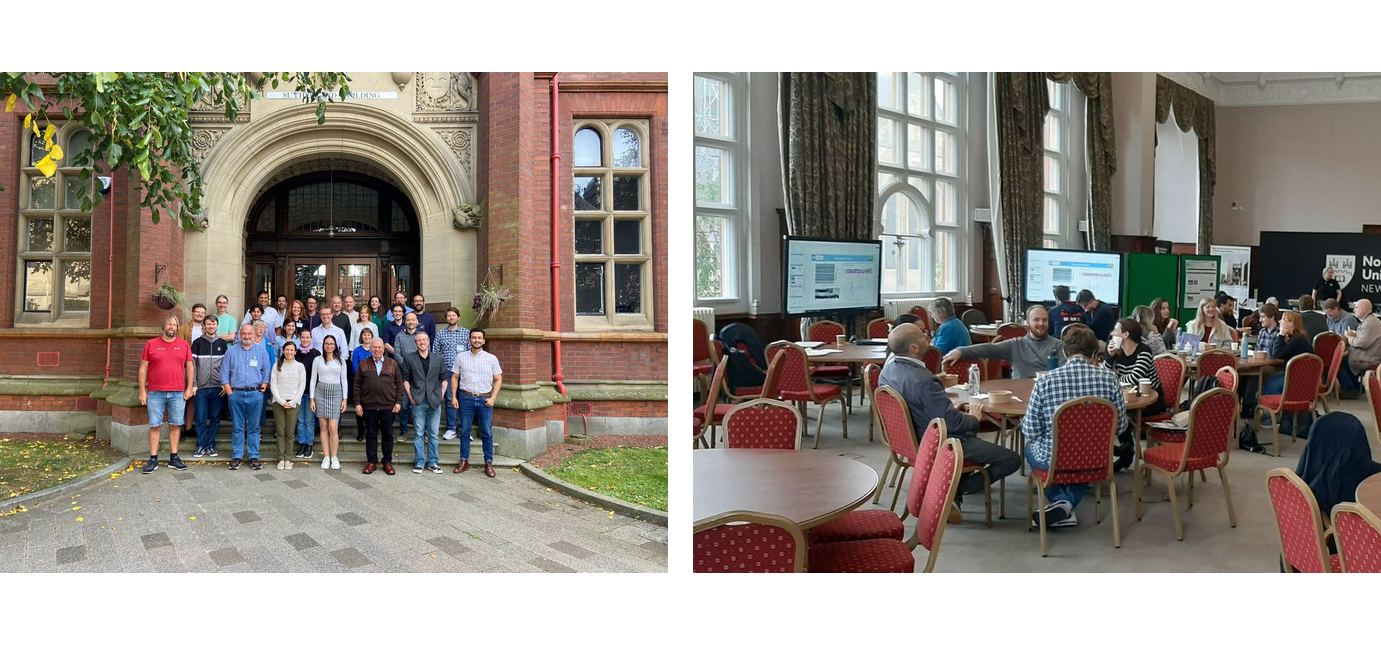
2. DynaSun Network workshop: Waves, Reconnection and Particle Acceleration in Solar Flares, Northumbria University (Newcastle upon Tyne, NE1 8ST, UK), 2-6 September 2024
https://sites.google.com/view/dynasun2024/overview
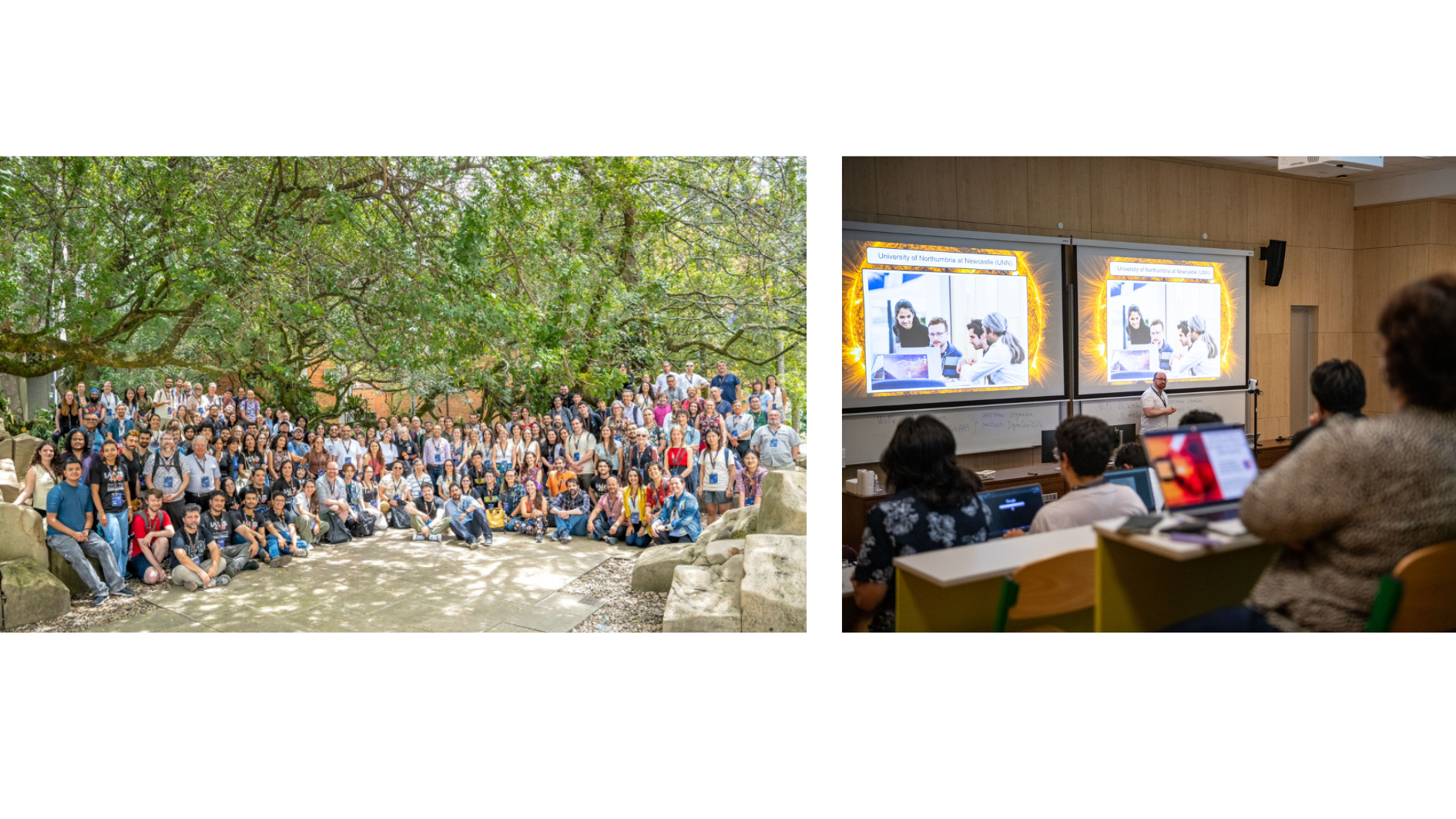
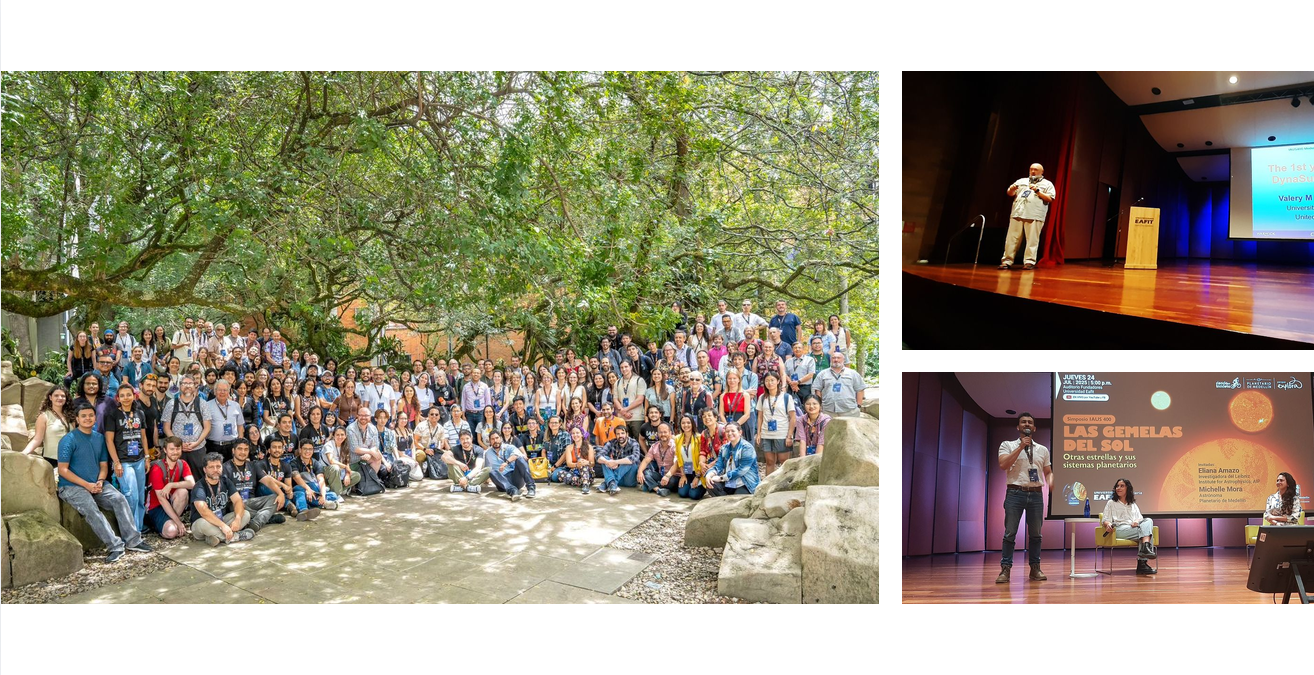
3. Solar and Stellar Multi-Scale Activity, Medellín, Colombia, July 21-25, 2025
https://astronomiaoan.github.io/iaus400/program.html
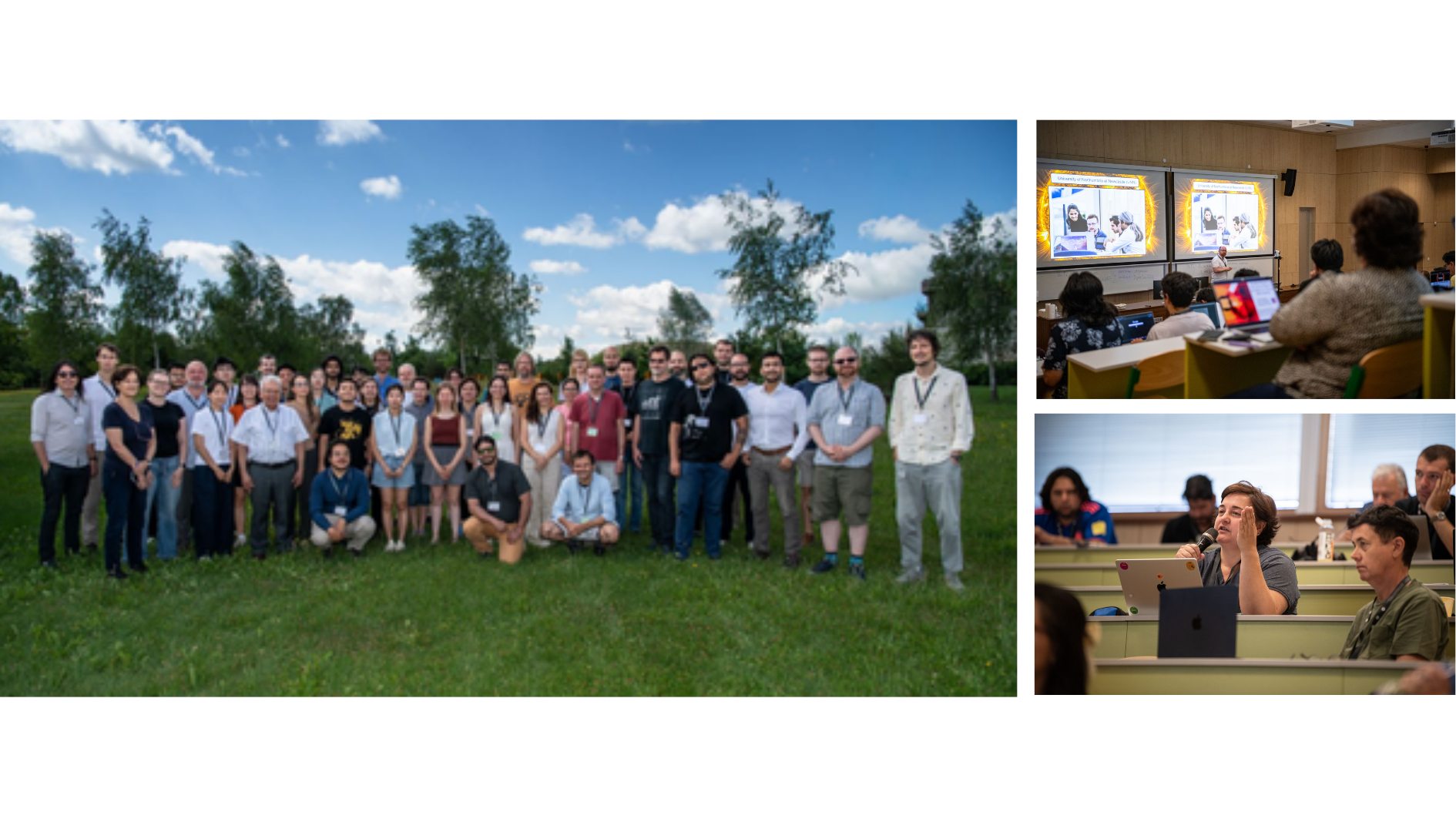
4. 3rd DynaSun Meeting: Morphology and Evolution of Coronal Mass Ejections, České Budějovice, Czech Republic, July 6-10, 2026
The research was sponsored by the DynaSun project and has thus received funding under the Horizon Europe programme of the European Union under grant agreement (no. 101131534). Views and opinions expressed are however those of the author(s) only and do not necessarily reflect those of the European Union and therefore the European Union cannot be held responsible for them."
- DynaSun in the spotlight: Exploring the Sun’s dynamic atmosphere
A recent Czech Radio interview with Petr Jelínek from the University of South Bohemia highlighted the importance of understanding the dynamic processes taking place in the solar atmosphere. The interview, recorded in connection with the DynaSun project, also introduced the international collaboration behind the project and its efforts to better understand phenomena such as solar flares, coronal mass ejections and other processes that shape space weather. While a total solar eclipse will not be visible from Czechia until 2135, research within DynaSun is helping us explore the Sun and its activity every day.
Link for podcast:
- DynaSun brings international solar research to České Budějovice
In July 2026, the Faculty of Science at the University of South Bohemia hosted the 3rd DynaSun Meeting, bringing together around 50 researchers from Europe, South America and other parts of the world. The international conference focused on the observation and understanding of the dynamic processes taking place in the solar atmosphere, with particular attention to coronal mass ejections and their impact on space weather. The meeting highlighted the importance of international collaboration and researcher exchange in advancing modern solar physics.
Link for report:
https://www.facebook.com/reel/1776312460485797

This project DynaSun has received funding under the Horizon Europe programme of the European Union under grant agreement (no. 101131534).


