

Archaeozoology
Archaeozoology is the study of animal remains recovered from archaeological sites, primarily bones and teeth, and less frequently scales, keratinous tissues, hair, or mollusc shells. Its aim is to provide a better understanding of human–animal relationships across different periods of the past, regions, and environmental settings.
By analysing finds recovered from archaeological contexts such as settlement layers, caves, wells, and cesspits, archaeozoology reconstructs past subsistence practices, animal exploitation, farming systems, and the environmental conditions in which humans and animals lived. It also examines other roles of animals, including their function as companions, objects of trade, and carriers of symbolic or ritual significance. In addition, archaeozoological research contributes to our understanding of animal domestication, the processing of animal products, and craft production.
Beyond the analysis of animal bone remains, archaeozoology employs a range of specialised methods available within LAPE, including stable isotope, cementochronological, and osteometric analyses. These approaches provide information on animal foddering practices, origin, age, and body size, as well as on past landscapes, climatic conditions, and the seasonality of economic and other human activities. Research draws on both hand-collected remains recovered during archaeological excavations and small faunal remains retrieved through sieving.
Teeth as calendars of the past: hunting at the early medieval hillfort of Netolice
The analysis of cementum increments in tooth roots makes it possible to determine not only an animal’s age, but also the season of the year in which it died or was hunted. This method was applied to the study of teeth from red deer (Cervus elaphus), roe deer (Capreolus capreolus), and wild boar (Sus scrofa) recovered from the early medieval hillfort Na Jánu near Netolice in South Bohemia. The analysed finds originated from archaeological layers dated to the 11th–12th centuries. The results suggest that hunting was concentrated mainly in autumn and winter, when game animals were in their best condition and easier to track in the landscape. Detailed analysis of animal teeth can contribute to our understanding of hunting seasonality and the ways natural resources were exploited in the past.
- Pořádková, K. & Kovačiková, L. 2023: Cementochronology in archaeozoology: Exploring the age and hunting season of game from the early medieval hillfort Na Jánu in Netolice through dental cementum analysis. Archeologické rozhledy 75(4), 359-381.
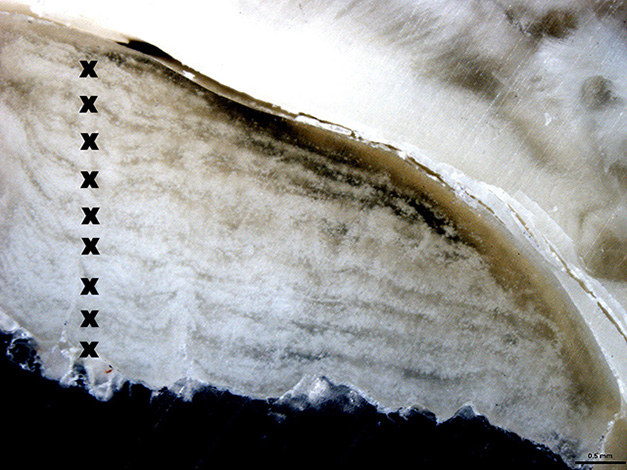
Detail of acellular cementum on a lower molar of a red deer (Cervus elaphus), indicating a ten-year-old individual hunted in autumn or winter. Crosses mark individual acellular cementum increments. Photo: K. Pořádková.
Pigs in the service of the inhabitants of Great Moravia: pig-breeding management st Mikulčice
Domestic pigs (Sus domesticus) were among the most important sources of meat in the Great Moravian centre of Mikulčice during the eighth and ninth centuries. The combination of archaeozoological data and stable carbon and nitrogen isotope analyses showed that most pigs were raised extensively in open landscapes, where they relied largely on natural food resources. While extensive husbandry clearly predominated, evidence was also found for alternative management practices in which pigs were more closely associated with human settlements and consumed a larger proportion of food resources linked to household and agricultural activities. The results suggest that the inhabitants of Mikulčice employed a well-organised system of pork production that combined local breeding with supplies from a broader economic hinterland. The study contributes to a better understanding of everyday life, economic organisation, and landscape use in the Great Moravian period.
- Kovačiková, L., Drtikolová Kaupová, S., Poláček, L., Velemínský, P. Limburský, P. & Brůžek, J. 2022: Pig-Breeding Management in the Early Medieval Stronghold at Mikulčice (Eighth–Ninth Centuries, Czech Republic). Environmental Archaeology 27(3), 277-291.
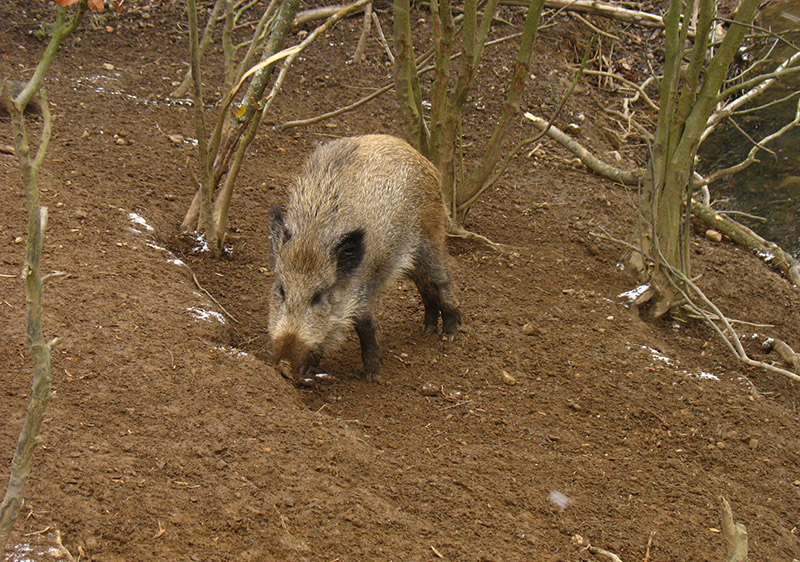
Stable carbon (δ¹³C) and nitrogen (δ¹⁵N) isotope values from the teeth of early medieval domestic pigs (Sus domesticus) from Mikulčice revealed a similarity in feeding behaviour to wild boar (Sus scrofa), regardless of sex. Their physical appearance was also remarkably similar.
Small animal bones, big stories: fish and birds at the medieval castle of Mokřice
Archaeozoology is not limited to the study of large bones from domestic or wild mammals. Research on animal remains from Mokřice castle (14th–15th centuries) has shown that the small and fragile bones of birds and fish can provide surprisingly detailed information about the use of the surrounding landscape and local natural resources in the everyday life of a medieval castle community. Finds of grey partridge (Perdix perdix), thrushes (Turdus sp.), hawfinch (Coccothraustes coccothraustes), and mallard (Anas platyrhynchos) bones testify to the inclusion of small birds in the diet and suggest a seasonal pattern of their hunting. Remains of common carp (Cyprinus carpio), northern pike (Esox lucius), and European perch (Perca fluviatilis) highlight the importance of fish in local food consumption and point to their local production in ponds and fish-holding basins situated below the castle. The study demonstrates that even inconspicuous bone remains can help reveal aspects of past life that would remain hidden if attention were focused solely on the more numerous bones of larger animals.
- Kovačiková, L. & Drnovský, P. 2023: Assessment of animal bones from Mokřice Castle (Bohemia). A view on the diversity of the diet of the inhabitants of the medieval castle and the possibilities of food production of animal origin. Archaeologia historica 48(1), 81-111.
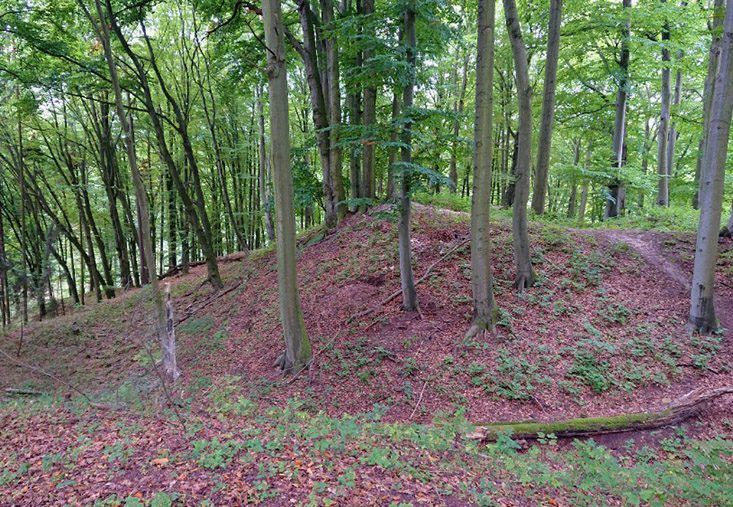
Archaeological excavations at the now-ruined Mokřice castle (Jičín district) yielded a large osteological assemblage. In the valley of the Studénka stream below the castle, a system of three ponds and three fish-holding ponds was also identified.
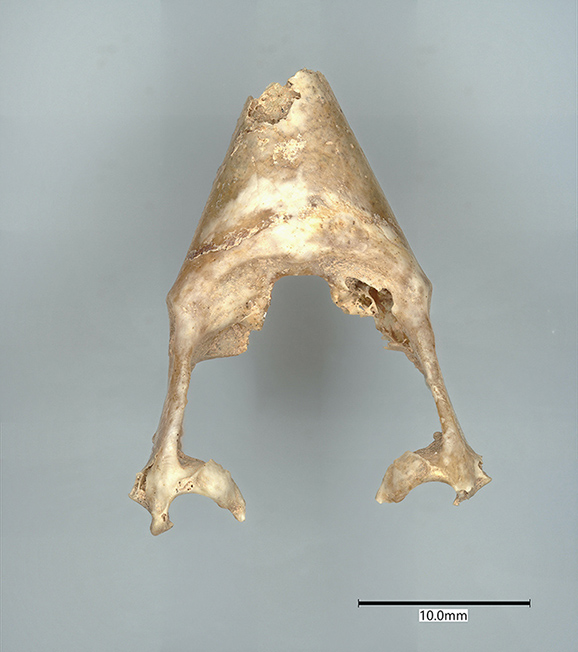
Lower jaw of a hawfinch (Coccothraustes coccothraustes) recovered from Mokřice castle. This species may have been among the small birds captured through traditional bird trapping, which employed nets, snares, cages, and various other traps.


