

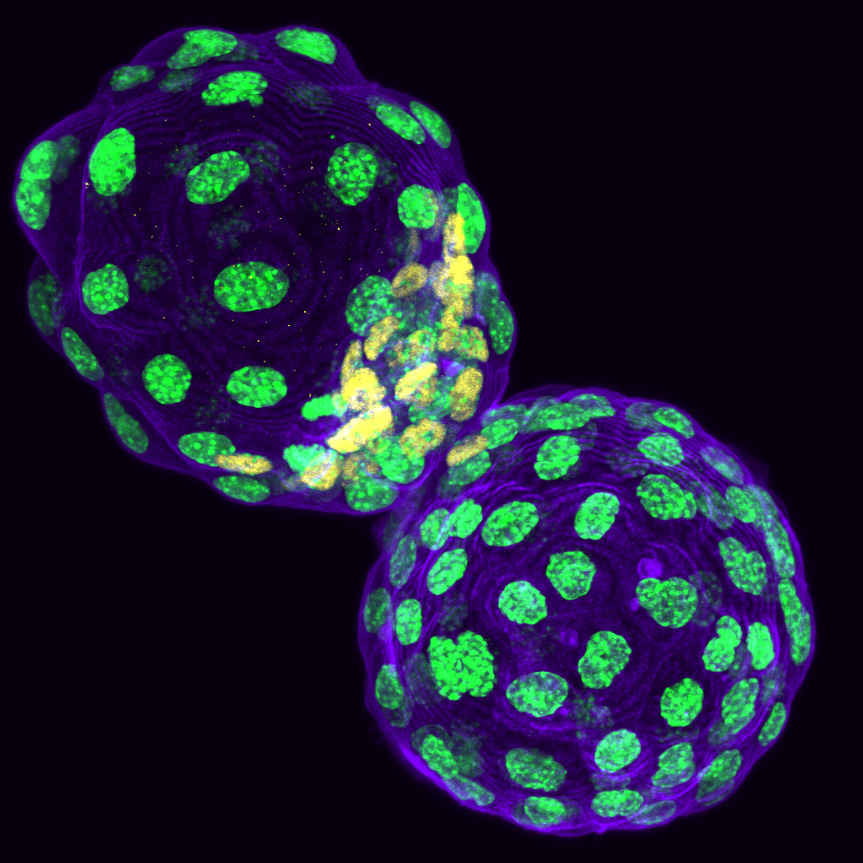
Researchers in the Department of Molecular Biology and Genetics (Faculty of Science) at the University of South Bohemia, led by prof. Alexander W. Bruce and collaborators from the Institute of Animal Physiology and Genetics of the Czech Academy of Sciences, have identified a previously unrecognised role for the gene Tead4 in mouse blastocyst development.
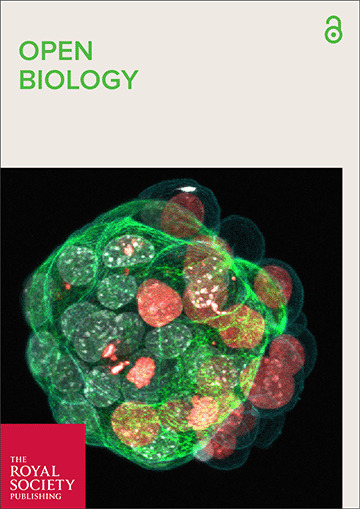
The publication made it to the cover image of Open Biology.
TEAD4 Regulates apical domain homeostasis and cell-positioning to maintain the trophectoderm lineage during mouse blastocyst development
Rebecca Collier, Martina Bohuslavová, Michaela Vaškovičová, Aleksandar I. Mihajlović, Andrea Hauserová, Valeriya Zabelina, Monika Fluks, Lenka Gahurová, Dávid Drutovič and Alexander W. Bruce
Following fertilisation, mammalian embryos undergo a period of preimplantation development before reaching the blastocyst stage, at which point they implant into the uterine wall and continue development throughout pregnancy. During these early stages, the embryo establishes its first specialised cell lineages. The blastocyst consists of an outer epithelial layer of trophectoderm (TE) cells, which will contribute to the placenta, surrounding a fluid-filled cavity and an inner cell mass (ICM) located at one pole. Within the ICM, two further lineages emerge: the primitive endoderm (PrE), an epithelial layer adjacent to the cavity that contributes further extraembryonic supportive tissues, and the epiblast (EPI), a pluripotent cell population that gives rise to the embryo proper and is the source of embryonic stem cells. The formation of these three lineages, TE, PrE and EPI, is essential for successful development and pregnancy. Their emergence is driven by a highly regulative and self-organising process involving lineage-specific gene expression, cell-cell communication and coordinated cell movements.
Researchers in the Department of Molecular Biology and Genetics (Faculty of Science) at the University of South Bohemia, led by prof. Alexander W. Bruce and collaborators from the Institute of Animal Physiology and Genetics of the Czech Academy of Sciences, have identified a previously unrecognised role for the gene Tead4 in mouse blastocyst development.
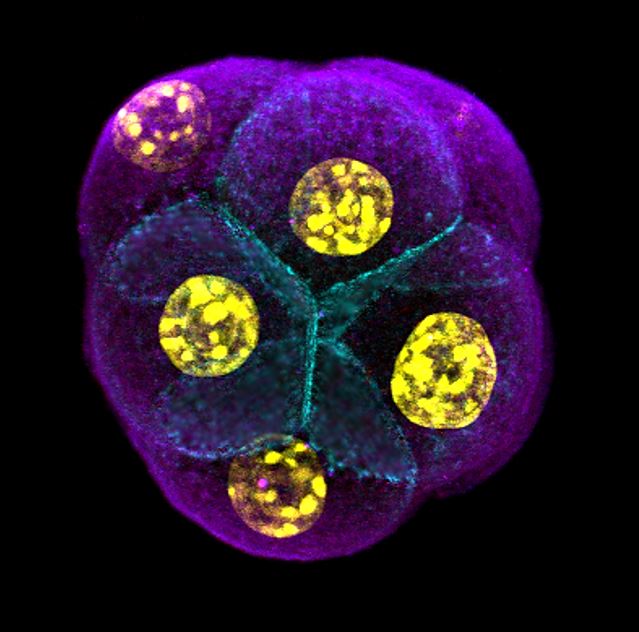
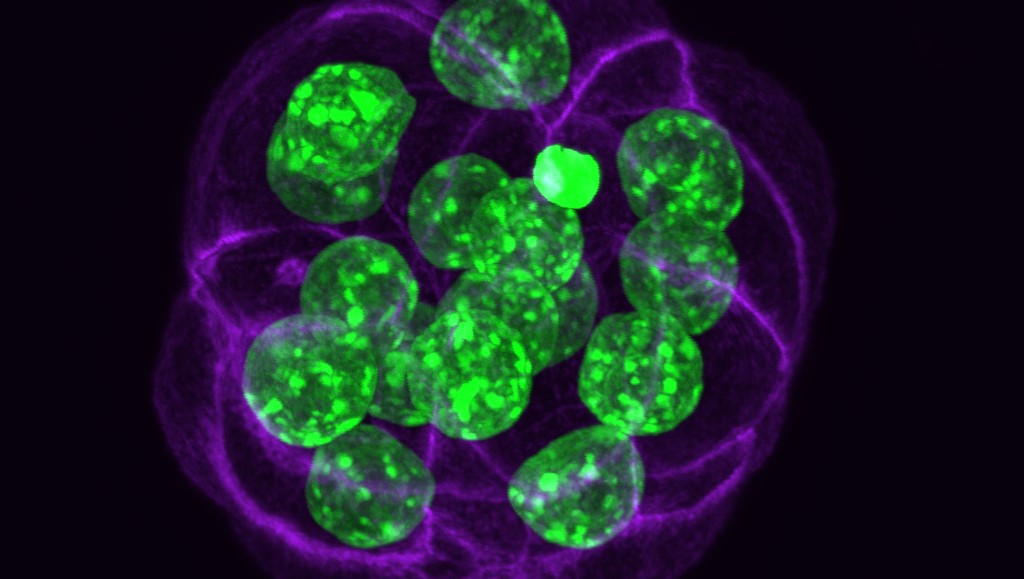
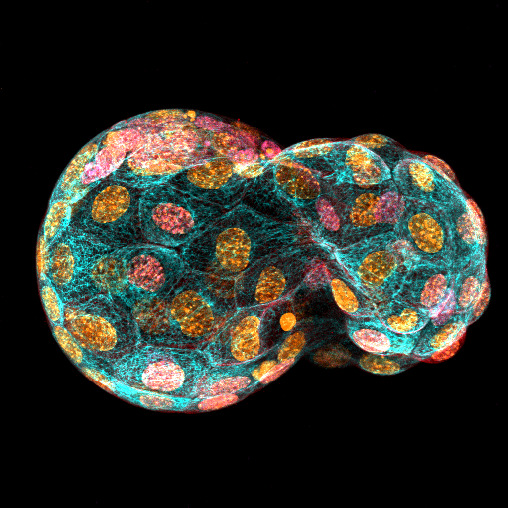
While Tead4 is known to initiate TE cell fate by activating TE-specific genes in outer embryonic cells, the new study demonstrates that it also ensures these cells remain correctly positioned on the embryo's surface as the blastocyst forms.Using targeted knockdown of Tead4 gene expression in fluorescently labelled cell clones, the researchers showed that cells lacking TEAD4 protein often fail to maintain their surface position. Instead, they relocate into the ICM and ultimately contribute to the EPI lineage. This behaviour suggests that embryos can compensate for mis-specified cells through self-organising mechanisms that preserve normal development.
The study further reveals that Tead4 maintains TE integrity by regulating genes involved in cytoskeletal organisation, particularly those associated with actin dynamics. Through effects on cell contractility and the orientation of cell division, Tead4 helps establish feedback mechanisms that both reinforce TE identity and retain TE cells at the embryo surface. Together, these findings provide new insight into how mammalian embryos coordinate cell fate and cell positioning during blastocyst formation, ensuring robust early development and successful progression towards implantation and pregnancy.
DOI: https://doi.org/10.1098/rsob.250441


