
Can the origins of folktales be traced in the same way as the origins of biological species? Can scientists reconstruct the history of languages or cultural traditions using the same methods that evolutionary biologists use to study the evolution of living organisms? These questions are explored in a new book chapter by Pavel Duda of the Faculty of Science at the University of South Bohemia, published in Culture Evolving: Bridging Life Sciences and Humanities by Springer Nature.
The book brings together researchers from Charles University, Masaryk University, the Institute of Archaeology of the Czech Academy of Sciences and other institutions. It offers a comprehensive overview of current research on cultural evolution from the perspectives of biology, anthropology, archaeology and related disciplines.
Pavel Duda's chapter introduces cultural phylogenetics, a field that adapts methods originally developed to reconstruct the evolutionary history of organisms to the study of culture. These approaches now enable researchers to reconstruct the history of languages, trace the spread of folktales, myths and artistic traditions, investigate the evolution of religion, marriage and other social institutions, and test hypotheses about the evolution of human societies. Pavel Duda and his colleagues at FSc USB also use these methods in their own research on the evolution of human behaviour – from family organisation through food sharing and parental care to rites of passage.
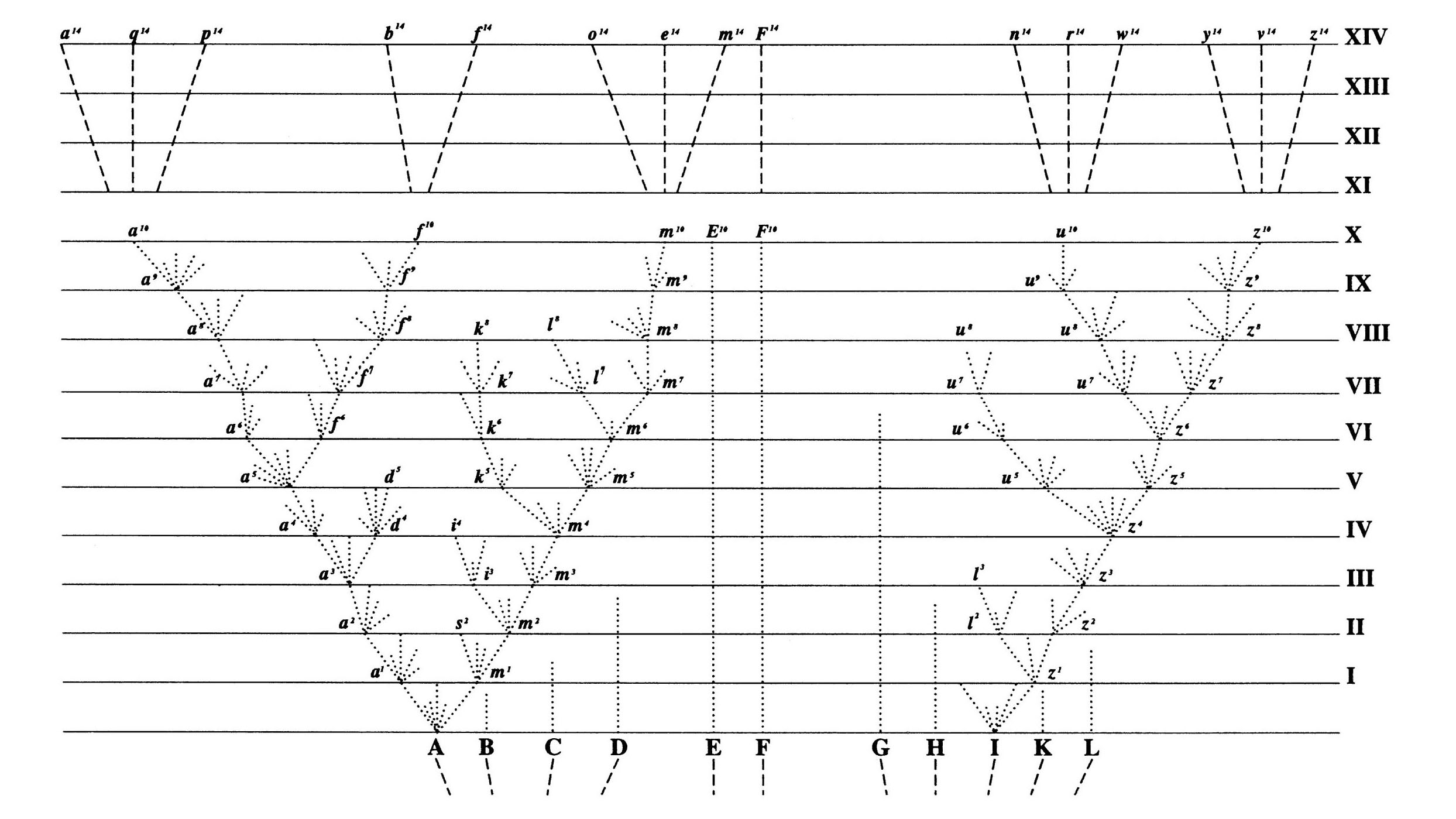
The chapter follows the development of cultural phylogenetics from Charles Darwin's observations on the parallels between biological and linguistic evolution, through the emergence of historical linguistics, to today's computational phylogenetic methods. It highlights their application in reconstructing the evolution of Indo-European languages, analysing the origins of the Little Red Riding Hood folktale, and studying the evolution of social organisation across human cultures.
Today, cultural phylogenetics is one of the fastest-growing areas of evolutionary anthropology. Beyond reconstructing cultural history, it helps researchers understand how cultural innovations emerged, how they spread among human populations, and how ecological and social factors have shaped different forms of social organisation.
Duda, P. (2026). Cultures as Species: Tree Thinking and the Phylogenetic Approach in Linguistics, Archaeology, and Anthropology. In J. Toman, J. Havlíček, T. Hermann, R. Kundt, & J. Švorcová (Eds.), Culture Evolving: Bridging Life Sciences and Humanities (pp. 325–350). Springer Nature.
The full publication is available on the Springer Nature website.


