
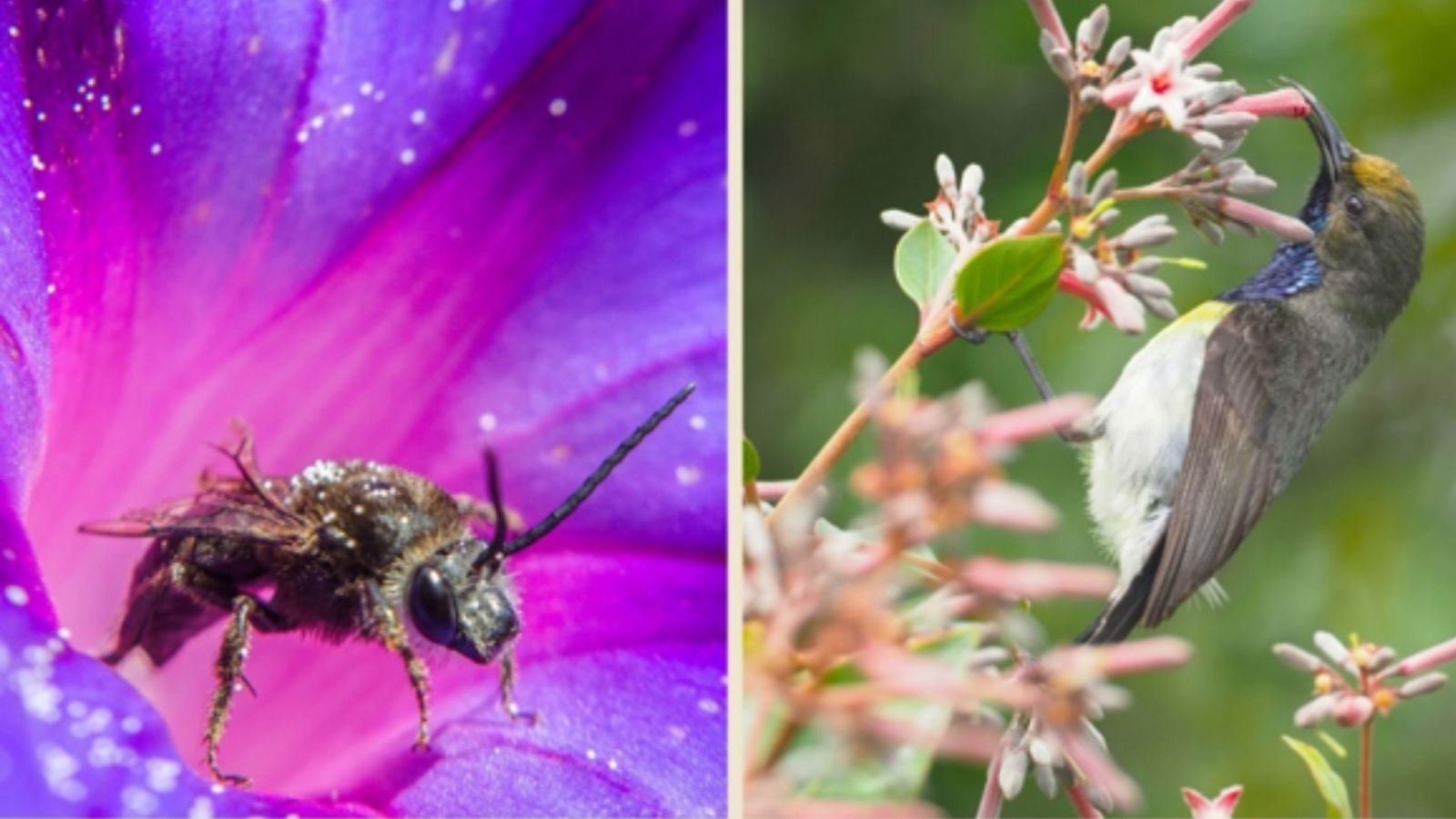
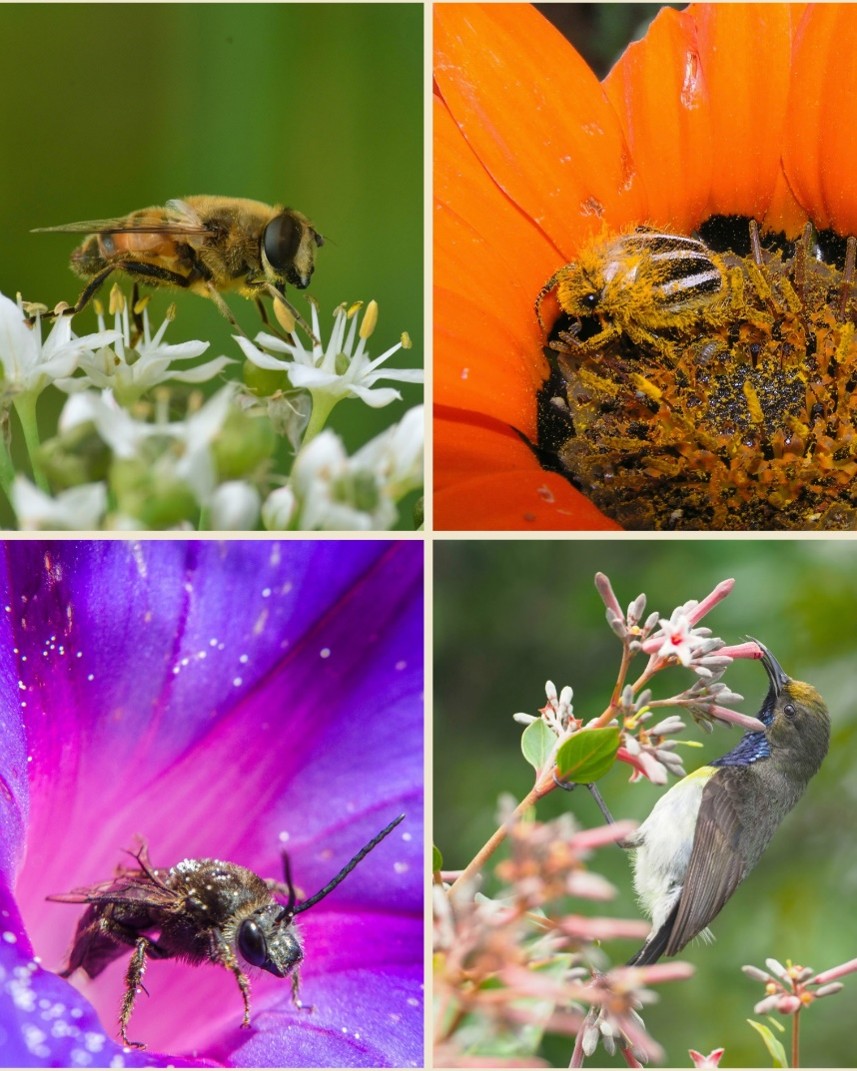
The study also involved Jana Jersáková from the Faculty of Science, University of South Bohemia in České Budějovice, who was the sole co-author representing the faculty of Science. The research was led by Sailee Sakhalkar and Robert Tropek from Charles University and the Biology Centre of the Czech Academy of Sciences.
The largest global analysis of plant-pollinator interactions has revealed that climate, rather than latitude, is the main force shaping pollination worldwide, challenging the long-standing expectation that pollination becomes increasingly specialized toward the tropics. The findings were published in Nature Ecology & Evolution.
Pollination is essential for plant reproduction, genetic diversity, and the production of fruits and seeds that support ecosystems and human food supplies. While some plants depend on specific pollinators, others are visited by a wide range of species. Ecologists have long assumed that specialized plant-pollinator relationships would be most common in tropical regions because of their high biodiversity. However, this hypothesis had never been rigorously tested at a global scale.
To address this question, researchers compiled 3,415 plant-pollinator networks from 162 studies worldwide. The dataset included more than 110,000 interactions among 5,343 pollinator species and 6,126 plant species across all major terrestrial biomes, including tropical forests, savannas, temperate forests, Mediterranean shrublands, meadows, and subarctic tundra.
The study brought together 142 researchers from 32 countries across six continents, and represented years of fieldwork around the world. “No single team could study pollination on this scale,” says Sakhalkar. “By combining the work of researchers from across the world, we could finally see both the global picture and the enormous variety within it.”
The results were surprising. Specialized interactions were not consistently more common in the tropics. Although specialization often peaked near the northern boundary between tropical and subtropical regions, different plant and pollinator groups showed distinct patterns. Instead of latitude, temperature and rainfall were found to be the best predictors of specialization, and their effects varied among pollinator groups. “Plants and pollinators do not experience latitude itself,” explains Tropek, who co-led the study. “They experience heat, cold, rain, and seasonal changes, each in their own way.”
The findings have important implications for understanding ecological responses to climate change. Rising temperatures and altered rainfall patterns may shift species distributions, flowering times, and pollinator activity, potentially disrupting established interactions. Such changes could also affect crop production, especially in systems that rely on specialized pollinators.
Researchers emphasize that different pollinator groups, such as bees, hoverflies, moths, and hummingbirds, may respond very differently to climatic conditions because of their distinct biology and behavior. As a result, climate change is unlikely to affect all pollination networks equally. Highly specialized communities may be particularly vulnerable, as the loss of even a single partner species can be difficult to compensate for, whereas more generalist species may be able to switch to alternative partners.
Reference: Sakhalkar et al. (2026) Global patterns in plant-pollinator specialization. Nature Ecology & Evolution. https://doi.org/10.1038/s41559-026-03170-7.
More information from the leading researchers:
- Dr. Sailee Sakhalkar, email:
This email address is being protected from spambots. You need JavaScript enabled to view it. - Assoc. Prof. Robert Tropek, email:
This email address is being protected from spambots. You need JavaScript enabled to view it.
Source: Charles University and the Biology Centre of the Czech Academy of Sciences; adapted for publication by the Faculty of Science, University of South Bohemia in České Budějovice.


