Přejít na hlavní obsah

Přírodovědecká fakulta JU

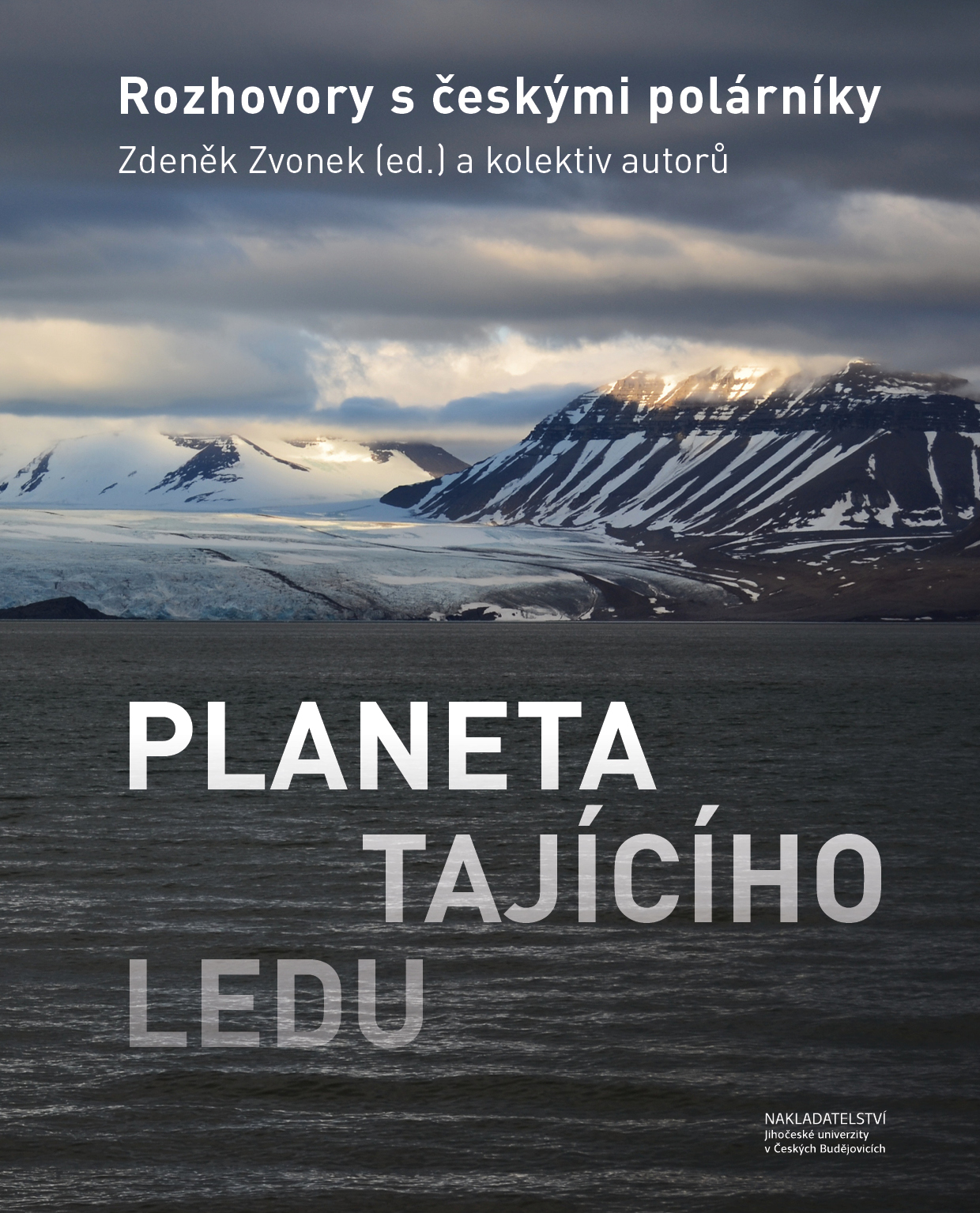
A book capturing the unique testimonies of Czech polar explorers has been published by USB Publishing House

  • Seznam štítků: Publikace
  • Galerie:
    • Galerie:
    • Galerie:
    • Galerie:
    • Galerie:
    • Galerie:

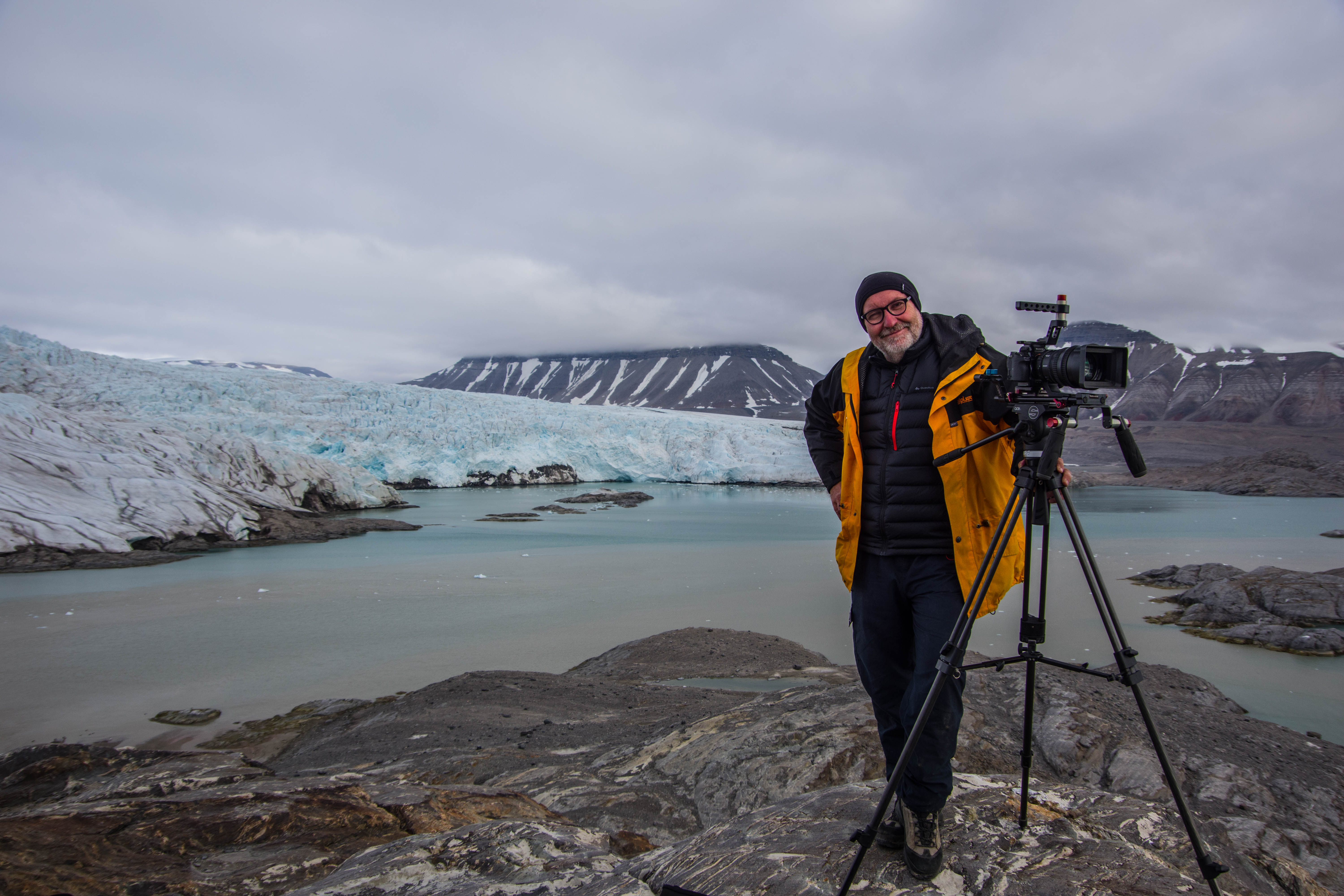
Seeing firsthand the changing landscapes of the polar regions, especially the Arctic. That is what the new book The Planet of Melting Ice: Interviews with Czech Polar Explorers describes. It was introduced to the world by documentary filmmaker and cameraman Zdeněk Zvonek. It contains a collection of 19 interviews with scientists, including graduates of the University of South Bohemia and individuals who currently work or have previously worked there and have long been active in the Arctic. Some of them for several decades—specifically Josef Elster, Oleg Ditrich, Jitka Klimešová, Miloslav Devetter, Jana Kvíderová, Jakub Žárský, Martin Hanáček, Michala Tůmová, Martin Lulák, Anna Stehrer Polášková, and others.

The author’s motivation was to clarify the issue of climate change, understand global processes, and see how scientists—from the most senior to the youngest—perceive them. The book offers not only authentic perspectives from Czech polar explorers but also reflections on the impacts of global climate change, on the behavior of modern society in terms of sustainability on Earth, and on the possibilities for remedying damage caused by human activity.

According to the author, one thread unites the book: the consensus among scientists that humanity and our civilization bear responsibility for current global changes. He also noted that, when it comes to the future, researchers differ—older scientists tend to be more pessimistic, while younger ones are more optimistic.

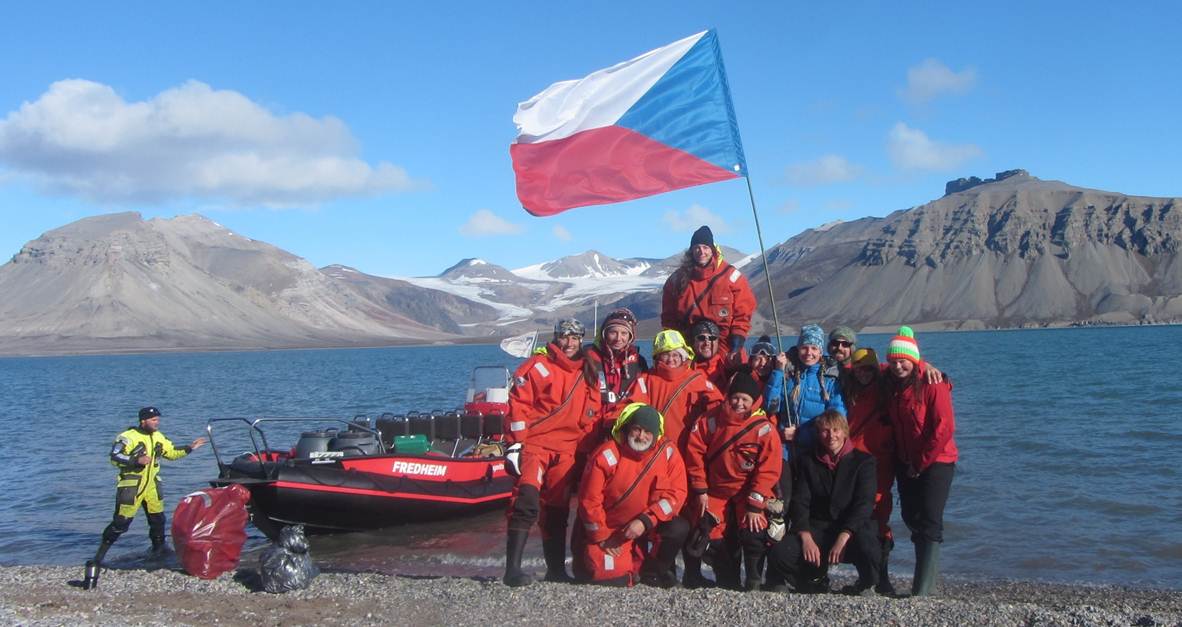
The book is accompanied by an extensive selection of photographs from both the Arctic and the Antarctic, capturing the natural environment, fieldwork under these conditions, and the changes these regions are undergoing.

The book is dedicated to the prominent Czech polar explorer Josef Svoboda (1929–2022), who conducted long-term studies of the Canadian Arctic. The Czech research station on Svalbard also bears his name.

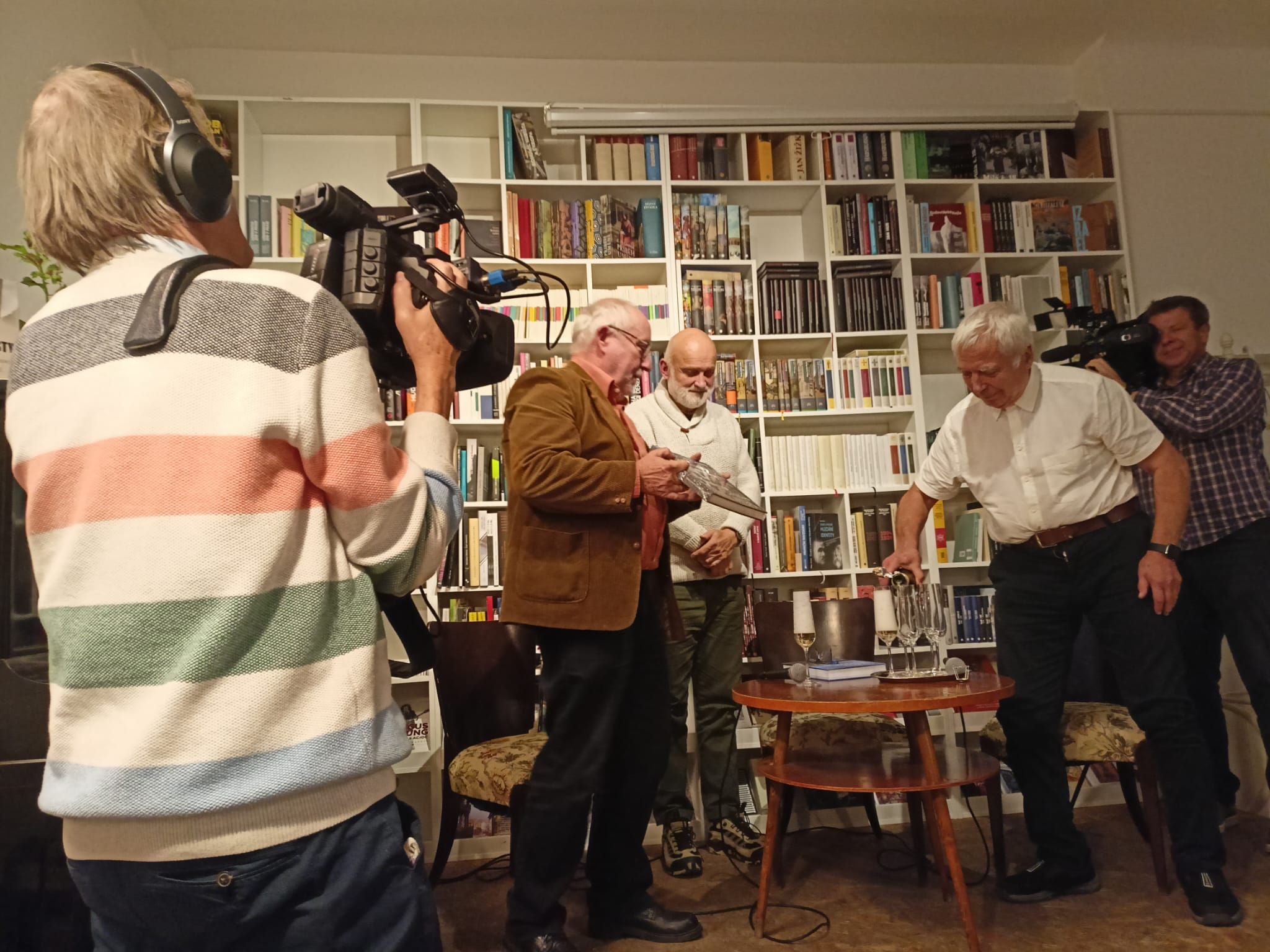
Czech Television covered the ceremonial launch of the new book by the University of South Bohemia Press in České Budějovice, airing a report about it on October 26, 2025, in the Věda 24 program. The report can be viewed here.

A student of the Faculty of Science will search for life on Mars

  • Seznam štítků: Tiskové zprávy
  • Galerie:
    • Galerie:
    • Galerie:
    • Galerie:
    • Galerie:
    • Galerie:
    • Galerie:

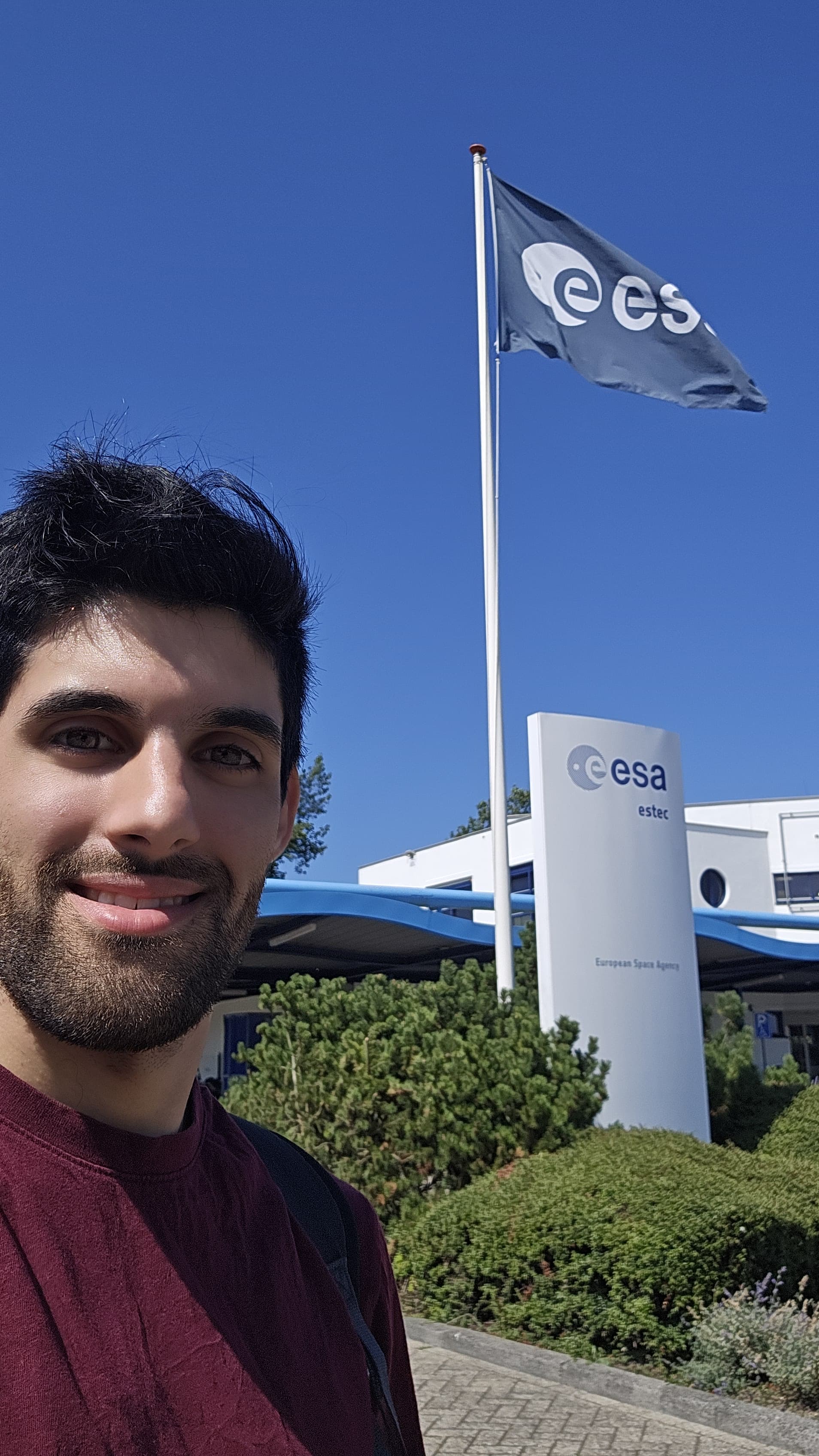
He is a student of the Biological Chemistry program at the Faculty of Science of the University of South Bohemia. As a researcher, he mainly focuses on mapping. He himself says that without participating in the Polar Ecology course at the Czech Arctic Research Station of the University of South Bohemia in Svalbard, he would never have made it into the European Space Agency (ESA) project. Argentinean Lucas Fernandez has already moved to the Netherlands, where he is starting his work on the ExoMars mission these days.

He submitted his application to the space project seven months ago. 383 applicants passed the initial ESA selection criteria. From this pool, Lucas Fernandez was selected for the team of researchers whose task will be to analyze images of the Red Planet sent to Earth by orbiting probes. The highlight of the mission is the launch of a rover named after the famous scientist Rosalind Franklin to Mars in 2028. Its task will be to search for signs of past or present life.

“My task in this mission will be to analyze surface data from Mars sent by probes, together with surface data obtained by NASA’s Curiosity and Perseverance rovers. The goal is to identify the most promising areas for searching for life and to evaluate potential hazards that the Rosalind Franklin rover might encounter,” explains Lucas Fernandez, who, from June 17, 2025, has access to all the necessary systems and data of the European Space Agency at its ESTEC (European Space Research and Technology Centre) headquarters near Amsterdam.

The international team working on the mission is huge. It includes geologists, mineralogists, IT experts, and technical engineers. Lucas Fernandez will be working on mapping the rover’s landing area with two other colleagues. They will also use images to determine what types of rocks and minerals are in the area. The Rosalind Franklin rover will be equipped with a drill capable of reaching up to two meters below the surface. Scientists are almost certain that, due to strong UV radiation, there is no life on the surface of Mars. However, using the rover, they want to investigate if something could survive just one meter below the surface of the Red Planet.

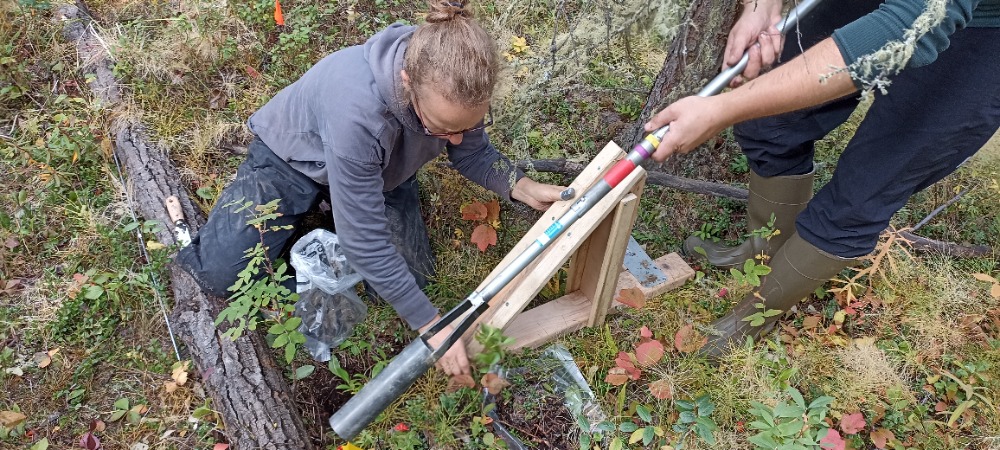
“Our team is basically divided into two groups. One part believes that life once existed on Mars, but not anymore, and the other – to which I belong – thinks that it is still there. This is because we have certain signals, but not enough evidence. We are scientists; we need strong proof. And that is exactly the goal of this mission. Essentially, to find life, whether it’s from the past or still present today,” adds Lucas Fernandez, who openly says that the course he took at the University of South Bohemia’s research station in Svalbard, in the group led by the head of the Centre for Polar Ecology, Jiří Bárta, significantly helped him get into the ESA program. For example, in polar conditions, they collected drill cores for subsequent analysis. This is exactly the kind of work the rover will be doing on Mars.

“Fieldwork in extreme conditions similar to those on Mars, combined with the analysis of satellite images, was exactly what the space agency was looking for. Not all universities have a Centre for Polar Ecology. Having it at the University of South Bohemia is a great privilege and a unique opportunity. There are a number of people here who are at least partially involved in astrobiology as well. And they work in areas that are actually quite similar to Mars,” describes Lucas Fernandez, outlining his path to international success in this prestigious project.

“The Centre for Polar Ecology has been studying organisms living in the extreme conditions of the Arctic for almost 20 years. Thanks to our research station, we have joined the network of international institutions offering this unique opportunity in the Czech Republic. As part of the ‘Polar Ecology’ course, the practical part of which takes place in Svalbard, we educate future experts in botany, zoology, and microbiology. During our polar expedition, I was Lucas’s mentor. His main role in the project was as a ‘data manager’ responsible for the precise collection of data. He designed and implemented an innovative approach, which, in my opinion, is the most significant contribution to his current work at ESA – he created a method for comparing field measurements with data from satellite images to determine the relationship between soil properties and the measurement of albedo - surface reflectivity,” explains Jiří Bárta, head of the Centre for Polar Ecology at the Faculty of Science, University of South Bohemia in České Budějovice.

Work on the Rosalind Franklin rover, which is due to head to Mars in 2028, is being completed by the ESA international team and should be finished this year. The rover will be launched to the Red Planet by a rocket, most likely built by a private investor. A landing module is also under construction.

Česká arktická výzkumná stanice s Centrem polární ekologie PřF JU funguje již 10 let!

  • Seznam štítků: PŘF

Česká arktická výzkumná stanice s Centrem polární ekologie PřF JU funguje již 10 let!

Počátky výzkumu polárních oblastí na PřF JU začaly v roce 2007 expedicí na souostroví Svalbard pod vedením pozdějšího zakladatele a vedoucího CPE prof. Josefa Elstera. V roce 2011 na Svalbardu proběhl první Kurzu polární ekologie. Kurzů již proběhlo 9 a celkem se jich zúčastnilo 168 studentů nejen Jihočeské univerzity, ale také Univerzity Karlovy v Praze, Masarykovy univerzity v Brně nebo Univerzity Palackého v Olomouci. V pořadí 10. kurz bude zahájen začátkem července 2024. Zájem studentů o výzkum polárních oblastí potvrzuje i zhruba 40 bakalářských, diplomových či disertačních prací s polární tématikou, úspěšně obhájených na PřF JU.

Centrum polární ekologie uspořádalo 4 ročníky konference Polar Ecology (20122014, 2016 a 2020), v roce 2017 zorganizovali Týdenní summit arktické vědy a od roku 2018 se účastní vědecko-kulturního Arktického festivalu.

Od roku 2014 na Svalbardu funguje Česká arktická výzkumná stanice, logisticko-technické pracoviště Přírodovědecké fakulty JU zajišťující provoz výzkumné infrastruktury, jediné svého druhu v Longyearbyenu. Za chodem stanice stojí tým 4 stálých zaměstnanců a 10-12 sezónních pracovníků, který zajišťuje téměř celoroční provoz stanice.

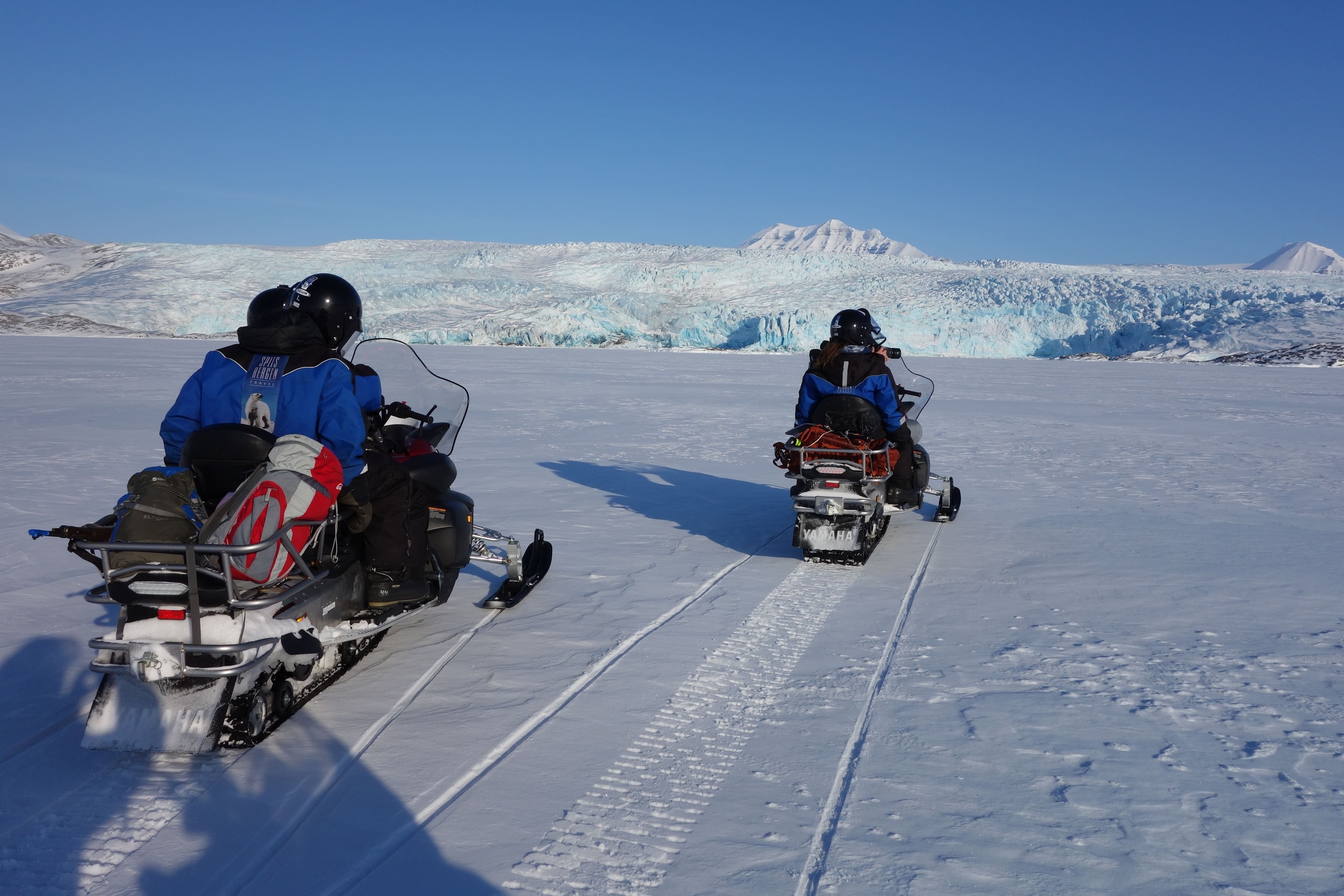
Stanici tvoří hlavní základna Payerův dům v Longyearbyen, který je plně vybavený od kuchyňky až po plnohodnotné laboratoře, terénní stanice Nostoc, která se nachází poblíž opuštěného města Pyramid a dále výzkumná loď Clione, sněžné skútry a čluny.

Stanice se zapojila do mezinárodní vědecké infrastruktury a za dobu své existence poskytla zázemí desítkám vědců z celého světa.

  • 204 českých vědců a studentů (JU, ČZU, MUNI, UK, AVČR, UPOL)
  • 361 zahraničních vědců a studentů z 21 zemí světa

Podrobněji o historii, vědě a výzkumu i současnosti se můžete dočíst v zajímavé Vysokoškolské učebnici POLÁRNÍ EKOLOGIE SVALBARDU (Josef Elster, Oleg Ditrich (eds.) a kolektiv autorů)

Děkujeme všem, kteří se podíleli a podílejí na chodu polární stanice a na vědeckém úspěchu Centra polární ekologie.

Autoři: Blanka Bodnárová (CPE), Marek Brož (CARS)

Foto: Archiv CPE a CARS, Jan Kavan

Česko vstupuje do International Permafrost Association díky vědcům z PřF JU

  • Seznam štítků: PŘF
  • Galerie:
    • Galerie:
    • Galerie:
    • Galerie:
    • Galerie:

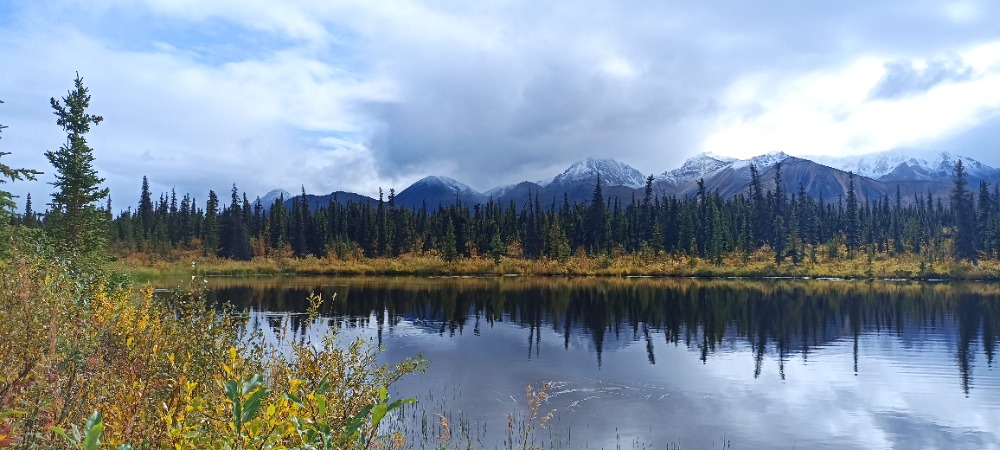
Český výzkum v oblasti permafrostu pokrývá širokou škálu témat, včetně dlouhodobého sledování teplotních režimů aktivních vrstev permafrostu, mikrobiologie, periglaciální geomorfologie a ekologie. Masarykova univerzita v Brně a Jihočeská univerzita v Českých Budějovicích provozují výzkumné stanice na ostrově Jamese Rosse v Antarktidě a na Špicberkách, což poskytuje jedinečnou příležitost pro dlouhodobý výzkum a vzdělávání dalších generací studentů. Čeští vědci se navíc podílejí na projektech souvisejících s permafrostem na Aljašce, v Kanadě, na Sibiři a v Grónsku.

Žádost České republiky o vstup do IPA (International Permafrost Association) podal v roce 2024 Filip Hrbáček (Masarykova univerzita), který se také stane novým zástupcem České republiky v Radě IPA. Žádost podal za podpory skupiny šesti vědců – Michaely Kňažkové (Masarykova univerzita), Jany Voříškové (Mikrobiologický ústav AV ČR), Jiřího Bárty a Jana Kavana (Jihočeská univerzita), Tomáše Uxy (Geofyzikální ústav AV ČR) a Zbyňka Engela (Univerzita Karlova). Žádost byla schválena Radou IPA a členství bude zahájeno v roce 2025.

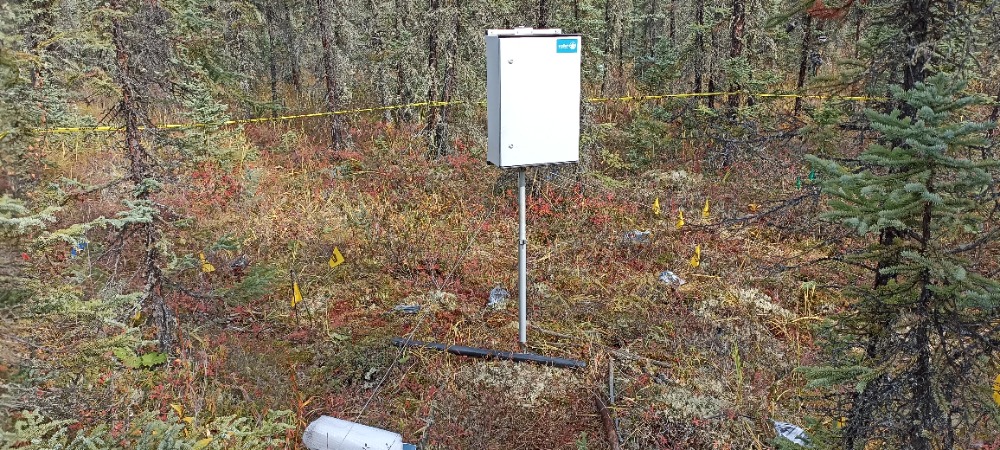
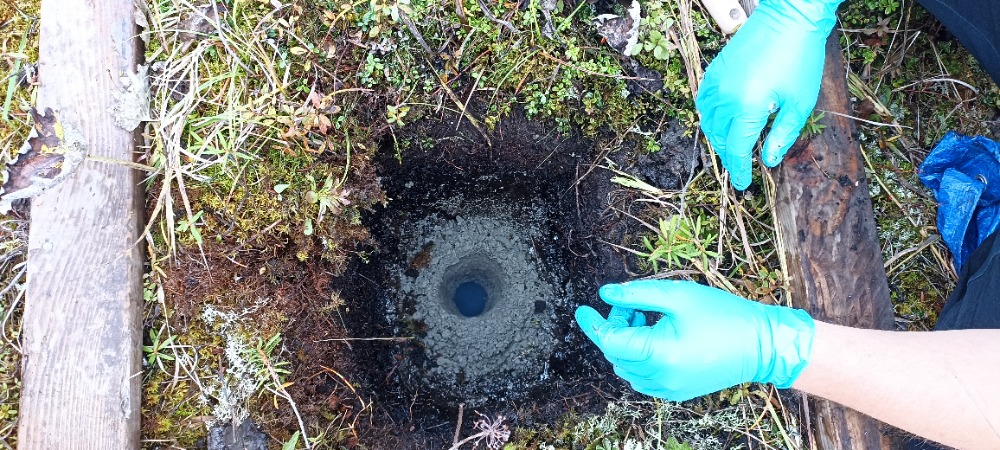
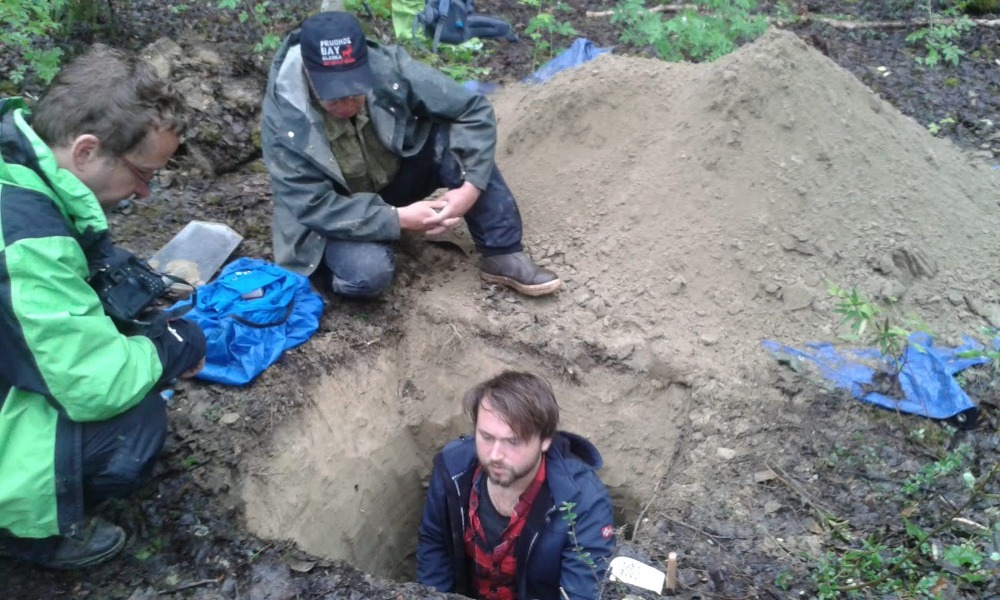
Centrum polární ekologie Přírodovědecké fakulty JU se zapojuje do výzkumu permafrostu svým dlouhodobým monitoringem fyzikálně-chemické aktivní vrstvy permafrostu (měření teploty a vlhkosti půdy) na 10 dlouhodobě měřících meteorologických stanicích v okolí terénní základny Jihočeské univerzity v lokalitě Petuniabukta na Svalbardu. Od roku 2021 jsme tato měření doplnily díky mezinárodnímu projektu o 3 lokality na Aljašce ve spolupráci s Geofyzikálním ústavem, Univerzity of Alaska, Fairbanks. Měření vědci z CPE doplňují o biochemické a genetické analýzy mikrobiálních společenstev žijící v permafrostu pomocí pokročilých analýz DNA.

New IPA member: Czechia - International Permafrost Association

Co se děje pod povrchem: celoroční sledování permafrostních půd na Aljašce

  • Seznam štítků: PŘF
  • Galerie:
    • Galerie:
    • Galerie:
    • Galerie:
    • Galerie:
    • Galerie:
    • Galerie:

Shrnutí dvou publikací Jiřího Bárty v prestižním časopise Communications Earth & Environment

Ve studiiz oblasti Fairbanks (Aljaška) jsme po dobu více než tří let nepřetržitě sledovali tzv. redox potenciál půdy – veličinu, která zásadně ovlivňuje rozklad organické hmoty a tvorbu skleníkových plynů jako je oxid uhličitý a metan.

Zjistili jsme, že:

  • půdní podmínky se výrazně mění během roku,
  • v létě a na podzim převažují redukční podmínky (příznivější pro tvorbu metanu), v zimě a na jaře spíše oxidační (příznivější pro spotřebu metanu),
  • podmínky vhodné pro tvorbu metanu se během sledovaného období prakticky nevyskytly.

Výsledky ukazují, že pokud chceme správně odhadnout chování arktických ekosystémů, nestačí měřit jen v létě: rozhodující procesy probíhají po celý rok a je třeba dlouhodobý, kontinuální monitoring.


Ve druhé studii jsme analyzovali více než 600 vzorků z neporušených permafrostních půd z celého pan-arktického regionu (Aljaška, Sibiř, Kanada, Grónsko). Zaměřili jsme se na mikroorganismy, které řídí koloběh metanu: metanogeny – produkují metan, metanotrofy – metan spotřebovávají.

Výsledky byly překvapivé:

  • v celé Arktidě jsme nalezli pouze 22 typů metanogenů a 26 typů metanotrofů,
  • jejich zastoupení se výrazně lišilo mezi lokalitami i mezi jednotlivými vrstvami půdy,
  • pouze čtyři typy metanogenů se vyskytovaly na všech zkoumaných místech.

Zcela zásadním zjištěním bylo, že „metanový filtr“ v permafrostních půdách je téměř výhradně tvořen několika málo dominantními druhy obligátních metanotrofů, příbuzných rodu Methylobacter. Právě tyto mikroorganismy zachycují a rozkládají metan ještě dříve, než se dostane do atmosféry.

Zároveň jsme zjistili, že při degradaci permafrostu a vysychání půdy se situace může dramaticky změnit. Případová studie z Aljašky ukázala, že v sušších podmínkách začínají převládat jiné druhy metanotrofů, příbuzné rodu Methylocapsa, které jsou schopné spotřebovávat dokonce i velmi nízké koncentrace metanu přímo z atmosféry.

V některých scénářích by tak arktické půdy mohly zůstat významným zdrojem metanu, jinde by se naopak mohly stát jeho částečným pohlcovačem.

Naše studie proto identifikovala jako první malou skupinu klíčových „mikrobiálních hráčů“, kteří mohou v příštích desetiletích významně ovlivnit rychlost klimatických změn.


Více informací se můžete dozvědět ve zmíněných studiích:

Liebmann, P., Vogel, C., Kholodov, A. et al. Perennial redox potential dynamics in Alaskan degraded and non-degraded permafrost soils. Commun Earth Environ (2025). https://doi.org/10.1038/s43247-025-03143-x

Wang, H., Lindemann, E., Liebmann, P. et al. Methane-cycling microbiomes in soils of the pan-Arctic and their response to permafrost degradation. Commun Earth Environ 6, 748 (2025). https://doi.org/10.1038/s43247-025-02765-5

Conference on cybersecurity at USB presented real incidents, their solutions, and protection options

  • Seznam štítků: PŘF

October is the European Cybersecurity Month. The National Cyber and Information Security Agency regularly organizes the "Safe Internet Festival," which offers a series of events aimed at raising awareness about security in the online space. A two-day conference was held at the Faculty of Science of the University of South Bohemia in České Budějovice in cooperation with CZ.NIC. The event was intended primarily for students and the public, and its goal was to present a wide spectrum of topics from the field of cybersecurity – from real incidents and their consequences and lessons learned through technological solutions to demonstrations of digital protection. The opening speech was delivered by the Vice-Rector for Science and Research of the University of South Bohemia, Assoc. Prof. Ing. Luděk Berec, Dr., who emphasized the importance of education in the field of security in the digital space.

One of the opening sessions was an analysis of a security incident that took place in 2024 in Helsinki, Finland. Matias Mesiä from Traficom provided a detailed breakdown of the course of the attack, its impacts on infrastructure, and the subsequent measures that were taken. Attention was also drawn to the current trend of exploited vulnerabilities with a comparison of Finland and the Czech Republic, where the values and trends were almost identical.

The next part of the program was devoted to various types of cyber incidents, their solutions, and lessons learned from practice. Participants became familiar with examples of attacks, methods of incident response, and procedures that lead to effective management of crisis situations. There was also discussion about how organizations analyze incidents, what tools they use, and how to learn from them for the future.

The block dedicated to CZ.NIC focused on several topics. First, Věra Mikušová spoke, introducing students to the functioning of CSIRT teams in the Czech Republic, the European Union, and worldwide, their role in incident response, and methods of international cooperation. Subsequently, Oto Stefan presented the functioning of the domain registry in the Czech Republic, the FRED system, and the principles of DNS management. Participants learned how the FRED system works, who uses it worldwide, and how it is technologically secured. Finally, Jaromír Talíř demonstrated the topic of secure digital identities that can be used for protection in cyberspace. Both individual globally used technologies and standards were presented, as well as the development of solutions in the Czech Republic and future EU plans in this area.

The National Cyber and Information Security Agency also presented several topics. First, Jakub Maděránek described the course of an attack – from phishing through compromise to negotiations with ransomware groups. He showed how these groups become almost "companies" that deal not only with the technical aspects of attacks but also with "customer satisfaction" – that is, of victims. Furthermore, Jakub Onderka presented a block on post-quantum cryptography, which offered insight into the current issues of today's cipher standards and emerging post-quantum algorithms that many of us are already using without realizing it. At the end of the day, Lenka Ondrysková presented the NÚKIB web portal and its gradual transformation over the years, including the collection of user feedback and its use for further development.

The second day of the conference was opened by four employees of ČEZ a.s. Participants were introduced to the functioning of their Integrated Security Center (iSOC), which combines classic security operations center (SOC) monitoring with elements of physical security, including access control systems for critical and regular sections of ČEZ buildings, technical and organizational measures, as well as alarm systems, sensors, and other elements of physical protection. All this information is handled by iSOC employees in the C4 Enterprise system, which serves as a central platform for managing security processes and integrating various technologies within ČEZ's security ecosystem.

The next block was devoted to Pavel Gistinger from the Police of the Czech Republic, specifically from NCTEKK. He presented procedures for how the police uncover internet fraudsters. He focused on cases where attackers target less technically or financially literate individuals through fraudulent advertisements and ads, often with investment themes. Participants thus gained an overview of how investigations of these cases proceed, how interventions against international fraudsters are carried out, and what techniques NCTEKK uses.

Participants also learned about the course of a ransomware attack, the method of communication with attackers, and how the functioning of an entire company changes after such an attack. The speaker shared practical experience showing what a fundamental impact a cyber attack can have on internal processes, corporate culture, and the organization's security policy. During the presentation, a motto was mentioned that every company should follow in the field of cybersecurity: "Don't ask if, but when."

The final block of the second day belonged to experts from CESNET, who presented a number of their services and open-source tools. Pavel Kácha first described the history of the development of network traffic collection and security data at CESNET and currently used technologies such as MENTAT, FTAS, NERD, PassiveDNS, WARDEN, and many others. Martin Šebela subsequently presented the Phishingator service, including demonstrations of practice phishing campaigns, sending fraudulent emails, and testing results. The goal of the Phishingator service is to teach users that phishing can come in any form, which some at the University of South Bohemia have already practically experienced. Jakub Judiny then showed how CESNET reduces the number of reports and thus the burden on incident handlers through aggregation, sorting, thresholding, and filtering of events in the MENTAT service, which is also used by the University of South Bohemia. Jaroslav Svoboda presented to participants methods of scanning servers and websites using SNER and AUROR services, including the use of TARANIS-NG from the Slovak CERT team. All data from these services subsequently goes into the WARDEN system, from which MENTAT creates comprehensive reports. Finally, Pavel Kácha showed how CESNET uses and provides to others the HUGO honeypot service for detecting anomalies and attackers in computer networks.

Czech Republic joins the International Permafrost Association thanks to scientists from the Faculty of Science

  • Seznam štítků: PŘF
  • Galerie:
    • Galerie:
    • Galerie:
    • Galerie:
    • Galerie:

Czech permafrost research activities cover a wide range of research topics, including long-termmonitoring of active layer and permafrost thermal regimes, periglacial geomorphology microbiology, and the ecology of the periglacial domain. Notably, Masaryk University in Brno and the University of South Bohemia in České Budějovice operate research stations in James Ross Island, Antarctica, and Svalbard, respectively, providing a unique opportunity for long-term research and education of new generations of students. Moreover, Czech scientists are involved in permafrost-related projects in Alaska, Canada, Siberia, and Greenland.

The application of Czech Republic to join IPA was submitted in 2024 by Filip Hrbáček (Masaryk University), who will serve as a new representative of the Czech Republic in the IPA council. Dr. Hrbáček’s application was supported by a group of six scientists – Michaela Kňažková (Masaryk University), Jana Voříšková (Institute of Microbiology, CAS), Jiří Bárta and Jan Kavan (University of South Bohemia), Tomáš Uxa (Institute of Geophysics, CAS), Zbyněk Engel (Charles University). The application was approved by the IPA Council and the membership will start in 2025.

Centre for Polar Ecology is involved in permafrost research through its long-term monitoring of the physico-chemical active layer of permafrost (temperature and soil moisture measurements) at 10 long-term meteorological stations around the University of South Bohemia field base at Petuniabukta, Svalbard. Since 2021 we have added 3 sites in Alaska thanks to an international project in cooperation with the Geophysical Institute, University of Alaska, Fairbanks. CPE scientists are complementing the measurements with biochemical and genetic analyses of permafrost-resident microbial communities using advanced DNA analyses.

New IPA member: Czechia - International Permafrost Association


Extrémní vlny vzniklé telením ledovce významně transformují pobřežní oblasti Grónska

  • Seznam štítků: Objevy

Analýza historických fotografií a mapových podkladů od roku 1929 odhalila výraznou transformaci pobřežní zóny v těsném sousedství grónského ledovce Eqip Sermia. Odlamování ker z čela ledovce (tzv. telení) způsobuje masivní vlny – často označované jako pseudo-tsunami. Čelo ledovce má v současné době průměrně 200 m na výšku. Vlny vzniklé odlomením části tohoto čela mohou při nárazu na břeh dosahovat až 12m výšky a mají značnou kinetickou energii. V posledních dvou dekádách dochází k významnému nárůstu intenzity telení a tím i zrychlené transformaci pobřeží. Je to přímým důsledkem zrychlení pohybu ledovce (až 20 m/den) a zrychleného přísunu hmoty ledu z akumulační části Grónského ledovcového štítu. 


Vzniklé vlny nejvíce působí ve dvou lokalitách, které jsou díky složení materiálu (nezpevněný sediment) nejvíce náchylné. Je to především bývalá boční moréna v levé části ledovcového čela, která se vlivem vln transformovala a progradovala rychlostí ca 1 m/rok a postupně uzavřela původní mořský záliv. 


Druhou lokalitou je sedimentární klif ca 4 km proti současnému čelu ledovce. Na něj dopadají vlny v podstatě přímo bez předchozí transformace v příbřežní části. Za posledních ca 40 let klif ustupoval v průměru 0.53 m/rok. Během terénního výzkumu (8. srpna 2023) byla zaznamenána jedna z těchto vln, která se přelila přes pláž a dosáhla do výše 5.5m na stěně klifu. Díky detailnímu mapování území s dronem před a těsně po události bylo možné kvantifikovat impakt takovéto vlny. Na pláži přilehlé ke klifu jsme identifikovali jednotlivé horninové bloky o průměrné velikosti 1.2 m2 (kolmý průmět na ortofotografii), které byly transportovány průměrně na vzdálenost 1.4 m. Největší zaznamenaná vzdálenost transportu byla 3.2 m u bloku s průměrem 1.39 m. Jde vůbec o první publikovaný příklad kvantifikace erozních následků těchto extrémních vln vzniklých telením ledovce. 


Extrémní vlny spojené s ledovcovou činností mají značnou erozní sílu a potenciál významně transformovat pobřežní oblasti, které jsou často důležité díky umístění dopravní infrastruktury a sídel. Se současnou akcelerací pohybu ledovců v okrajových částech Grónského ledovcového štítu (a navazující akcelerací telení) lze očekávat i zvýšenou intenzitu zdokumentovaných procesů.


Na studii vedené kolegy z Univerzity ve Wroclawi (Alfred Jahn Cold Regions Research Centre) spolupracovali Jan Kavan (Centrum Polární Ekologie) a Milan Novák (Katedra Informatiky) z Jihočeské univerzity. Podíleli se na terénním mapování, zpracování dronových dat a jejich interpretaci.

Oskar Kostrzewa, Małgorzata Szczypińska, Jan Kavan, Krzysztof Senderak, Milan Novák, Mateusz C. Strzelecki (2024): A Boulder Beach Formed by Waves From a Calving Glacier Revisited: Multidecadal Tsunami–Controlled Coastal Changes in Front of Eqip Sermia, West Greenland. Permafrost and Periglacial Processes. https://doi.org/10.1002/ppp.2235 

Kontakt: Mgr. Jan Kavan, Ph.D. (Tato e-mailová adresa je chráněna před spamboty. Pro její zobrazení musíte mít povolen Javascript.)

Obr. 1: Bývalá boční moréna transformovaná extrémními vlnami do současné podoby kosy; vlevo fjord a čelo ledovce Eqip Sermia, vpravo uzavřená laguna (foto Jan Kavan)

Obr. 2: Ledovec Eqip Sermia na západním pobřeží Grónska; vpravo pak vývoj čela ledovce od roku 1959, žluté rámečky v panelu E označují studovanou morénu (M) a pláž (B)

Obr. 3: Čelo ledovce Eqip Sermia a výrazná "ice-mélange" vzniklá častým telením ledovce (foto Jan Kavan)

Feathered cowards: why some birds are afraid of the unknown

  • Seznam štítků: Důležitá sdělení

The largest scientific study to date focusing on neophobia, or the fear of new and unknown things, has revealed why some bird species are more afraid than others. Research with a Czech footprint shows that dietary demands and migratory behavior play key roles. Neophobia determines how animals balance risk and new opportunities. Caution can protect them from danger, but at the same time, it makes rapid adaptation to new nesting opportunities, food sources, or environmental changes more difficult.

This unique global study involving many bird species, published in the prestigious journal PLOS Biology, was led by Rachael Miller of Anglia Ruskin University and the University of Cambridge, together with a team from the international scientific project ManyBirds. The research included 129 collaborators from 82 institutions, including several Czech scientists from the Faculty of Science at the University of South Bohemia in České Budějovice. Experiments were conducted in 24 countries across six continents—in laboratories, in the field, and in zoos—to investigate why some birds are more cautious than others when presented with unfamiliar objects during feeding.

Birds were offered familiar food alongside a novel object composed of color combinations and textures not found in nature. The scientists then measured the time it took for the birds to touch the familiar food, interpreting greater hesitation in the presence of the novel object as neophobia.

Overall, the study found that among all 1,439 tested birds across 136 species—representing 25 taxonomic orders from penguins to parrots—two ecological factors strongly influenced neophobia: dietary specialization and migratory behavior. Species with greater dietary specialization are less accustomed to changes in their environment and therefore may perceive such changes as greater threats. Migratory birds more frequently visit new environments and encounter unfamiliar, sometimes risky, objects. For them, neophobia may be evolutionarily advantageous. The highest levels of neophobia were observed in grebes and flamingos, whereas falcons and pheasants were among the least neophobic species, approaching food quickly.

“We contributed to the study with experiments on the great tit and the red-backed shrike. We tested the tits in a laboratory trial cage and always returned them to the wild after the experiment. In contrast, we observed the shrikes directly at their nesting sites in the Doupov Mountains. The study is truly exceptional in that it allows, for the first time, the comparison of reactions across such a large number of bird species worldwide,” described Ondřej Fišer, one of the Czech scientists and co-author of the study from the Faculty of Science at the University of South Bohemia in České Budějovice.

“Neophobia has its advantages and disadvantages. It protects individuals from potential risks but can also limit their chances to exploit new resources, such as unfamiliar food or new nesting sites. Neophobia plays an important role in assessing how species might respond to changes. Species that are more wary of unfamiliar objects or situations may struggle to adapt to new challenges such as climate change or urbanization, whereas species with lower neophobia may be more flexible or resilient. Our study also highlights the power of large scientific teams. Through the ManyBirds project, we were able to gather data and expertise from around the world, which helped us uncover new rules shaping animal behavior on an evolutionary scale,” added Rachael Miller, the lead scientist.

The ManyBirds project was founded by Rachael Miller and Megan Lambert in February 2021. “Our findings have important implications, especially for species undergoing environmental changes or being reintroduced to the wild from captive‐breeding programs. By better understanding this behavior, conservationists can tailor strategies to improve the survival chances of endangered species,” explained Megan Lambert of the University of Veterinary Medicine Vienna.

Link to the open‐access study: https://doi.org/10.1371/journal.pbio.3003394

Photo: Jan Čapek, Jimena Lois-Milevicich

Video capturing a female red‐backed shrike (Lanius collurio) during the novel‐object experiment in the field in the Doupov Mountains. The presented food was a mealworm larva. Author: Mgr. Ondřej Fišer, Ph.D.
https://drive.google.com/file/d/1N5IXT4ykmylzURn3gvVCBBI6D5knjlYZ/view?usp=drive_link

Forest encroachment in Mediterranean Europe threatens unique fauna of moths

  • Seznam štítků: Důležitá sdělení

For most visitors, the Mediterranean is a symbol of summer and sun-scorched landscapes. In reality, however, it harbors one of the world’s greatest natural treasures. It is home to tens of thousands of plant and animal species, many of which occur nowhere else on Earth. And although it is often believed that the original Mediterranean landscape was covered with dense forests, a new, exceptionally large-scale study by entomologists from the Biology Centre of the Czech Academy of Sciences (BC CAS) and the University of South Bohemia (USB) shows the opposite: the true Mediterranean jewels are found in open, mosaic-like landscapes shaped for millennia by both people and animals. If these places become overgrown by new forests or occupied by buildings, hundreds of unique species will disappear with them.

The Mediterranean belongs among the global biodiversity hotspots - it hosts about 30,000 species of vascular plants, including 13,000 so-called endemics that are found nowhere else in the world (for comparison, the Czech Republic hosts about 3,000 vascular plants, 50 of them endemic). The Mediterranean Basin also represents a craddle of human civilisation, affected by humans since ancient times. It is still disputed, how would the Mediterranean habitats would look without human influence, and how to efficiently conserve them.

“Originally, the habitats of Mediterranean endemics had not been maintained by ancient farmers, but by large herbivorous mammals, as elsewhere in the world,” says Martin Konvička from the Institute of Entomology, BC CAS, and the Faculty of Science, USB. “Shortly after their extripation, Mediterranean habitats – essentially open savannas – were maintained by pastoralists and farmers, and this continued until the modern era,” he explains.
The question of the original Mediterranean landscape already intrigued the ancient Greek philosopher Plato, who believed that the pristine state of the region was covered with woodlands – an assumption that has persisted to this day. It continues to affect environmental policy, protected areas design, and even placements of new major investments, including renewable energy projects. However, naturalists often disagree, arguing that unique Mediterranean flora, as well as birds, reptiles, small mammals or butterflies mainly depend on open, non-forested habitats. These are now disappearing in alarming rate as local people move to cities, traditional land use declines, and the landscape becomes overgrown with new woodland.

A team of scientists and students from the Institute of Entomology, BC CAS, and the Faculty of Science, USB, led by Martin Konvička and Jana Šlancarová Lipárová, sought to answer this long-standing question. In their extraordinarily extensive research, recently published in the journal Biological Conservation, they focused on a remarkably diverse group of macro-moths – a group seven times richer in species than butterflies in Europe. The research was conducted in an area between southernmost tip of mainland Greece, Bulgaria, and North Macedonia, covering 150 sites that differed in the degree of forest encroachment: grazed grasslands, sparse shrublands, and dense forests. Over two years, the researchers visited each site five times, collecting exactly 42,136 individual moths belonging to 641 species. The first author of the study, Michal Zapletal, spent almost six years processing this material.

The study revealed that all three landscape types – grazed grasslands, sparse shrublands, and closed forests – hosted a similar number of species, but their composition differed significantly. “Moths inhabiting small Mediterranean ranges prevail at the sparse shrublands and grasslands, while closed forests were inhabited mainly by species characteristic for Central Europe, whose ranges extend far to the north and east,” says Jana Šlancarová Lipárová. She adds that moths typical of the Mediterranean Basin depend on open habitats, maintained for millennia through traditional land use practices. 
“The current southern Europe is undergoing climatic cooling, as it is succumbing to woodlands and the unique southern species are being replaced by widely distributed species from more northern latitudes,“ emphasizes Martin Konvička. Well-intended environmental policies are not helping, either. „All across southern Europe, we are witnessing a boom of solar and wind power plants, often located to the most valuable open sites,“ notes Alena Bartoňová, another co-author of the study. To preserve the unique biodiversity of the Mediterranean, it is essential to protect and maintain traditionally managed open landscapes – grazed grasslands and sparse shrublands – which have, for thousands of years, created and supported the life of this extraordinary region.


Foto (archiv of Jana Lipárová, BC AV ČR)

Kontakt: 

Doc. Mgr. Martin Konvička, Ph.D., Head of the Temperate Biodiversity Laboratory, tel. 775 131 354, e-mail: Tato e-mailová adresa je chráněna před spamboty. Pro její zobrazení musíte mít povolen Javascript.   

Mgr. Daniela Procházková, PR Manager, Biology Centre CAS, tel. 387 775 064, 778 468 552, e-mail: Tato e-mailová adresa je chráněna před spamboty. Pro její zobrazení musíte mít povolen Javascript.


Genomic Study Uncovers How Marine Algae Thrive from the Tropics to Polar Seas

Phaeocystales, a group of bloom-forming marine algae, are gaining attention for their global reach and surprising adaptability. Found from the icy waters of the Southern Ocean to tropical seas, these nanoplankton can make up nearly 10% of the ocean’s plankton biomass. They drift as single cells or join forces into vast, jelly-like colonies that can stretch for hundreds of square kilometres – sometimes large enough to be seen from space.

When Phaeocystis forms blooms, its cells secrete a sticky, mucus-like matrix that floats just below the surface and can generate foamy layers along coastlines. These smelly, gelatinous blooms have disrupted tourism and clogged fishing nets and aquaculture equipment from the North Sea to the Mediterranean, with single events costing tens of millions of dollars. Yet, these same organisms play vital ecological roles: their flexibility allows them to thrive where other plankton cannot, from dim, nutrient-poor waters to frigid polar seas. They are also key players in the cycling of carbon and sulphur, helping regulate Earth’s climate by producing dimethyl sulphide (DMS) – a compound that influences cloud formation and atmospheric cooling.

Now, a team led by Andrew Allen, Ph.D. (J. Craig Venter Institute and Scripps Institution of Oceanography) and Mgr. Zoltán Füssy, Ph.D. (University of South Bohemia) has decoded the genetic secrets behind Phaeocystis’ success. Their study, published in Nature Communications, provides the most comprehensive genomic insight into the group to date.

By sequencing 13 strains of Phaeocystales, including high-quality reference genomes for three species, the researchers uncovered how these algae adapt to a wide range of conditions. The genomes reveal signs of mixotrophy – using both dissolved nutrients and live prey for nutrition – as well as adaptations to iron and vitamin B12 scarcity in polar regions. The team also found evidence of horizontal gene transfer and viral DNA insertions, showing that Phaeocystis evolution has been shaped by interactions with other marine microbes and viruses. Together, these discoveries highlight Phaeocystis as a remarkably versatile and influential group of algae – one whose genetic complexity and ecological reach make it a key piece in understanding the future of our changing oceans.

In addition to collaborators from České Budějovice, San Diego, and the US Department of Energy, Joint Genome Institute (JGI), the teams included researchers from the United States, The Netherlands, France, and Australia. This project was funded in part by National Oceanic and Atmospheric Administration grants NA15OAR4320071 and NA19NOS4780181, National Science Foundation grants NSF OCE-1756884 and NSF OCE-2224726, and the Simons Collaboration on Principles of Microbial Ecosystems (PriME) grant 970820.

For the article click here.

Image courtesy Ian Probert (Roscoff Culture Collection, France).

Genomová studie odhaluje, jak mořské řasy vzkvétají od tropů až po polární led

  • Seznam štítků: PŘF, Důležitá sdělení

Řasy z řádu Phaeocystales, tvořící mohutné mořské květy, si získávají pozornost díky své mimořádné ekologické roli a celosvětovému rozšíření. Tyto drobné jednobuněčné organismy, které se vyskytují ve všech oceánech – od ledových vod Antarktidy až po tropické moře – mohou tvořit až 10 % celkové biomasy planktonu. Žijí buď jednotlivě, nebo vytvářejí obrovské kolonie, které pokrývají stovky čtverečních kilometrů a jsou viditelné i z vesmíru.

Když Phaeocystis vytváří rozsáhlé květy, buňky se spojují do lepkavé hmoty připomínající hlen, která plave těsně pod hladinou a často vytváří pěnu se silným zápachem. Tyto květy mohou narušovat turistiku a komplikovat rybolov i akvakulturu, protože ucpávají sítě a potrubí, v oblastech jako Severní moře či Středozemí. Přesto však hrají důležitou ekologickou roli: díky své biologické přizpůsobivosti se jim daří i při nedostatku světla a živin, v širokém rozmezí teplot i slanosti, a jsou tak klíčovou součástí mořských potravních sítí.

Kromě toho mají zásadní význam v koloběhu uhlíku a síry, kde přispívají k tzv. biologickému uhlíkovému čerpadlu – tím, že jejich kolonie klesají do hlubin oceánu a odvádějí uhlík z atmosféry. Produkují také dimethylsulfid (DMS), sloučeninu ovlivňující tvorbu mraků a tím i klima.

Tým vedený Andrewem Allenem (J. Craig Venter Institute a Scripps Institution of Oceanography) a Zoltánem Füssym (Jihočeská univerzita) nyní rozluštil DNA tohoto pozoruhodného řádu řas, zejména rodu Phaeocystis. Výsledky publikované v časopise Nature Communications přinášejí dosud nejucelenější pohled na jejich genetickou výbavu a evoluční přizpůsobivost.

Výzkumníci sekvenovali 13 kmenů Phaeocystales, včetně tří vysoce kvalitních referenčních genomů. Tyto genomy odhalují evoluční inovace umožňující přežití v extrémních podmínkách, metabolickou flexibilitu i známky horizontálního přenosu genů a virových vložek. Studie tak ukazuje, že Phaeocystales se vyvíjely ve složitém vztahu s dalšími mořskými organismy i viry a že jejich genetická rozmanitost má zásadní význam pro pochopení fungování oceánských ekosystémů i změn klimatu.

Kromě spolupracovníků z Českých Budějovic, San Diega a Joint Genome Institute (JGI) amerického ministerstva energetiky, tým zahrnoval výzkumníky z USA, Nizozemska, Francie a Austrálie. Projekt byl hrazený veřejnými a soukromými sponzory (National Oceanic and Atmospheric Administration, National Science Foundation, a Simons Foundation).

Odkaz na celý vědecký článek zde.

Fotografie poskytl Ian Probert (Roscoff Culture Collection, Francie).

How endangered is the animal migration in the Anthropocene?

  • Seznam štítků: Research
  • Galerie:
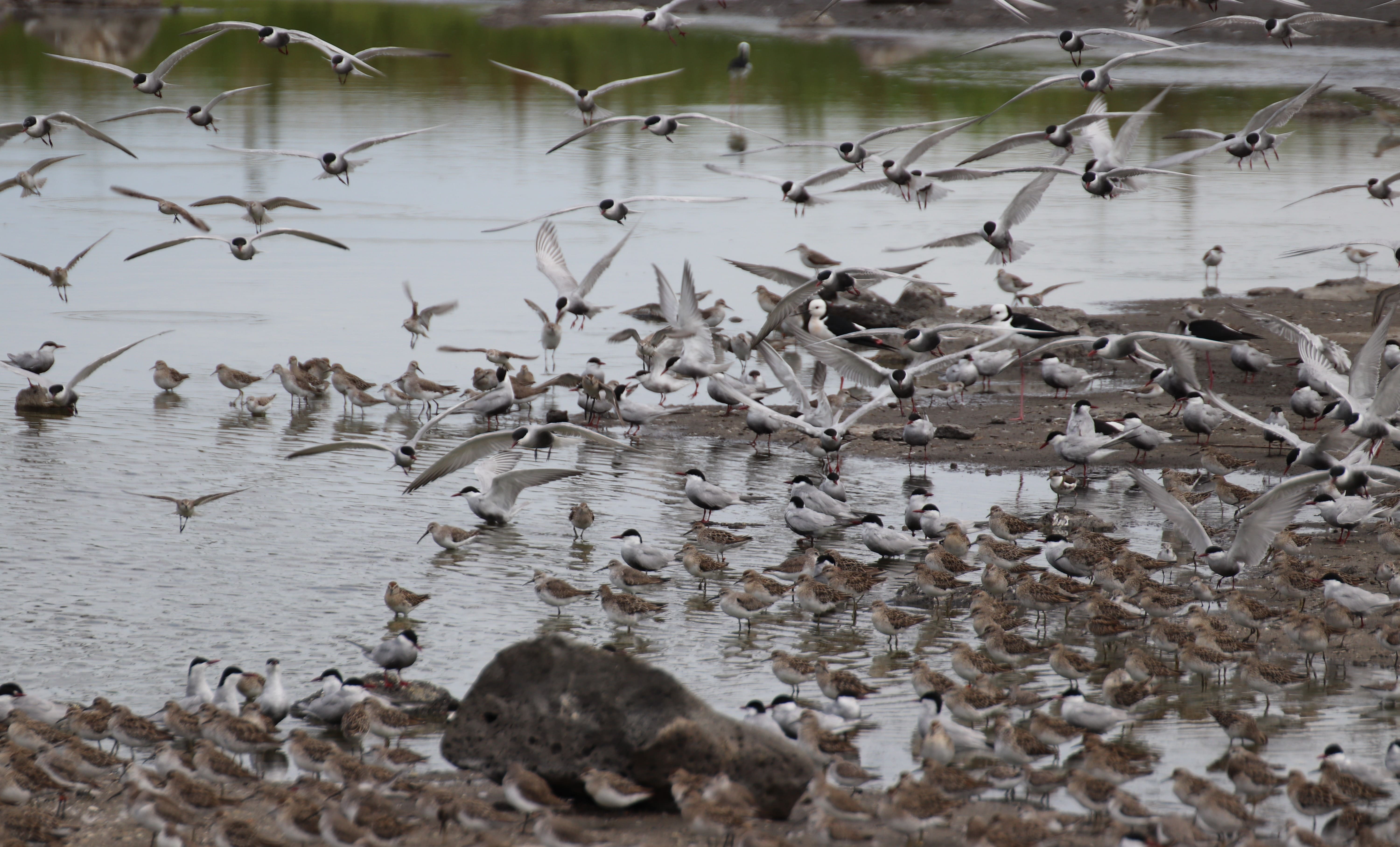
    • Galerie: , Text k fotce: A flock of migratory shorebirds and terns at the shore of Australia (Vojtěch Kubelka).
    • Galerie: , Text k fotce: One of the iconic and endangered migratory species is Monarch Butterfly (Danaus plexippus) travelling regularly across North America (Vojtěch Kubelka).
    • Galerie: , Text k fotce: Migratory behaviour itself is arduous and not all individuals are able to make the journey (Vojtěch Kubelka).
    • Galerie: , Text k fotce: An example of migratory bird which has undergone serious decline across Europe is Northern Lapwing (Vanellus vanellus), here male returning back at South Bohemian breeding grounds in the spring (Vojtěch Kubelka).
    • Galerie: , Text k fotce: Part of the Vojtěch Kubelka‘s team during investigation of benefits for migratory behaviour in Argentinian shorebirds (Vojtěch Kubelka).

Migratory animals and their mass seasonal movements represent a unique spectacle in nature, connecting continents as well as human societies. However, given the increasing human pressure and climate change impacts, migratory animals are globally declining in numbers and facing diverse threats along their migratory journeys. 

The international team of experts, including Vojtěch Kubelka from the department of Zoology and Centre for Polar Ecology at Faculty of Science, University of South Bohemia, has filled an important knowledge gap with a topical review in a prestigious journal Biological Reviews.

The comprehensive article not only highlights the plethora of threats migratory animals are unfortunately facing nowadays but also suggests relevant conservation strategies helping to preserve the spectacle of migration. Authors hope that the review will be a useful tool for scientists, conservationists and policy-makers during the next decades all over the world.

Steven J. Cooke, Morgan L. Piczak, Navinder J. Singh, Susanne Åkesson, Adam T. Ford, Shawan Chowdhury, Greg W. Mitchell, D. Ryan Norris, Molly Hardesty-Moore, Douglas McCauley, Neil Hammerschlag, Marlee A. Tucker, Joshua J. Horns, Ryan R. Reisinger, Vojtěch Kubelka & Robert J. Lennox (2024): Animal migration in the Anthropocene: threats and mitigation options. Biological Reviews 99: 1242–1260.

Contact: RNDr. Vojtěch Kubelka, Ph.D. (Tato e-mailová adresa je chráněna před spamboty. Pro její zobrazení musíte mít povolen Javascript.

Info meeting for the Polar Ecology Course 2026

Would you like to take part in the Polar Ecology Course in Svalbard, but you don't know what to do? How does such course work and what themes are covered? Who can apply and how much will it cost? And can you meet a polar bear?

We will answer all your questions on November 12, 2025 at an information meeting in lecture room C4 from 4:30 pm.

The meeting will be available via Teams, the details will be provided later.

We look forward to seeing you and to hearing all your questions!

Informační schůzka ke Kurzu polární ekologie 2026

Chtěli byste se zúčastnit Kurzu polární ekologie na Svalbardu, ale nevíte, co pro to máte udělat? Jak takový kurz probíhá a co se na něm řeší? Kdo všechno se může přihlásit a kolik to bude stát? A můžete potkat ledního medvěda?

Na všechny vaše palčivé otázky odpovíme 12. 11. 2025 na informační schůzce, která proběhne v přednáškové místnosti C4 od 16.30.

Schůzka bude hybridní, pro zájemce bude možnost připojit se přes Teamsy. Podrobnosti upřesníme později.

Těšíme se na vás a na vaše dotazy!


Jak ohrožena je migrace zvířat v Antropocénu?

  • Seznam štítků: Publikace
  • Galerie:
    • Galerie: , Text k fotce: Hejno tažných bahňáků a rybáků na pobřeží Austrálie (Vojtěch Kubelka).
    • Galerie: , Text k fotce: Jedním z ikonických a ohrožených tažných druhů je monarcha stěhovavý (Danaus plexippus) pravidelně cestující přes severní Ameriku (Vojtěch Kubelka).
    • Galerie: , Text k fotce: Migrační chování samo o sobě je náročné a ne vždy všichni jedinci přesuny zvládnou (Vojtěch Kubelka).
    • Galerie: , Text k fotce: Ukázkový tažný druh ubývající napříč Evropou je čejka chocholatá (Vanellus vanellus), zde samec vracející se zjara na jihočeská hnízdiště (Vojtěch Kubelka).
    • Galerie: , Text k fotce: Část týmu Vojtěcha Kubelky během výzkumu výhod migračního chování argentinských bahňáků (Vojtěch Kubelka).

Migrující živočichové a jejich hromadné sezónní přesuny představují jedinečné přírodní divadlo, propojují kontinenty stejně jako lidské společnosti. Avšak vlivem vzrůstajícího tlaku člověka a klimatických změn tažní živočichové celosvětově ubývají a čelí řadě hrozeb během svých dalekých přesunů.

Mezinárodní tým expertů, včetně Vojtěcha Kubelky z Katedry zoologie a Centra polární ekologie PřF JU, zaplnil důležitou mezeru v poznání souhrnným článkem v prestižním časopise Biological Reviews.

Komplexní článek nejen zdůrazňuje řadu hrozeb pro migrující živočichy, kterým v poslední době čelí podél svých migračních tras, ale zároveň navrhuje vhodné ochranářské strategie pomáhající zachránit jedinečný fenomén migrace. Autoři studie doufají, že přehledový článek bude užitečným nástrojem pro vědce, ochranáře ale i politiky v následujících dekádách po celém světě. 

Steven J. Cooke, Morgan L. Piczak, Navinder J. Singh, Susanne Åkesson, Adam T. Ford, Shawan Chowdhury, Greg W. Mitchell, D. Ryan Norris, Molly Hardesty-Moore, Douglas McCauley, Neil Hammerschlag, Marlee A. Tucker, Joshua J. Horns, Ryan R. Reisinger, Vojtěch Kubelka & Robert J. Lennox (2024): Animal migration in the Anthropocene: threats and mitigation options. Biological Reviews 99: 1242–1260.

Kontakt: RNDr. Vojtěch Kubelka, Ph.D. (Tato e-mailová adresa je chráněna před spamboty. Pro její zobrazení musíte mít povolen Javascript.) 


Jak tuky končí v játrech? Seminář s RNDr. Janem Kovářem, CSc. (IKEM Praha)

  • Seznam štítků: PŘF, Důležitá sdělení

Přijměte pozvání na seminář Katedry medicínské biologie, který se koná tuto středu 22. října 2025 od 13:15 hod. v posluchárně C1. Na semináři vystoupí RNDr. Jan Kovář, CSc. s přednáškou na téma „Steatóza jater – jak ukládáme tuky v játrech“.

I když dr. Kováře možná někteří znáte jako dlouholetého vyučujícího Klinické biochemie II, jeho hlavním působištěm je Institut klinické a experimentální medicíny (IKEM) v Praze, kde vede Izotopové servisní středisko Centra experimentální medicíny IKEM a v posledních letech se intenzivně zabývá zejména výzkumem steatotického onemocnění jater asociovaného s metabolickou dysfunkcí.

Těšíme se na hojnou účast.

Konference o kyberbezpečnosti na JU představila reálné incidenty, jejich řešení i možnosti ochrany

  • Seznam štítků: PŘF

Říjen je evropským měsícem kybernetické bezpečnosti. Národní úřad pro kybernetickou a informační bezpečnost pravidelně pořádá "Festival bezpečného internetu", který nabízí sérii akcí realizovaných s cílem šíření osvěty o bezpečnosti v online prostoru. Na Přírodovědecké fakultě Jihočeské univerzity v Českých Budějovicích se uskutečnila dvoudenní konference ve spolupráci s organizací CZ.NIC. Akce byla určena především studentům a veřejnosti a jejím cílem bylo představit široké spektrum témat z oblasti kybernetické bezpečnosti – od reálných incidentů a jejich následků a poučení přes technologická řešení a ukázky digitální ochrany. Úvodní slovo pronesl prorektor pro vědu a výzkum Jihočeské univerzity, pan doc. Ing. Luděk Berec, Dr., který zdůraznil důležitost vzdělávání v oblasti bezpečnosti v digitálním prostoru. 

Jedním z úvodních bloků byla analýza bezpečnostního incidentu, který se odehrál v roce 2024 ve finských Helsinkách. Matias Mesiä ze společnosti Traficom detailně rozebral průběh útoku, jeho dopady na infrastrukturu a následná opatření, která byla přijata. Poukázáno bylo i na aktuální trend zneužívaných zranitelností s porovnáním Finska s Českou republikou, kde hodnoty a trendy byly téměř totožné. 

Další část programu se věnovala různým typům kybernetických incidentů, jejich řešení a poučením z praxe. Účastníci se seznámili s příklady útoků, způsoby reakce na incidenty a postupy, které vedou k efektivnímu zvládnutí krizových situací. Diskutovalo se i o tom, jak organizace analyzují incidenty, jaké nástroje využívají a jak se z nich poučit pro budoucnost. 

Blok věnovaný organizaci CZ.NIC se zaměřil na několik témat. Jako první vystoupila Věra Mikušová, která studenty seznámila s fungováním CSIRT týmů v České republice, Evropské unii i ve světě, jejich rolí při řešení incidentů a způsoby mezinárodní spolupráce. Následně Oto Stefan představil fungování registru domén v České republice, systém FRED a principy správy DNS. Účastníci se dozvěděli, jak systém FRED funguje, kdo ho ve světě využívá a jak je technologicky zajištěn. Nakonec Jaromír Talíř předvedl téma bezpečných digitálních identit, které lze využít pro ochranu v kyberprostoru. Představeny byly jak jednotlivé světově využívané technologie a standardy, tak i vývoj řešení v ČR a budoucí plány EU v této oblasti. 

Národní úřad pro kybernetickou a informační bezpečnost (NÚKIB) představil také několik témat. Jako první přiblížil Jakub Maděránek průběh útoku – od phishingu přes kompromitaci až po vyjednávání s ransomware skupinami. Ukázal, jak se z těchto skupin stávají téměř „firmy“, které řeší nejen technické aspekty útoků, ale i „spokojenost zákazníka“ – tedy obětí. Dále Jakub Onderka představil blok o postkvantové kryptografii, který nabídl pohled do aktuální problematiky standardů dnešních šifer a nastupujících postkvantových algoritmů, které mnozí z nás již využívají, aniž bychom si to uvědomovali. Na závěr dne představila Lenka Ondrysková webový portál NÚKIB a jeho postupnou transformaci v průběhu let, včetně sběru zpětné vazby od uživatelů a jejího využití pro další vývoj. 

Druhý den konference zahájila čtveřice zaměstnanců společnosti ČEZ a. s. Účastníkům bylo představeno fungování jejich Integračního centra bezpečnosti (iSOC), které kombinuje klasický bezpečnostní operační dohled (SOC) s prvky fyzické bezpečnosti, které zahrnují docházkové systémy pro kritické i běžné sekce budov ČEZ, technická a organizační opatření, nebo i systémy poplachů, čidla a další prvky fyzické ochrany. Všechny tyto informace zaměstnanci iSOC řeší v systému C4 Enterprise, který slouží jako centrální platforma pro řízení bezpečnostních procesů a integraci různých technologií v rámci bezpečnostního ekosystému ČEZ. 

Další blok byl věnován Pavlu Gistingerovi z Policie ČR, konkrétně z NCTEKK. Ten představil postupy, jak policie odhaluje internetové podvodníky. Zaměřil se na případy, kdy útočníci cílí na méně technicky nebo finančně gramotné jedince prostřednictvím podvodných inzerátů a reklam, často s tématem investic. Účastníci tak získali přehled o tom, jak probíhá vyšetřování těchto případů, jak se provádějí zásahy proti mezinárodním podvodníkům a jaké techniky NCTEKK využívá. 

Účastníci se dále seznámili s průběhem ransomware útoku, způsobem komunikace s útočníky a tím, jak se po takovém útoku mění fungování celé firmy. Přednášející sdílel zkušenosti z praxe, které ukazují, jak zásadní dopad může mít kybernetický útok na vnitřní procesy, firemní kulturu i bezpečnostní politiku organizace. Během přednášky zaznělo motto, kterým by se měla řídit každá firma v oblasti kybernetické bezpečnosti: „Neptejte se zda, ale kdy.“ 

Závěrečný blok druhého dne patřil odborníkům z CESNET, kteří představili řadu svých služeb a open-source nástrojů. Pavel Kácha nejprve přiblížil historii vývoje sběru síťového provozu a bezpečnostních dat na CESNET a aktuálně používané technologie jako MENTAT, FTAS, NERD, PassiveDNS, WARDEN a mnohé další. Martin Šebela následně představil službu Phishingator, včetně ukázek cvičných phishingových kampaní, rozesílání podvodných e-mailů a výsledků testování. Cílem služby Phishingator je poučit uživatele, že phishing může přijít v libovolné podobě – což si někteří na JU již prakticky vyzkoušeli. Jakub Judiny poté ukázal, jak CESNET snižuje množství reportů a tím i zátěž na incident handlery pomocí agregace, třídění, tresholdingu a filtrace událostí ve službě MENTAT, kterou využívá i Jihočeská univerzita. Jaroslav Svoboda účastníkům představil metody skenování serverů a webů pomocí služeb SNER a AUROR, včetně využití TARANIS-NG od slovenského CERT týmu. Veškerá data z těchto služeb následně putují do systému WARDEN, ze kterého MENTAT vytváří přehledné reporty. Na závěr Pavel Kácha ukázal, jak CESNET využívá a poskytuje ostatním honeypot službu HUGO pro detekci anomálií a útočníků v počítačové síti. 

Konference v čase

  • Seznam štítků: PŘF

Zveme vás na cyklus přednášek “Konference v čase”od Přírodovědecké fakulty JU, která se zaměřuje na udržitelná témata.

  1. Společnost, business a udržitelnost – Udržitelnost jako příležitost pro transformaci přednáší Soňa Klepek Jonášová dne 9.10.2025, 16:00 až 17:30, posluchárna C4, budova C, PřF JU (Branišovská 1760)
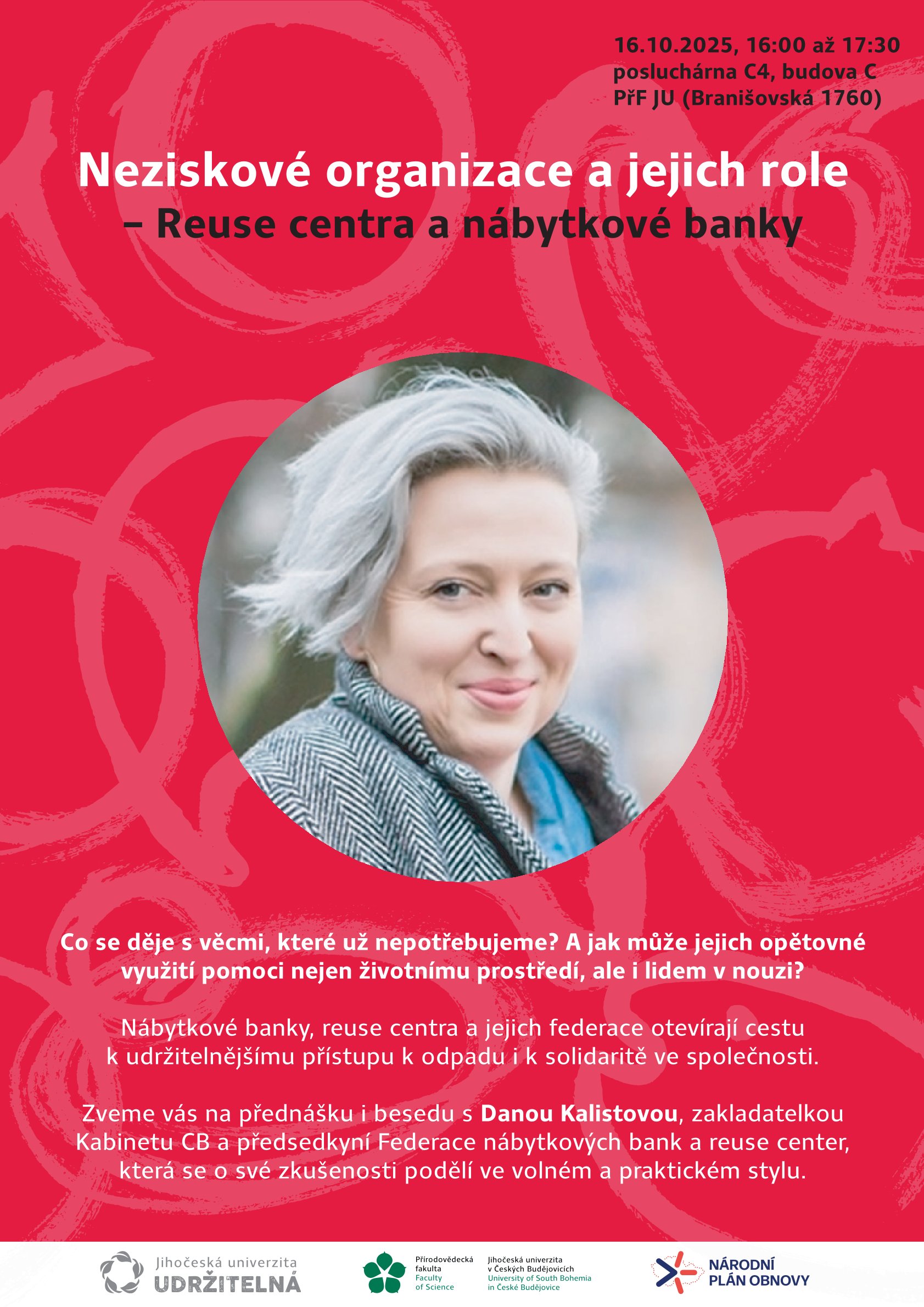
  2. Neziskové organizace a jejich role – Reuse centra a nábytkové banky přednáší Dana Kalistová dne 16.10.2025, 16:00 až 17:30, posluchárna C4,budova C, PřF JU (Branišovská 1760)
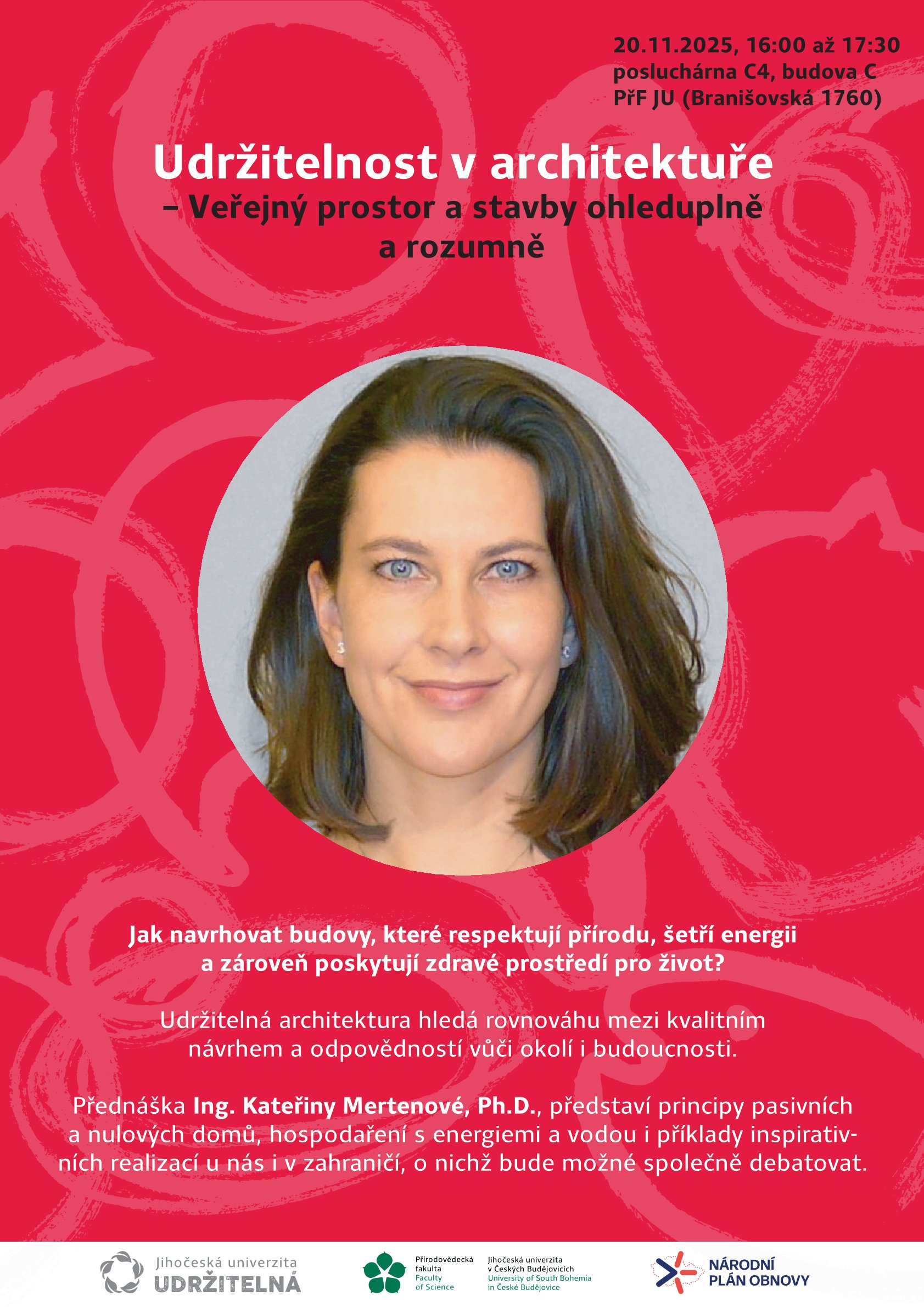
  3. Udržitelnost v architektuře – Veřejný prostor a stavby ohleduplně a rozumně přednáší Ing. Kateřina Mertenová, Ph.D. dne 20.11.2025, 16:00 až 17:30, posluchárna C4, budova C, PřF JU (Branišovská 1760)
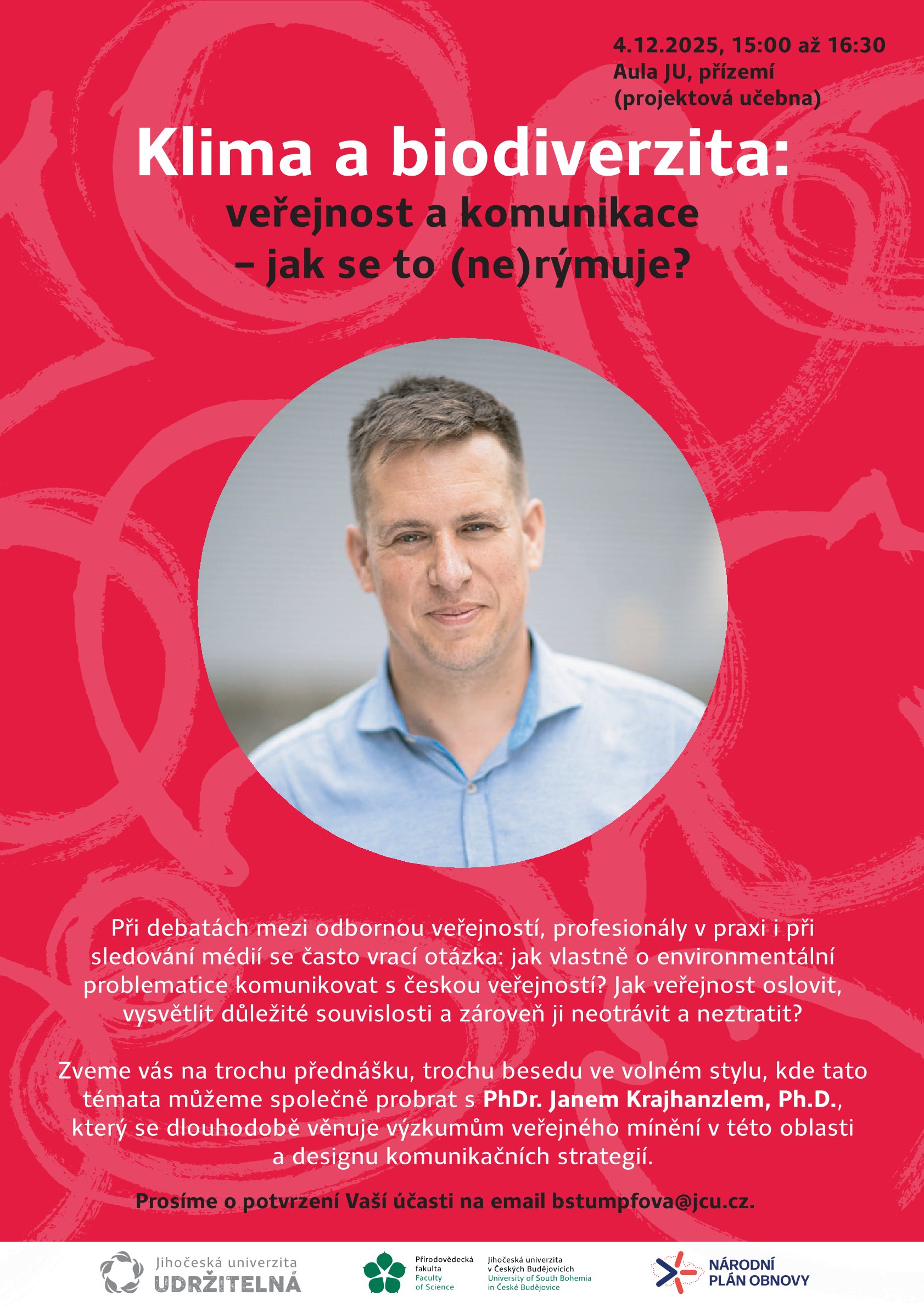
  4. Klima a biodiverzita: veřejnost a komunikace – Jak se to (ne)rýmuje?přednáší PhDr. Jan Krajhanzl, Ph.D. dne 4.12.2025, 15:00 až 16:30 Aula JU, přízemí (projektová učebna)

Realizováno z projektu NPO Podpora zelených dovedností a udržitelnosti – JU, reg. č.: NPO_JU_MSMT-2115/2024-4

Kurz Polární ekologie 2024 - report

  • Seznam štítků: PŘF
  • Galerie:
    • Galerie: , Text k fotce: Payerův dům
    • Galerie:
    • Galerie:
    • Galerie:
    • Galerie:
    • Galerie: , Text k fotce: opuštěné město Pyramiden
    • Galerie:
    • Galerie: , Text k fotce: Terénní stanice Nostoc
    • Galerie: , Text k fotce: Terénní stanice Nostoc - laboratoř
    • Galerie: , Text k fotce: Terénní stanice Nostoc - ložnice
    • Galerie:
    • Galerie:
    • Galerie: , Text k fotce: Ursuit obleky
    • Galerie: , Text k fotce: Rybák dlouhoocasí
    • Galerie:
    • Galerie:
    • Galerie: , Text k fotce: Část hlavního města Longyearbyen
    • Galerie:
    • Galerie: , Text k fotce: Sob polární
    • Galerie: , Text k fotce: Liška polární
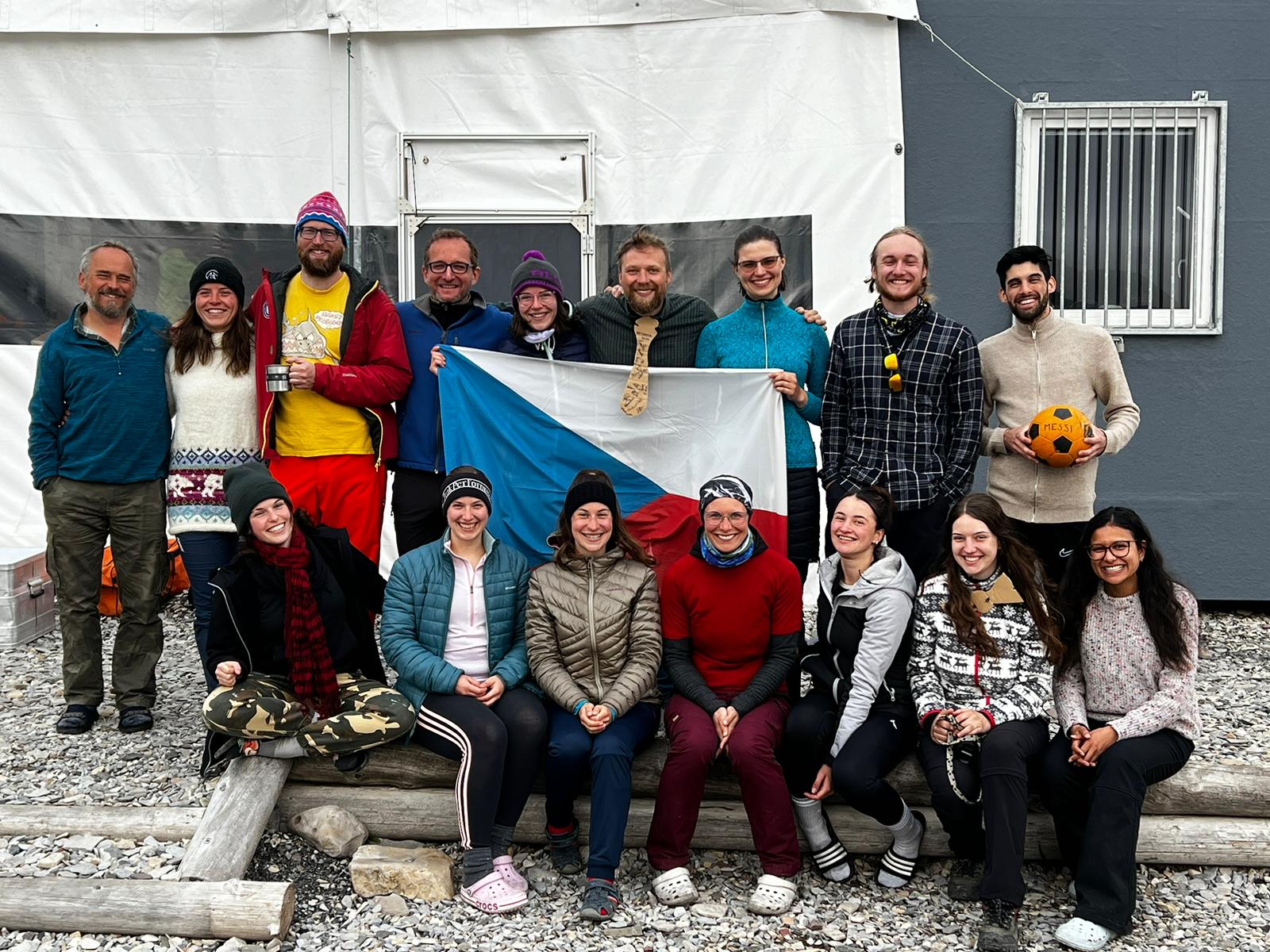
    • Galerie: , Text k fotce: Účastníci kurzu před stanicí Nostoc

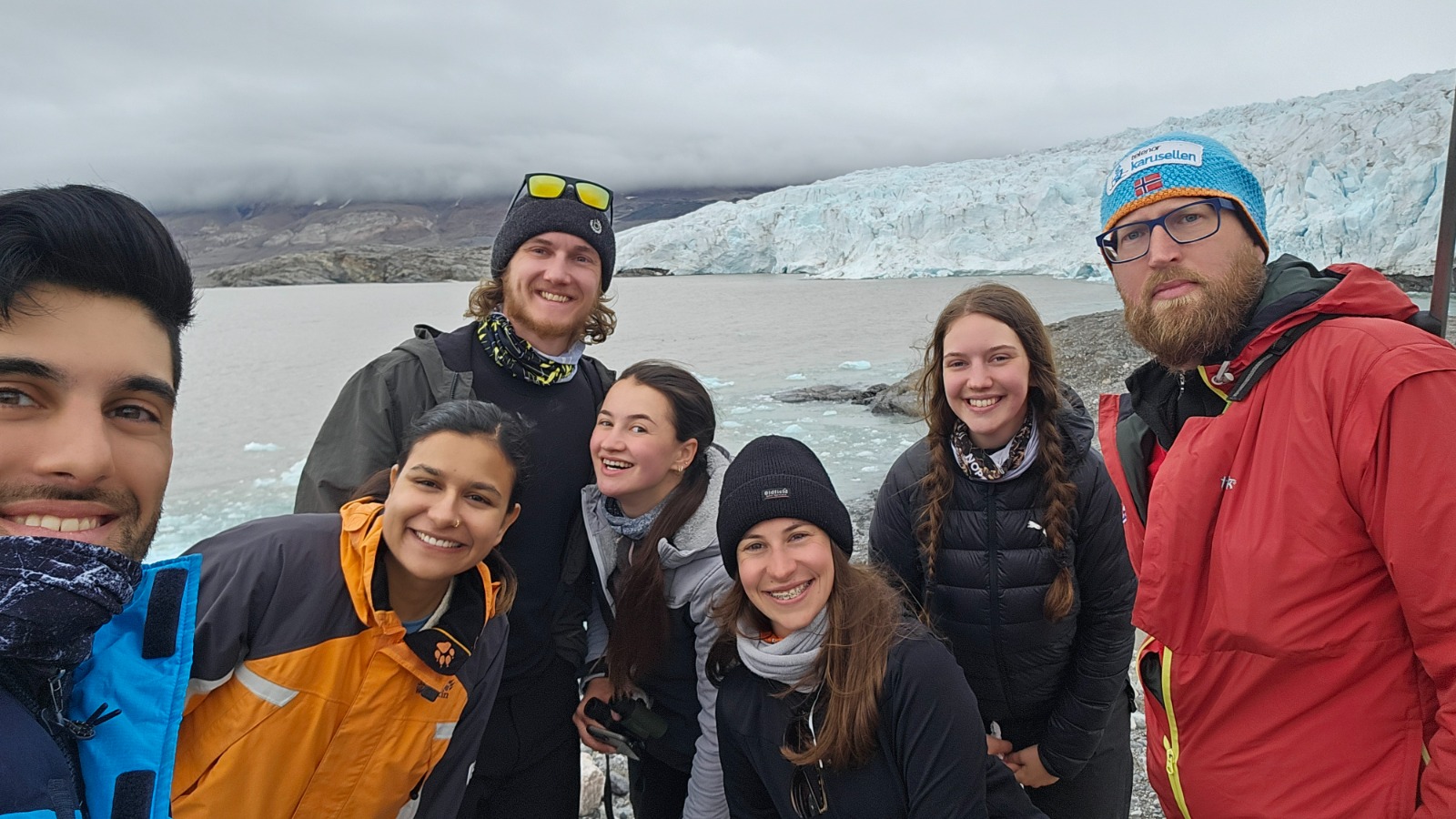
V letošním roce opět proběhla praktická část kurzu Polární ekologie na naší terénní stanici, který zaštiťuje Centrum Polární Ekologie (CPE). Celkem 10 studentů a 4 mentoři strávili 19 dní na České arktické výzkumné stanici (CARS) na Špicberkách. Tematicky byl kurz zaměřen na studium ústupu ledovců s cílem detailně popsat vývoj vegetace, bezobratlých živočichů a mikroorganismů. Dva dny studenti strávili v hlavním městě Špicberk, Longyearbyenu, v Payerově domě a seznámili se s typickou místní vegetací během exkurze do Endalen. Lodí se pak přesunuli na terénní stanici Nostoc na pobřeží zátoky Petuniabukta. Na této stanici si studenti vyzkoušeli život terénních vědců v polárních oblastech, prováděli sběr vzorků a podíleli se i na běžném denním chodu stanice (vaření pro celou expedici, uklízení apod.). Součástí kurzu byl také výcvik v manipulaci a střelbě ze signální pistole a kulovnice, jako nutné obrany při setkání s polárním medvědem. Všichni mentoři proto nosí do terénu zbraň pro případ, že by k tomuto setkání došlo.

Během expedice studenti postupně navštívili tři rozdílné ledovce (Ferdinadbreen, Hørbyebreen, Ebbabreen), v jejichž předpolí porovnávali různě staré plochy a sbírali vzorky pro pozdější analýzy na stanici, a po převozu do ČR i ve fakultních laboratořích a laboratořích Biologického centra. Botanická skupina pracovala na popisu druhů rostlin v předem vytyčených vegetačních čtvercích, zoologická skupina sbírala vzorky půdní fauny a následně je mikroskopovala na stanici, a mikrobiologická skupina odebírala vzorky půdy, ve kterých měřila uvolňování CO2 a schopnost mikroorganismů rozkládat různé zdroje živin. Součástí kurzu byly také jednodenní exkurze s cílem přiblížit studentům arktické prostředí. Např. na ledovci Nordenskiöldbreen se studenti seznámili s unikátními kryokonity, ale i s nebezpečnými ledovcovými mlýny, tzv. „moulin“. Na jezeře Blue Lake poblíž města Pyramiden byl zase studentům předveden odběr vzorků z člunu pomocí tzv. „planktonky“ a seznámili se také s fungováním meteostanic.

„Pro nás, jakožto studenty, se jednalo o nezapomenutelný zážitek a velké množství zkušeností, které nám pomohou v našich akademických kariérách.“

Přihlaste si
odběr newsletteru

Zůstaňme v kontaktu na
sociálních sítích

Branišovská 1645/31a, 370 05 České Budějovice Tel. 387 776 201 | Tato e-mailová adresa je chráněna před spamboty. Pro její zobrazení musíte mít povolen Javascript.


Branišovská 1645/31a, 370 05 České BudějoviceTel. 387 776 201 | Tato e-mailová adresa je chráněna před spamboty. Pro její zobrazení musíte mít povolen Javascript.
© 2026 Jihočeská univerzita v Českých Budějovicích
Cookies

1

0