Přejít na hlavní obsah

Přírodovědecká fakulta JU

Single-Cell Structural Biology with Intracellular Electron Crystallography

  • Seznam štítků: Publications
  • Galerie:
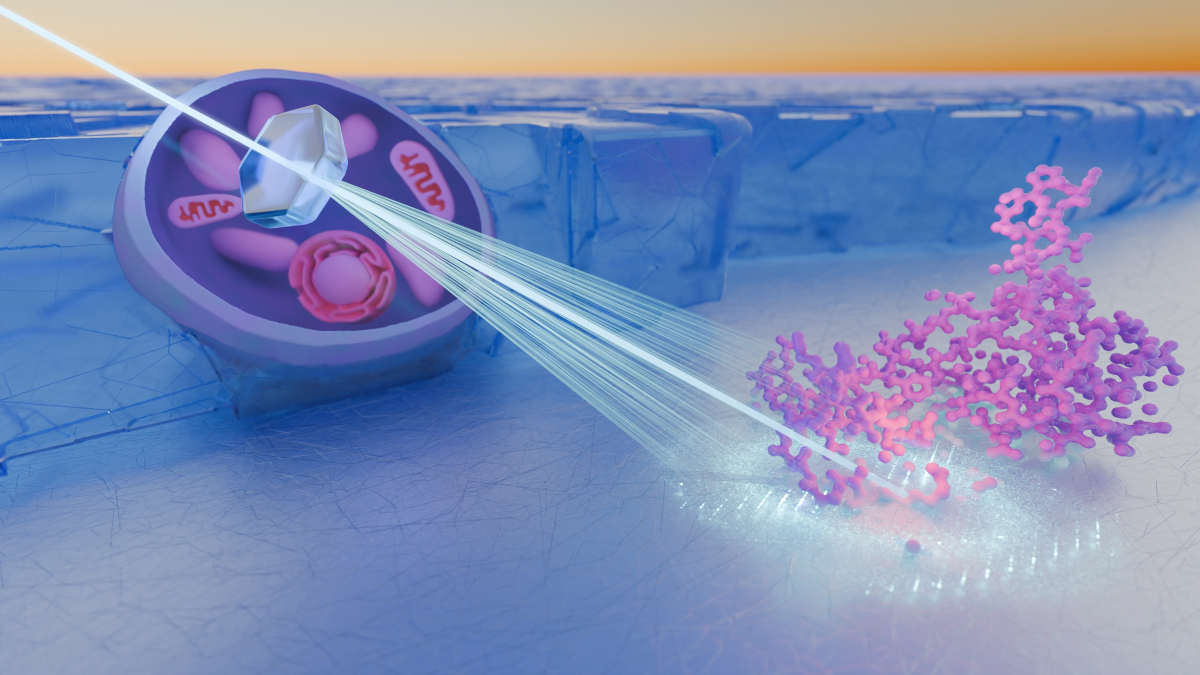
    • Galerie: , Text k fotce: Graphical representation of electron crystallography: First, a crystal of the protein is created in a cell. The cell is then frozen and ground down to the level of the crystal, from which its detailed structure is determined using electron diffraction.

Scientists from the Faculty of Science at the University of South Bohemia have made a groundbreaking achievement in structural biology by determining a high-resolution protein structure from a single crystal grown inside a living cell. This was achieved in collaboration with experts from the Institute of Molecular Genetics (CAS, Prague), ELI Beamlines (Prague), Biology Centre CAS (České Budějovice), University of Lübeck (Germany), and Uppsala University (Sweden).

The newly developed method, IncelluloED, combines intracellular protein crystallization with in-situ three-dimensional electron diffraction using standard cryo-electron microscopy (cryo-EM) equipment. It paves way for high-resolution structural analysis performed directly in cells and bypassing laborious protein purification and in vitro crystallization.

Intracellular crystallization has emerged as a promising strategy in structural biology, but the existing approaches faced major limitations. In 2024, the InCellCryst pipeline was introduced by our collaborators from the University of Lübeck for studying intracellular crystals using serial X-ray crystallography. However, serial crystallography requires the exposure of tens of thousands of crystal-containing cells, which prevents high-resolution studies on proteins that crystallize in only a few cells. IncelluloED breaks this barrier by enabling structure determination from just a single crystal in one cell.

The performance of the IncelluloED method was demonstrated using a microcrystal of HEX-1 protein from a rice blast fungus (Magnaporthe grisea) grown in an insect cell. While the IncelluloED yielded a 1.9 Å resolution structure from a 1.6 µm³ crystal, the serial X-ray crystallography required thousands of crystals with a total volume over 11 million µm³ to reach similar atomic resolution. IncelluloED showcased a multimillion-fold reduction in required material for high resolution structure determination.

Beyond its immediate performance, IncelluloED opens new avenues for systematic studies of intracellular crystallization, such as crystallization frequency and diffraction quality, and allows to search for ordered nanodomains within larger, poorly diffracting crystals. Future enhancements, like co-crystallization with ligands naturally occurring in cells, could boost structure-based drug discovery.

Despite its overall complexity the workflow proved robust: All cell that were selected for analysis yielded diffracting crystals and no sample was lost. By requiring only, a single crystal inside a single cell and using standard cryo-EM platforms, IncelluloED brings high-resolution structural biology into conventional laboratory settings and represents a significant step toward a new paradigm in the field, the realization of a single-cell structural biology laboratory.

Štěpánka Bílá, Dominik Pinkas, Krishna Khakurel, Juliane Boger, Tomáš Bílý, Janos Hajdu, Zdeněk Franta, Iñaki de Diego Martinez, Roman Tuma, Lars Redecke and Vitaly Polovinkin: Single-Cell Structural Biology with Intracellular Electron Crystallography, Nat Commun (2026). https://doi.org/10.1038/s41467-026-69205-6
 

South Bohemian researchers have linked science, healthcare, and technology. In a unique project, they aim to save newborns

With the intention to connect cutting-edge research, clinical practice, and modern technologies, a unique collaboration of significant institutions was established in South Bohemia. One of the concrete goals is the early identification of signs of infection that threaten prematurely born children. The Faculty of Science of the University of South Bohemia, České Budějovice Hospital, and the Biology Centre of the Czech Academy of Sciences are jointly implementing two ambitious projects: MEDDA (Medical Database) and BUDDIAG (Budweis Diagnostics) – both supported by the Jan Amos Comenius Operational Programme (OP JAK).

These projects utilize data, artificial intelligence, and an interdisciplinary approach to significantly advance diagnostics and patient care while strengthening the innovative potential of the entire region. The centerpiece of the MEDDA project is the creation of a modern data platform that will connect laboratory and clinical data and enable their efficient use in searching for new diagnostic possibilities. Specifically, it focuses on identifying early biomarkers for late-onset neonatal sepsis (LOS) – a serious infection that represents one of the greatest risks for children born before the 32nd week of pregnancy. "Artificial intelligence will help identify early sepsis biomarkers and enable doctors to make faster and more accurate decisions. The project thus responds to the acute need for data-driven care, healthcare digitalization, and effective transfer of research into practice," explains Jindřich Chmelař from the Department of Medical Biology at the Faculty of Science, University of South Bohemia.

Scientists from the Biology Centre of the Czech Academy of Sciences also specialize in developing new tools for advanced patient metabolism diagnostics. "From one drop of blood, we can simultaneously measure hundreds of substances circulating in the body. This is roughly an order of magnitude more than is usually obtained in standard clinical analyses today," says Petr Šimek from the Biology Centre of the Czech Academy of Sciences. In the BUDDIAG project, researchers are currently working on detailed analysis of metabolic processes in prematurely born children. Rapid and more accurate diagnostics will enable doctors to more effectively assess the health status of newborns and adapt treatment and nutrition to their individual needs. "We focus on the composition of fatty acids and want to substantially expand the set of biomarkers that have not been monitored so far. Thanks to this, it will then be easier to determine what condition the newborn is in and what their organism needs. When doctors correctly adjust the composition of fatty acids in nutrition, serious vision damage that these children often suffer from can be prevented, for example," adds Petr Šimek.

Obtaining a comprehensive, personalized metabolic picture of each patient represents a promising direction in disease prevention and treatment. The new diagnostic solutions that South Bohemian specialists are developing and testing at the České Budějovice hospital have significant commercial potential, and their application in the global market in the form of innovative diagnostic kits is expected.

Large amounts of information are currently collected in hospitals. According to international studies, however, only 3% of this data is effectively used. Within the care of children born before the 32nd week of pregnancy, data from laboratories and monitors are collected, and clinical data from patients are also recorded. This group of newborns has a reduced immune response and the resulting increased risk of serious infections. Through more thorough connection of all collected data, a more comprehensive view of the entire issue can be obtained. "Within the unique collaboration of the Faculty of Science of the University of South Bohemia, the Biology Centre of the Czech Academy of Sciences, and České Budějovice Hospital, a connection was made in two scientific projects, where there will be an effort to maximize the use of all obtained data for further optimization of care, prevention, early identification of infections, but also obtaining a picture of the metabolic functions of the developing organism. For these immature newborns, the aspect of the amount of blood drawn or other biological material is also important. In researching new analytical methods, this will also be taken into account so that traumatization during sampling is reduced, but also, for example, to reduce the number of transfusions administered," explains the practical significance of the projects Jiří Dušek, head of the Neonatology Department at České Budějovice Hospital.

The entire project is a unique connection of a specialized clinical workplace with scientists from many different fields of natural sciences and experts in data collection and analysis using artificial intelligence. The Faculty of Science of the University of South Bohemia leads the project both professionally and organizationally, ensures the development of the data platform, bioinformatics and laboratory analyses, and actively involves students in the project. České Budějovice Hospital, one of the largest and best-rated hospitals in the country, brings to the project primarily samples, patients, and key clinical data, clinical interpretation of analysis outputs, and their testing directly on patients. The Biology Centre of the Czech Academy of Sciences contributes cutting-edge research and method development in the field of metabolomics.

Connection with the commercial sector is helped by two private companies that are project partners – the fourth partner of the MEDDA project is the technology company Anycare s.r.o., which brings know-how in the field of digital data collection, software development, and real-time healthcare analytics to the project. The company Chromservis collaborates on the BUDDIAG project.

The goal is to immediately transfer research results into practice and subsequently begin using them in patients outside the studied group as well. This cooperation represents a pilot model of regional collaboration between research, healthcare, and technologies, which has the potential to fundamentally change not only the approach to newborn care, but also the broader concept of future medicine. The results will be applicable not only in South Bohemia, but also at national and international levels – with the ambition to become a model for future cooperation of academic, clinical, and technological institutions in the Czech Republic. At the same time, the projects significantly contribute to the development of the South Bohemian Region as a region with high innovative potential. They support the growth of qualified jobs, create an environment for excellent research, and increase the region's attractiveness for young scientists, doctors, and data specialists. They also strengthen cooperation between public institutions and the private sector, which is key for effective transfer of research results into practice. The MEDDA and BUDDIAG projects thus become a prototype of what modern healthcare based on data, cooperation, and innovations can look like.

Spinsolve Benchtop NMR training

  • Seznam štítků: Our achievements

Back to Dept. of Chemistry

Spinsolve 80 benchtop NMR training and workshop


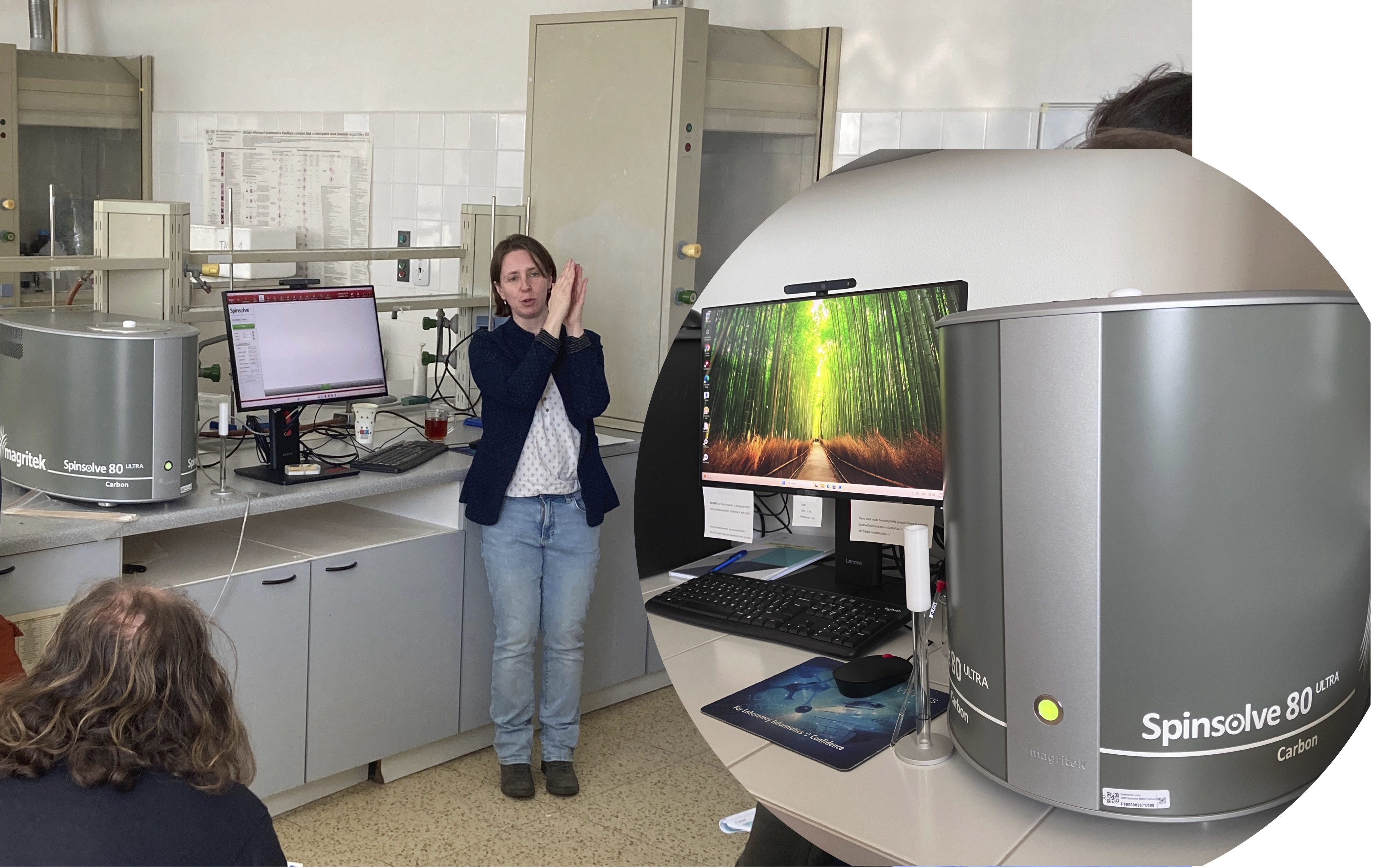
Following the installation of the latest instrument in our department, the Spinsolve 80 produced by Magritek) benchtop NMR, an application specialist from Magritek, Dr Hélène Freichels, conducted a training session on the device.


In addition to department staff, representatives from Amedis CZ and Amedis SK also participated in the training. The two-day training was followed by a workshop that introduced the instrument’s applications to colleagues from other departments.


Following the successful training, this versatile device is now in use, for example, in measurements conducted in collaboration with the Laboratory of Analytical and Environmental Chemistry of the Department of Chemistry and the Hospital České Budějovice. Zuzana Dvorníková, MSc, from the Laboratory of Applied Biochemistry, is conducting these measurements and is available for analyses on this instrument.

Presentation from the application seminar can be downloaded here


Státní závěrečné zkoušky a obhajoby kvalifikačních prací

Obhajoby bakalářských prací

1. 6. v C3
  • 8:00 – 8:45 Stanovení tetrakain hydrochloridu a adrenalin hydrochloridu v léčivých přípravcích pomocí kapalinové chromatografie
  • 8:50 – 9:35 Analýza vitamínů A, D, E, K v mateřském mléce pomocí HPLC s UV a FLD detekcí
  • 9:40 – 10:25 Stanovení oxidované a redukované formy glutathionu pomocí kapalinové chromatografie
  • 10:30 – 11:15 Zavedení metody na stanovení methylesterů volných mastných kyselin v biologických vzorcích pomocí plynové chromatografie s hmotnostní detekcí (GC-MS)
  • 11:20 – 12:05 Exprese a purifikace 2A proteázy enterovirů EV-A71 a EV-D68: Příprava pro strukturální a funkční studie

Magisterské státní závěrečné zkoušky

2. 6. v C3
  • 11:00 – 11:45 Biochemie
  • 13:00 – 17:30 Chemie a Didaktika chemie
4. 6. v C3
  • 9:30 – 11:45 Experimentální metody monitorování životního prostředí a Chemie životního prostředí

Obhajoby diplomových prací

1. 6. v C3
  • 13:15 – 14:05 Rozvoj zájmu o přírodní vědy: Inovativní přístupy k výuce biologie a chemie
  • 14:10 – 15:00 Strukturní analýza lidského galektinu-9 s dvěma sacharidovými rozpoznávacími
    doménami v komplexech s oligosacharidy
2. 6. v C3
  • 9:00 – 9:50 Analýza vybraných antiepileptik, metforminu, a jeho fotoproduktů ve vodných
    roztocích, studium fotochemické degradace
  • 9:55 – 10:45 Uvolňování vybraných fenolů z cigaretových nedopalků do složek životního prostředí
4. 6. v C3
  • 13:00 – 13:50 Stanovení vitamínů skupiny B v mateřském mléce a v mléčném fortifikátu
    promocí HESI-LC/MS
  • 13:55 – 14:45 Možnosti stanovení derivátů vybraných steroidních hormonů pro účely
    ultrastopové analýzy trusu goril nížinných pomocí LC-MS

Student Přírodovědecké fakulty bude pátrat po životě na Marsu

  • Seznam štítků: Tiskové zprávy
  • Galerie:
    • Galerie:
    • Galerie:
    • Galerie:
    • Galerie:
    • Galerie:
    • Galerie:

Je studentem programu Biological Chemistry na Přírodovědecké fakultě JU. Jako výzkumník se zaměřuje hlavně na mapování. Sám říká, že bez účasti na kurzu polární ekologie na České arktické výzkumné stanici Jihočeské univerzity na Svalbardu by se do projektu Evropské kosmické agentury (ESA) nikdy nedostal. Argentinec Lucas Fernandez už se přestěhoval do Nizozemí, kde právě v těchto dnech začíná jeho práce v misi ExoMars.

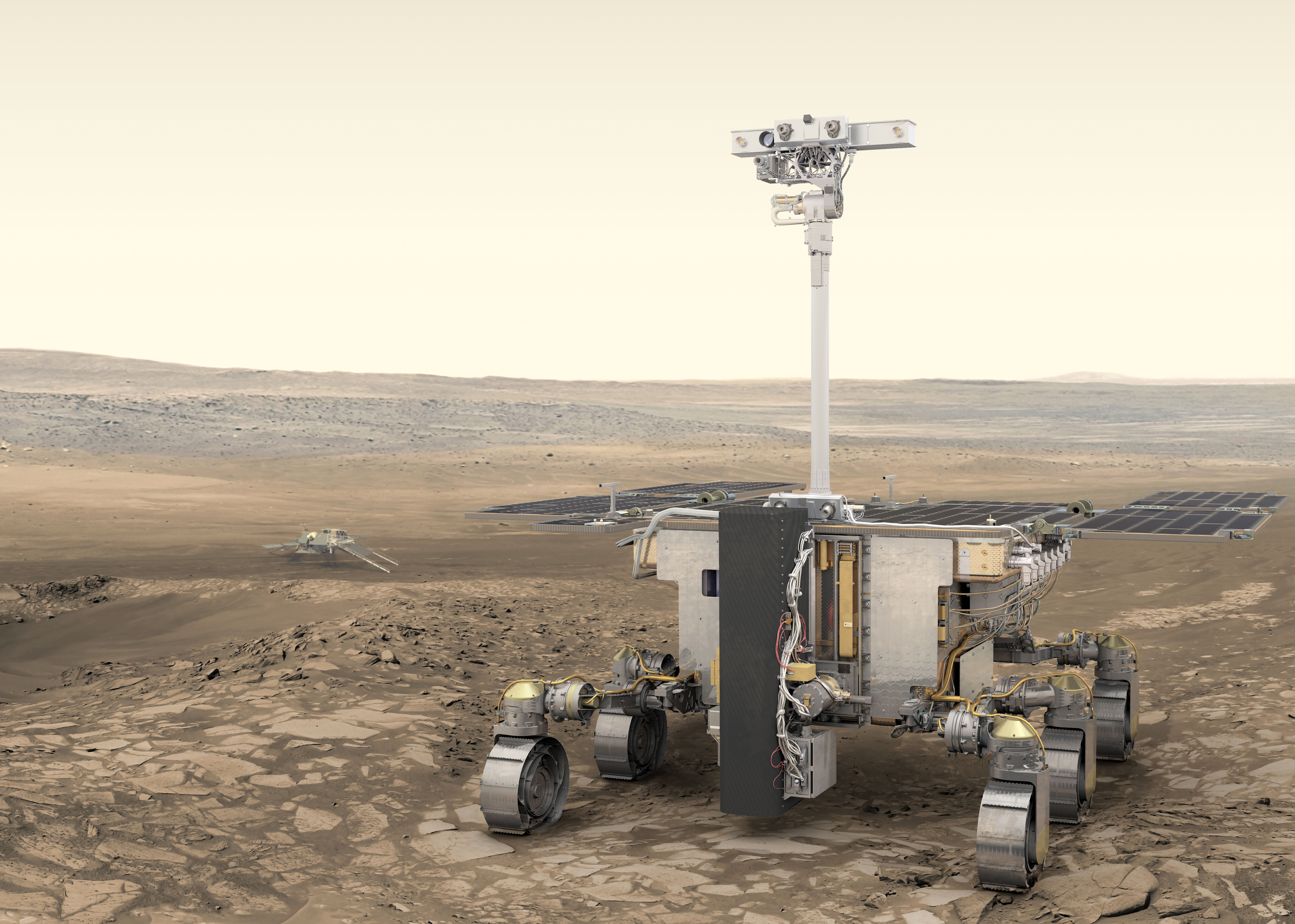
Přihlášku do vesmírného projektu podal před 7 měsíci. Prvotním sítem kritérií ESA prošlo 383 uchazečů. Z nich byl Lucas Fernandez vybrán do týmu výzkumníků, jejichž úkolem bude analyzovat snímky rudé planety, které na Zemi posílají sondy z její oběžné dráhy. Vrcholem mise je vyslání roveru pojmenovaného po slavné vědkyni Rosalind Franklin na planetu Mars v roce 2028. Ten bude mít za úkol hledat známky minulého nebo současného života.

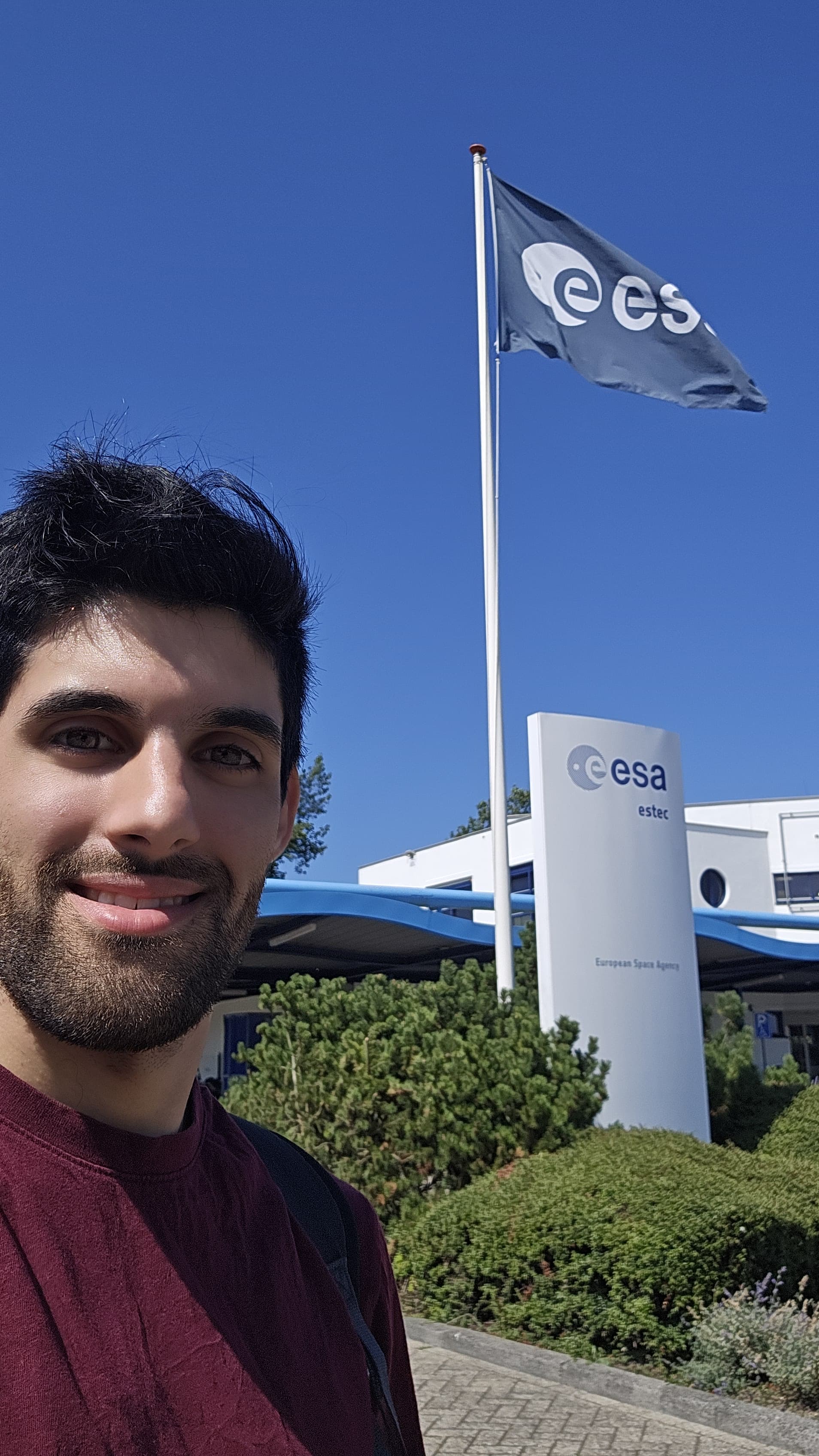
„Mým úkolem v této misi bude analyzovat data o povrchu Marsu, která posílají sondy, spolu s povrchovými daty získanými rovery Curiosity a Perseverance od NASA. Cílem je identifikovat nejperspektivnější oblasti pro hledání života a vyhodnotit potenciální nebezpečí, se kterými by se rover Rosalind Franklin mohl setkat,“ vysvětluje Lucas Fernandez, který má od 17. 6. 2025 přístup ke všem potřebným systémům a datům Evropské kosmické agentury v jejím sídle ESTEC (European Space Research and Technology Centre) nedaleko Amsterdamu.

Mezinárodní tým, který na misi pracuje, je obrovský. Jsou v něm geologové, mineralogové, IT experti, techničtí inženýři. Lucas Fernandez bude na mapování přistávací oblasti roveru spolupracovat ještě se dvěma dalšími kolegy. Budou také pomocí snímků zjišťovat, jaké horniny a minerály v dané lokalitě jsou. Rover Rosalind Franklin bude mít na palubě vrták, který je schopný dosáhnout až 2 metry pod povrch. Vědci už téměř s určitostí vědí, že na povrchu Marsu vzhledem k silné UV radiaci život není. Pomocí roveru ale chtějí zkoumat, zda třeba už jeden metr pod povrchem rudé planety něco přežít může.

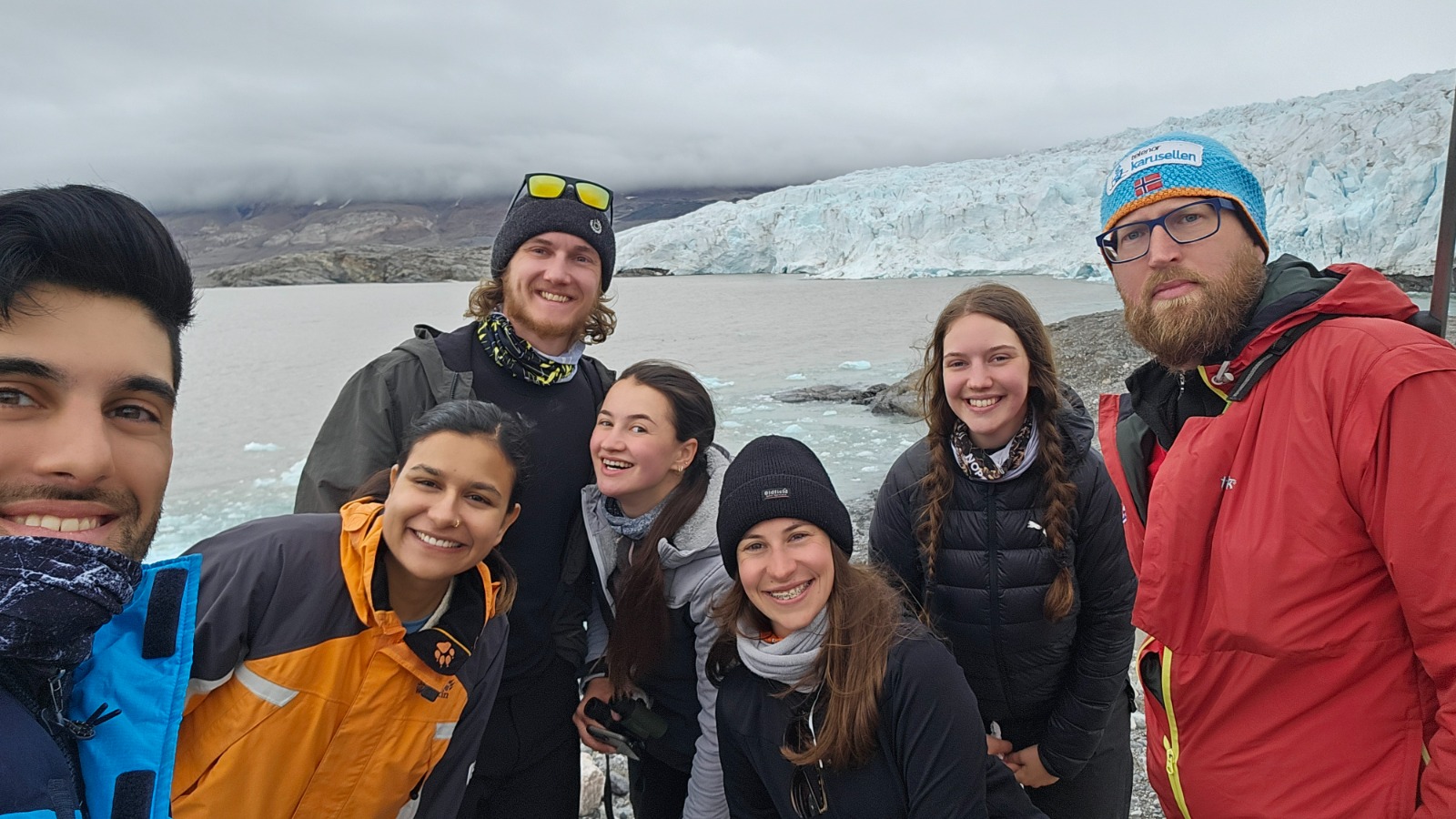
„Náš tým se v podstatě dělí na dvě skupiny. Jedna jeho část si myslí, že na Marsu život v minulosti byl, ale už není, a ta druhá – do které patřím i já – si myslí, že tam stále je. A to proto, že máme určité signály, ale ne dostatečné důkazy. Jsme vědci, potřebujeme silné důkazy. A to je právě cíl této mise. V podstatě najít život, a to ať už minulý, anebo i takový, který tam žije i dnes,“ dodává Lucas Fernandez, který se netají tím, že do programu ESA mu výrazně pomohl kurz, kterého se zúčastnil na vědecké základně Jihočeské univerzity na Svalbardu ve skupině vedoucího Centra polární ekologie Přírodovědecké fakulty JU Jiřího Bárty. V polárních podmínkách například odebírali vrtné jádro, které následně analyzovali. Právě takovou práci bude dělat i rover na Marsu.

„Terénní práce v extrémních podmínkách podobných Marsu, v kombinaci s analýzou satelitních snímků, byly přesně tím, co kosmická agentura hledala. Ne všechny univerzity mají Centrum polární ekologie. Mít ho na Jihočeské univerzitě je velké privilegium a jedinečná příležitost. Je tu řada lidí, kteří se alespoň částečně zabývají i astrobiologií. A pracují v oblastech, které jsou vlastně docela podobné Marsu,“ popisuje cestu k mezinárodnímu úspěchu v prestižním projektu Lucas Fernandez.

„Centrum polární ekologie se už téměř 20 let zabývá studiem organismů, kteří žijí ve velmi extrémních podmínkách Arktidy. Díky výzkumné stanici jsme se zařadili do sítě mezinárodních institucí, které tuto unikátní možnost v České republice nabízejí. V rámci kurzu „Polární ekologie“, jehož praktická část probíhá právě na Svalbardu, vzděláváme budoucí experty na botaniku, zoologii a mikrobiologii. Během naší polární expedice jsem byl Lucasovým mentorem. Jeho hlavní rolí v projektu byla funkce „datového manažera“ zodpovědného za přesný sběr dat. Navrhl a realizoval inovativní přístup, který podle mého názoru představuje nejvýznamnější přínos pro jeho současné působení v ESA – vytvořil metodu porovnání terénních měření s daty ze satelitních snímků za účelem zjištění závislostí mezi půdními vlastnostmi a měřením albeda neboli míry odrazivosti povrchu," popisuje Jiří Bárta, vedoucí Centra polární ekologie Přírodovědecké fakulty Jihočeská univerzity v Českých Budějovicích.

Práce na roveru Rosalind Franklin, který má vyrazit na Mars v roce 2028, mezinárodní tým ESA dokončuje, hotový má být letos. Na rudou planetu ho vynese raketa, kterou pravděpodobně postaví soukromý investor. Ve výstavbě je také přistávací modul.

Rozhovor pro ScienceZoom dostupný zde: Vesmír byl vždy mou vášní, říká student Jihočeské univerzity, který bude pátrat po životě na Marsu

Student project at the Department of Chemistry

  • Seznam štítků: PŘF

Anna Verchuša, a student at Windhoek International School in Namibia, has been working on her project for the graduation exam at the Department of Chemistry under Hana Mašková, specifically in the Laboratory of Applied Biochemistry led by Ján Štěrba. Anna came to the lab through contacts from the Faculty of Health and Social Sciences USB and the Czech Academy of Sciences.

International school students choose a project that is part of their final grade in Biology. Anna chose to do a project on the detection of tyrosinase enzyme activity. Tyrosinase is commonly present in fungi but also in the human body. Its function is to catalyse the conversion of the amino acid tyrosine. A dysfunctional tyrosinase leads to the absence of melanin in the body, i.e. albinism. Anna was able to detect tyrosinase activity from mushrooms in the presence of different concentrations of substrate (hydroquinone), as well as reduced activity in the presence of an inhibitor (vitamin C).

We wish Anna a successful graduation from the International School.

Studenti gymnázia Jírovcova se připravují na chemickou olympiádu

Studenti gymnázia Jírovcova se připravují na chemickou olympiádu
 
Ve čtvrtek 31. října 2024 měli studenti možnost vyzkoušet si v praxi metodu SDS-PAGE, elektroforetické separace molekul, používanou k identifikaci proteinů ve vzorcích. Díky spolupráci s Přírodovědeckou fakultou Jihočeské univerzity získali cenné zkušenosti v laboratořích katedry chemie. Žákům děkujeme za vřelou návštěvu, a studentům přejeme mnoho úspěchů v soutěží!
 

Studentský projekt na Katedře chemie

  • Seznam štítků: PŘF

Anna Verchuša, studentka mezinárodní školy Windhoek International School v Namibii, v těchto dnech pracovala na svém projektu k maturitní zkoušce na Katedře chemii pod vedením Hany Maškové, konkrétně v Laboratoři aplikované biochemie vedené Jánem Štěrbou. Anna se do laboratoře dostala skrze kontakty ze Zdravotně-sociální fakulty JU a Akademie věd ČR.

Studenti mezinárodní školy si vybírají projekt, který je součástí hodnocení výsledné známky z Biologie. Anna se rozhodla vypracovat projekt zabývající se detekcí aktivity enzymu tyrozinázy. Tyrozináza je běžně přítomna v houbách ale i v lidském těle. Její funkcí je katalýza přeměny aminokyseliny tyrozinu. Nefunkční tyrozináza vede k absenci melaninu v těle, tedy k albinismu. Anně se podařilo detekovat aktivitu tyrozinázy ze žampionů za přítomnosti různých koncentrací substrátu (hydrochinonu), stejně jako sníženou aktivitu v přítomnosti inhibitoru (vitamin C).

Přejeme Anně, aby se maturita na mezinárodní škole zdárně podařila.

Success stories of our students

  • Seznam štítků: Our achievements

Back to Dept. of Chemistry

Check out some of the success stories of our students and graduates.

A published paper of our BSc graduate

https://www.prf.jcu.cz/cz/aktualne/paper-bsc-thesis-fernandez-2026

Our students awarded with SGA grants 2026

https://www.prf.jcu.cz/cz/aktualne/sga-uch-2026

Our PhD student as the first author of a paper on Single-Cell structural biology with intracellular electron crystallography 

https://www.prf.jcu.cz/en/faculty/sustainable-faculty/news/single-cell-structural-biology-with-intracellular-electron-crystallography

Our PhD student Tereza Kozelková honored with the Zdeněk Veselovský Award 

https://www.prf.jcu.cz/en/faculty/sustainable-faculty/news/tereza-kozelkova-has-won-the-zdenek-veselovsky-award

Prestigious Mass Spectrometry Award goes to the Department of Chemistry and our graduate Karel Hořejší

https://www.prf.jcu.cz/en/faculty/news/prestigious-mass-spectrometry-award-goes-to-the-department-of-chemistry

A Biological Chemistry student Lucas Fernandéz will search for life on Mars

https://www.prf.jcu.cz/en/faculty/news/a-student-of-the-faculty-of-science-will-search-for-life-on-mars

Matěj Lácha awarded the best SGA 2024 project in the Bachelor's study category

https://www.prf.jcu.cz/en/faculty/news/matej-lacha-best-bc-sga2024-chemistry

PhD students Kateřina Jaklová and Anna Koutská were awarded a GAJU individual grant 

https://www.prf.jcu.cz/en/faculty/news/katerina-jaklova-and-anna-koutska-were-awarded-a-gaju-individual-grant

The award for the best SGA 2023 project in the Master's study category goes to the Department of Chemistry!

https://www.prf.jcu.cz/en/faculty/news/the-award-for-the-best-sga-2023-project-in-the-master-s-study-category-goes-to-the-department-of-chemistry

Biological Chemistry bachelor students Artemis Charouli and Filip Jelić published a scientific paper

https://www.prf.jcu.cz/en/faculty/news/paper-bachelor-students-charouli-jelic

Sustainability also in practical exercises

  • Seznam štítků: PŘF

At the Faculty of Science, sustainability is a long-term effort to reduce material consumption at various levels, even on small things – if possible. One recent example was the purchase of calculators for use in practical exercises. From a price point of view, of course, ordinary battery-powered calculators are cheaper, but they need to be replaced after a certain time. In the case of dozens of calculators, this means not only an additional financial cost but also the purchase of new batteries, which must be manufactured, transported, and used batteries recycled again (in the best case, when someone does not just throw them away in the regular waste). That is why we at the Department of Chemistry decided to buy slightly more expensive but more suitable calculators with solar power in terms of sustainability. In the future, we will also apply this approach to other electronic devices – we already use several external solar-powered keyboards. As far as possible, we also plan to purchase laboratory plastic made from recycled material.

Hana Tykalová, Ján Štěrba

Teaching in the heart of the rainforest: Students discovered the secrets of tropical ecology in Papua New Guinea

Teaching in the heart of the rainforest: Students discovered the secrets of tropical ecology in Papua New Guinea
Ten students from our faculty woke up in mid-August in the middle of a rainforest, surrounded by the singing of birds of paradise and facing a day full of battling with vines. And that was one of the more ordinary days you can experience on the Tropical Ecology Course in Papua New Guinea...

The journey to Papua began with a two-day flight across eight time zones. The last domestic flight (Fig. 1) took us to Madang, the capital of the province where we spent the entire course from July 31 to August 28, 2025. Not far from the city lies the Binatang Research Centre (BRC) (Fig. 2), where we met the Papua-New Guinean students with whom we shared the course (Fig. 3). After acclimatizing to the local time and climate, all twenty-eight students, ten Czech and eighteen PNG, set off for the rainforest, where the main part of the course was to take place. The Swire Research Station is located near the village of Wanang, and at this point, the village cannot be approached by car (Fig. 4). We therefore had to walk a considerable part of the route, but fortunately, carriers from nearby villages helped us carry our heavy field equipment, luggage, and supplies (Fig. 5). We spent the night in Wanang at the local school, where we filled our bottles with rainwater at dawn (Fig. 6) and continued our way. In the sweltering heat, we reached Swire Station and settled in – two weeks of fieldwork awaited us (Fig. 7).

The course involves developing our own projects in groups composed of Czech and local students. This year's edition had eight groups, each studying different organisms. Most of the projects – ornithological, herpetological, hydrobiological, and two entomological (beetles and butterflies) – focused on comparing biodiversity between different habitats. One group monitored the occurrence of termites, and the remaining two focused on succession and relationships between ants. The groups were assisted by local experts, without whom the projects would have been difficult to carry out, whether it was species identification or hard fieldwork (Fig. 8). We experienced what it is like to work in tropical conditions (Fig. 9) and discovered the incredible biodiversity of Papua-New Guinea.

The rainforest was dominated by large trees with wide roots, and ubiquitous lianas hung down from the heights of their branches (Fig. 10). The ornithologists among us were definitely in their element when they managed to catch a yellow-bellied longbill (Fig. 11), a long-tailed kingfisher (Fig. 12), and a buff-faced pygmy parrot (Fig. 13). And as if that weren't enough, birds of paradise, hornbills, and palm cockatoos paraded above their heads (Fig. 14). The herpetology group also did not leave the forest disappointed, encountering many different frogs (Fig. 15), as well as various reptiles (Fig. 16) such as a brown tree snake (Fig. 17). Not a day went by without someone coming to the camp to show us some "cool" invertebrate, so we got to see amazing beetles such as the iconic Eupholus (Fig. 18), caterpillars (Fig. 19), stick insects (Fig. 20), spiders such as a majestic Nephila (Fig. 21), whip-spiders (Fig. 22), and a whole spectrum of butterflies and moths (Fig. 23 and Fig. 24).

Reluctantly, we had to leave Swire Station, as a "welcome" program awaited us back in Wanang. The existence of the research station and protected area is very beneficial for the village, so they organized a traditional celebration, called a Sing-sing (Fig. 25), to mark our return. As is customary, it lasted from dusk until dawn, and the dancers made us feel very welcome. It didn't take long before we joined in the dancing (Fig. 26 and Fig. 27). But our experiences with Papuan culture did not end there, as we decided that as soon as we were back at the BRC, we would organize a cultural evening. Our friends taught us how to weave rice baskets from coconut leaves (Fig. 28) and gave us a taste of traditional foods such as coconut soup and sago (Fig. 29). In return, we baked them strudel, cooked goulash with dumplings and “buchtičky se šodó” (Fig. 30), and taught them how to dance polka. In addition, we were accompanied throughout the month by the strings of a guitar, which we used to pass the long evenings in the rainforest and which became an integral part of our stay (Fig. 31).

The remaining week at BRC was devoted to data analysis. We had to statistically evaluate our field observations and prepare a presentation, which was the goal of the entire course.

Thanks to the fact that we worked in teams, we also had time to diversify the program during the course. For example, we went to Madang to visit the local market (Fig. 32) and snorkel on a nearby island, where we observed an enormous wealth of corals, fish, echinoderms, mollusks, and other creatures (Fig. 33). The course also included two trips to interesting places in the surrounding area. The first was to KAKOBA crane, a construction crane used for tree canopy research, which lifted us fifty meters above the ground (Fig. 34). The second excursion took two days and ten hours in the car, but its destination made up for it. We spent the night in a village on a sandy beach (Fig. 35) and early in the morning we boarded boats (Fig. 36). These took us to Manam Island, an active volcano where primary succession can be observed beautifully (Fig. 37).

We all successfully completed our presentations and received certificates of completing the course. On our way home, we had time to visit Nature Park during our layover in Port Moresby, where we were completely fascinated by flocks of flying foxes (Fig. 38) and finally got to see a Lesser bird-of-paradise, known as the kumul, up close (Fig. 39). We are taking home countless experiences, ideas, and several typical Papua-New Guinean souvenirs from the Tropical Ecology course – dresses, hats, bilums, and bushknives (Fig. 40).

Author: Tomáš Jelínek (translated using DeepL)
Photos: Martin Břečka

Terénní kurz mořské biologie - Egypt 2025

  • Seznam štítků: Důležitá sdělení

Během letošního léta se po pravidelné roční pauze opět uskutečnil Terénní kurz mořské biologie. Probíhal od 9. do 17. července 2025 v prosluněných vodách Rudého moře nedaleko egyptského letoviska Marsa Alam. Hlavním cílem kurzu je seznámit účastníky s bohatstvím mořského života, k čemuž je druhově pestrý ekosystém korálového útesu ideálním prostředím. Vedle ukázek zástupců různých skupin mořské fauny a flóry se studenti učí základům potápění na nádech a získané dovednosti denně procvičují při šnorchlování.

Pro úspěšné konání kurzu je klíčový výběr lokality. Bohužel, kvůli proměnlivým cenám zájezdů jsme často nuceni osvědčená místa konání měnit, abychom se vešli do omezeného rozpočtu. Letos jsme tak zamířili do nové destinace – hotelového resortu Shoni Bay. Ačkoli jsme zde byli poprvé, lokalita předčila veškerá očekávání a zařadila se mezi nejlepší, které jsme za celou historii kurzu navštívili. A to máme možnost srovnání nejen s letovisky v oblasti Marsa Alam, ale i s lokalitou Dahab na Sinajském poloostrově (fotky a videa z minulých expedic k nahlédnutí zde: Mořská biologie).

Hotelová zátoka nabídla mimořádně bohatý korálový útes jak po levé, tak po pravé straně. Zcela unikátní byl častý výskyt karet pravých přímo na útesu, a především téměř každodenní návštěvy hejna delfínů dlouholebých přímo v zátoce. Program jsme si zpestřili výletem do věhlasné zátoky Abu Dabbab, známé hojným výskytem býložravých karet obrovských, různých druhů trnuch a kytarovců. Vrcholem kurzu pak byl výlet za ikonickým obyvatelem Rudého moře – dugongem. I přes nízkou pravděpodobnost tohoto ikonického savce rudomořských vod spatřit jsme při výpravě rychlými čluny měli to štěstí jej najít a strávit přibližně hodinu jeho pozorováním. Výlet jsme pak zakončili šnorchlováním na bohatých útesech zátoky Marsa Shagra Village a návštěvou mangrove.

V průběhu kurzu studenti absolvovali sérii přednášek o mořské fauně a flóře. Sami pak prezentovali referáty, v nichž představili určovací znaky vybraných skupin mořských živočichů. Na závěr všichni úspěšně složili zápočet.

Zájemcům o účast na budoucím kurzu důrazně doporučujeme neplánovat si kurz na poslední semestr studia, kdy by se vzhledem k velké pravděpodobnosti konání kurzu mimo vlastní semestr mohlo stát, že jej nebudou moci absolvovat. Příští termín je zatím stanoven na léto 2027.

Autor: Jiří Peterka

Tereza Kozelková Honored with the Zdeněk Veselovský Award

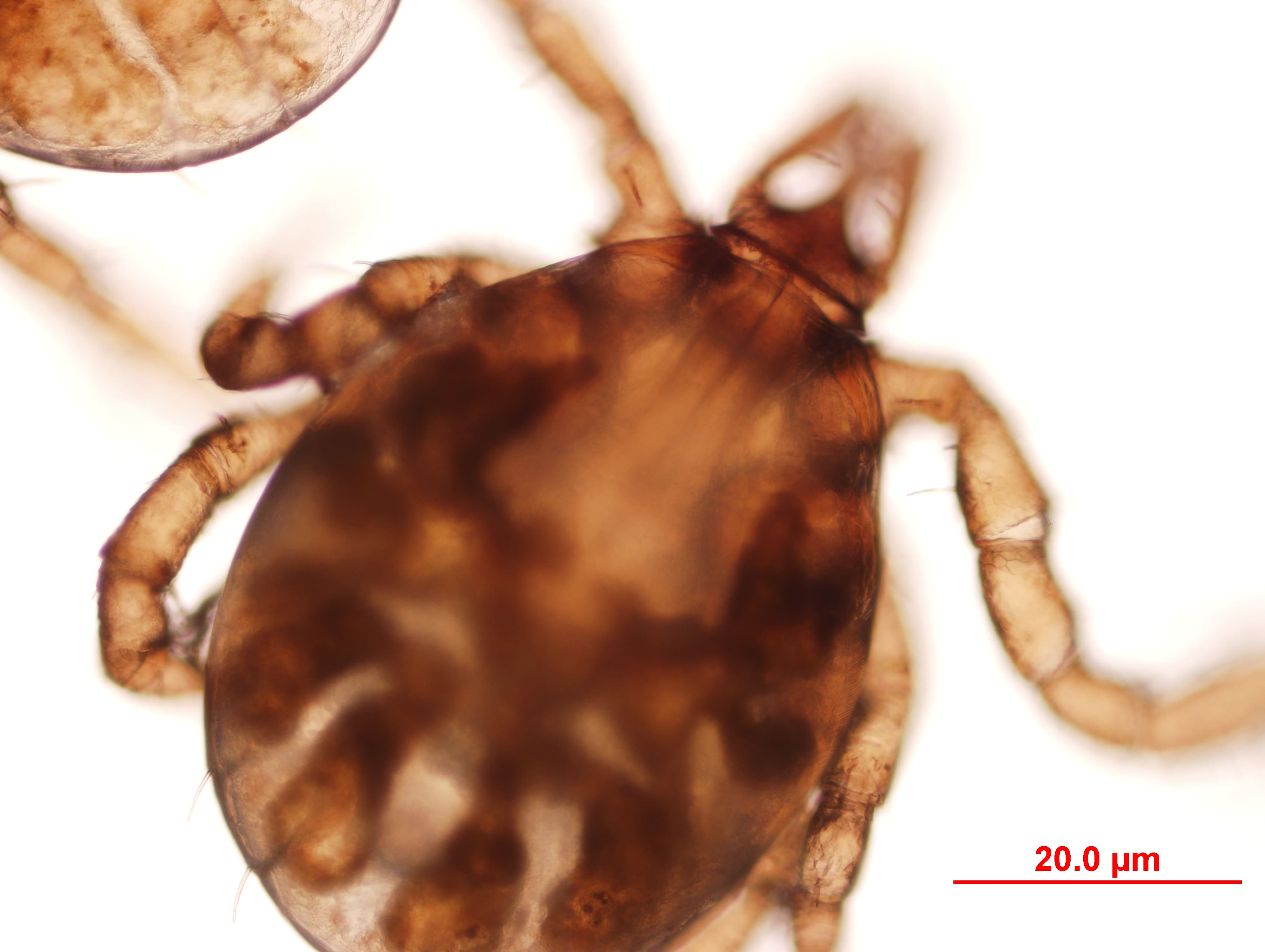
Postdoctoral researcher RNDr. Tereza Kozelková, Ph.D., a graduate of the master's and doctoral study programs in Biochemistry at the Department of Chemistry, Faculty of Science, University of South Bohemia in České Budějovice, currently working at the Institute of Parasitology, Biological Center of the Academy of Sciences of the Czech Republic, was awarded by the Czech and Slovak Ethological Society(Česká a Slovenská etologická společnost). For her research in the field of physiology and molecular biology of ticks, she received the Zdeněk Veselovský Award (Cena Zdeňka Veselovského). Her research brought new knowledge about lipid metabolism in ticks, which she summarized in her dissertation and was published in several prestigious international scientific journals.

The Zdeněk Veselovský Award is awarded to the best first-author scientific paper published in the previous year. The winner is decided by the expert committee of the Czech and Slovak Ethological Society (ČSEtS). The key criteria for the evaluation are primarily the originality of the work, scientific quality and the contribution of the student's research to the development of ethological research.

The scientific activities of RNDr. Tereza Kozelková, Ph.D. were also awarded by the rector of the University of South Bohemia, prof. Ing. Pavel Kozák, Ph.D., who congratulated her at the ceremonial opening of the 2025/2026 academic year. For more information click here.


Tereza Kozelková získala Cenu Zdeňka Veselovského

Postdoktorandka RNDr. Tereza Kozelková, Ph.D., absolventka magisterského a doktorského studijního programu Biochemie na Katedře chemie Přírodovědecké fakulty Jihočeské univerzity v Českých Budějovicích, v současnosti působící na Parazitologickém ústavu Biologického centra Akademie věd České republiky, získala za svůj výzkum v oblasti fyziologie a molekulární biologie klíšťat Cenu Zdeňka Veselovského. Její práce přinesla nové poznatky o metabolismu lipidů u klíšťat, které shrnula ve své disertační práci a publikovala v několika prestižních mezinárodních vědeckých časopisech.

Cena Zdeňka Veselovského je udělována za nejlepší prvoautorský vědecký článek publikovaný v uplynulém roce. O vítězi rozhoduje odborná komise České a Slovenské etologické společnosti (ČSEtS). Při hodnocení jsou klíčovými kritérii především originalita práce, vědecká kvalita a přínos studentova bádání k rozvoji etologického výzkumu.

Vědeckou činnost RNDr. Terezy Kozelkové, Ph.D. ocenil také rektor Jihočeské univerzity prof. Ing. Pavel Kozák, Ph.D., který jí pogratuloval při slavnostním zahájení akademického roku 2025/2026. Více informací zde.

The University of South Bohemia was presented at the Science Fair 2025

  • Seznam štítků: PŘF
  • Galerie:
    • Galerie:
    • Galerie:
    • Galerie:
    • Galerie:
    • Galerie:
    • Galerie:
    • Galerie:
    • Galerie:
    • Galerie:
    • Galerie:
    • Galerie:
    • Galerie:
    • Galerie:
    • Galerie:
    • Galerie:

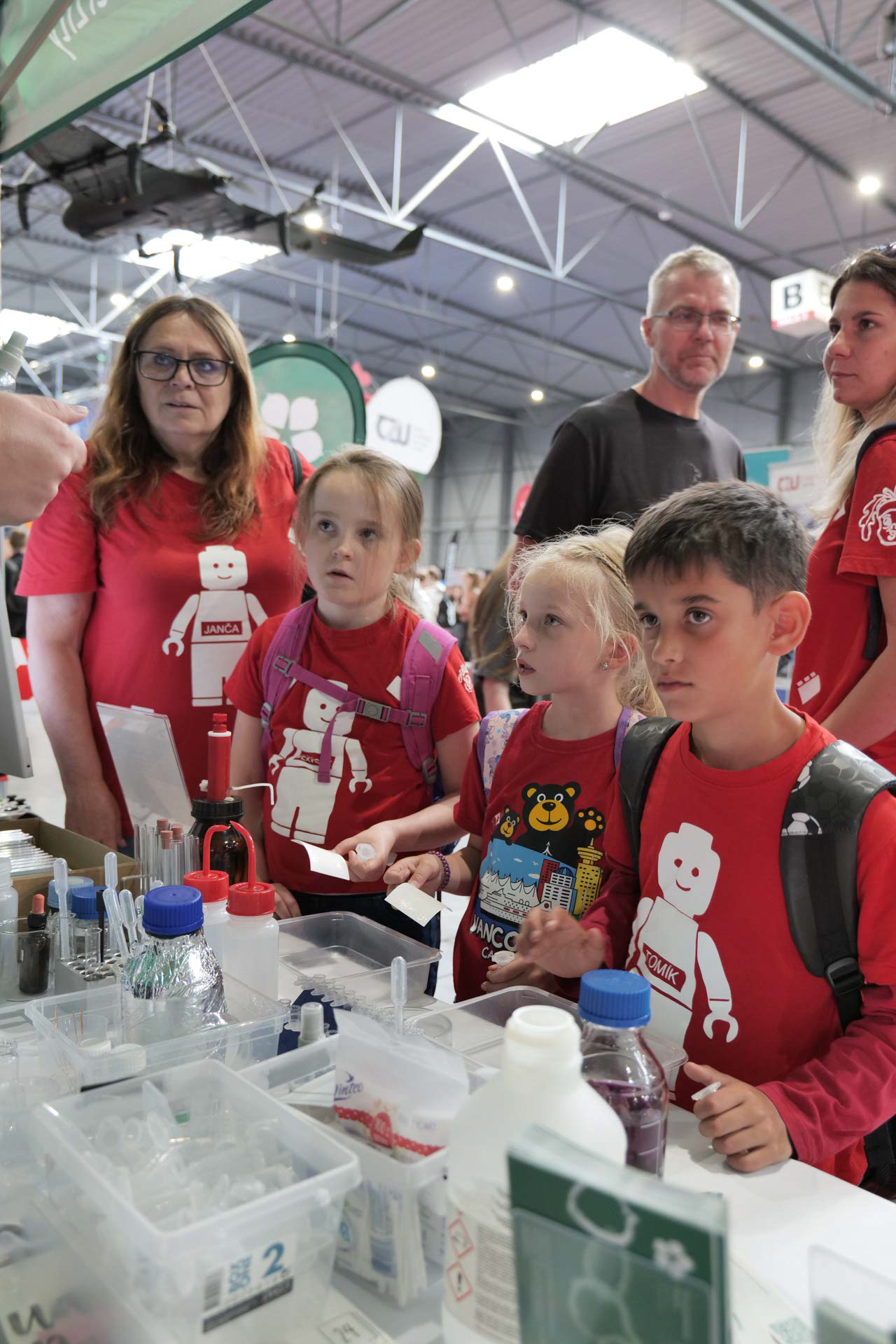
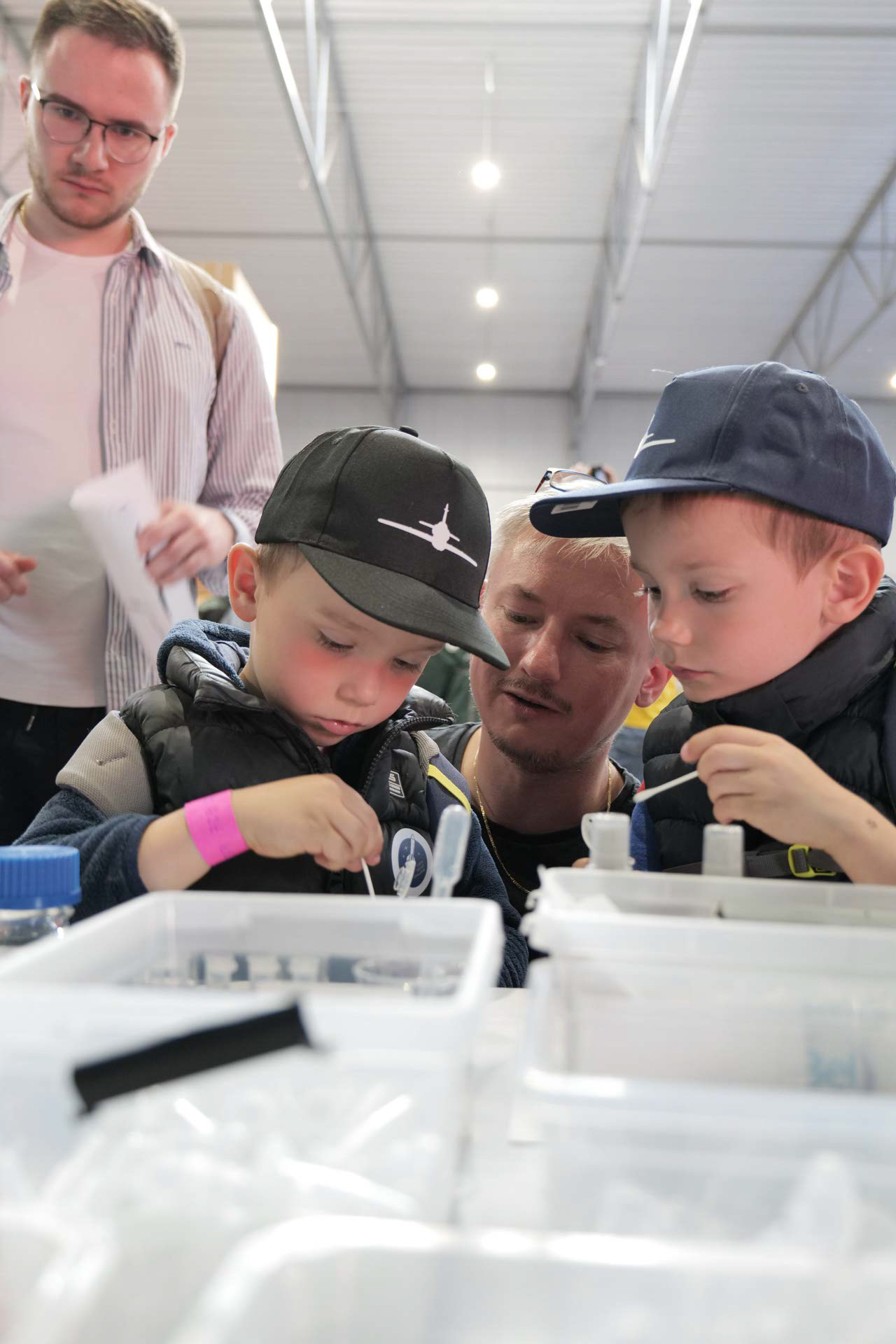
At this year’s Science Fair 2025, the University of South Bohemia in České Budějovice was represented by three faculties – the Faculty of Science, the Faculty of Arts, and the Faculty of Fisheries and Protection of Waters. Visitors had the opportunity to explore the world of science through interactive demonstrations, modern technologies, and entertaining activities for both children and adults.

Faculty of Science

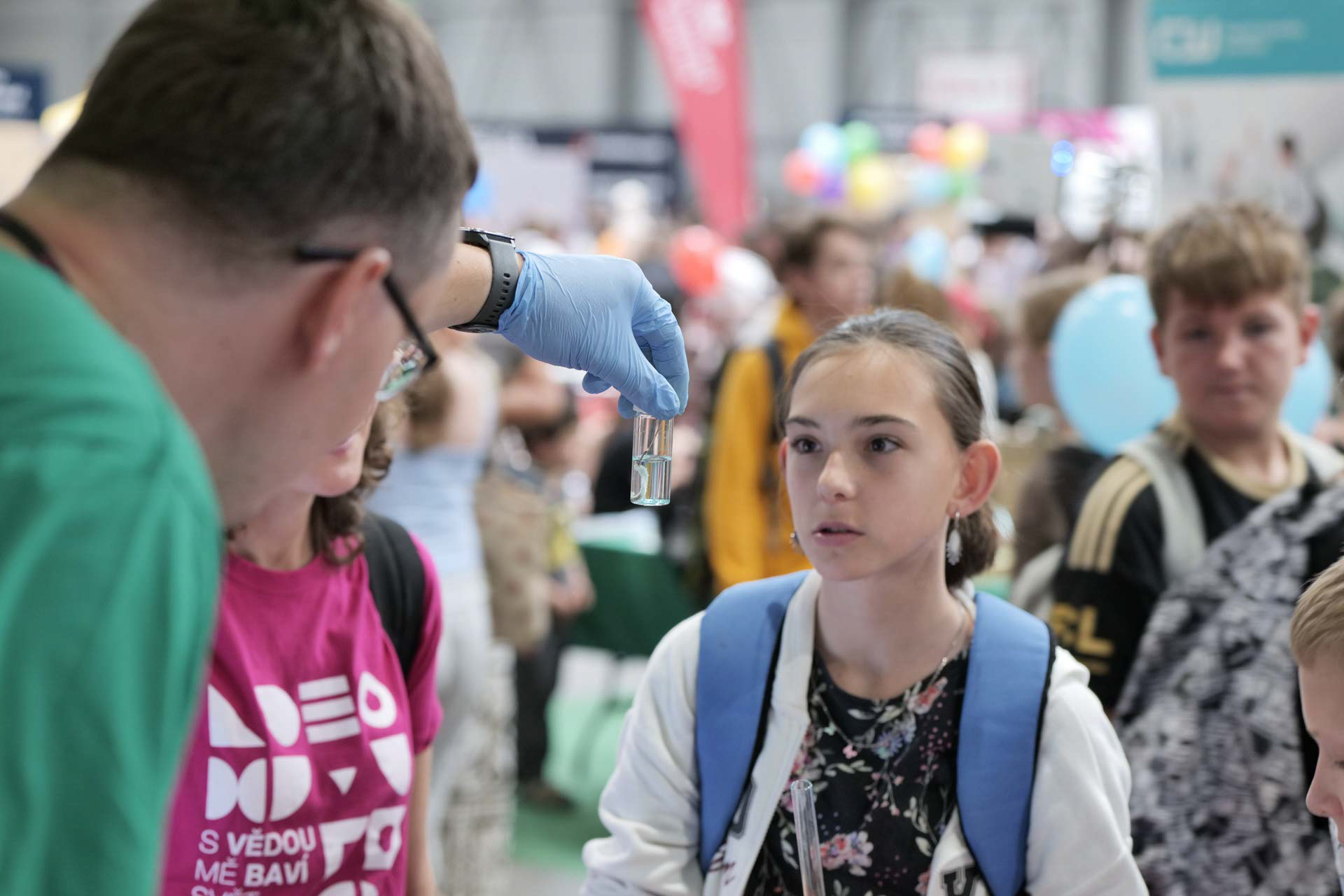
The Department of Chemistry offered visitors the chance to prepare Tollens’ reagent and subsequently silver-plate a test tube with elemental silver. Interested guests could also make invisible ink from red cabbage, write a secret message, and reveal it using a chemical reaction. Both creations could be taken home as original souvenirs. A demonstration of the so-called “chemical chameleon” – a colorful reaction illustrating changes in oxidation states – also attracted much attention.

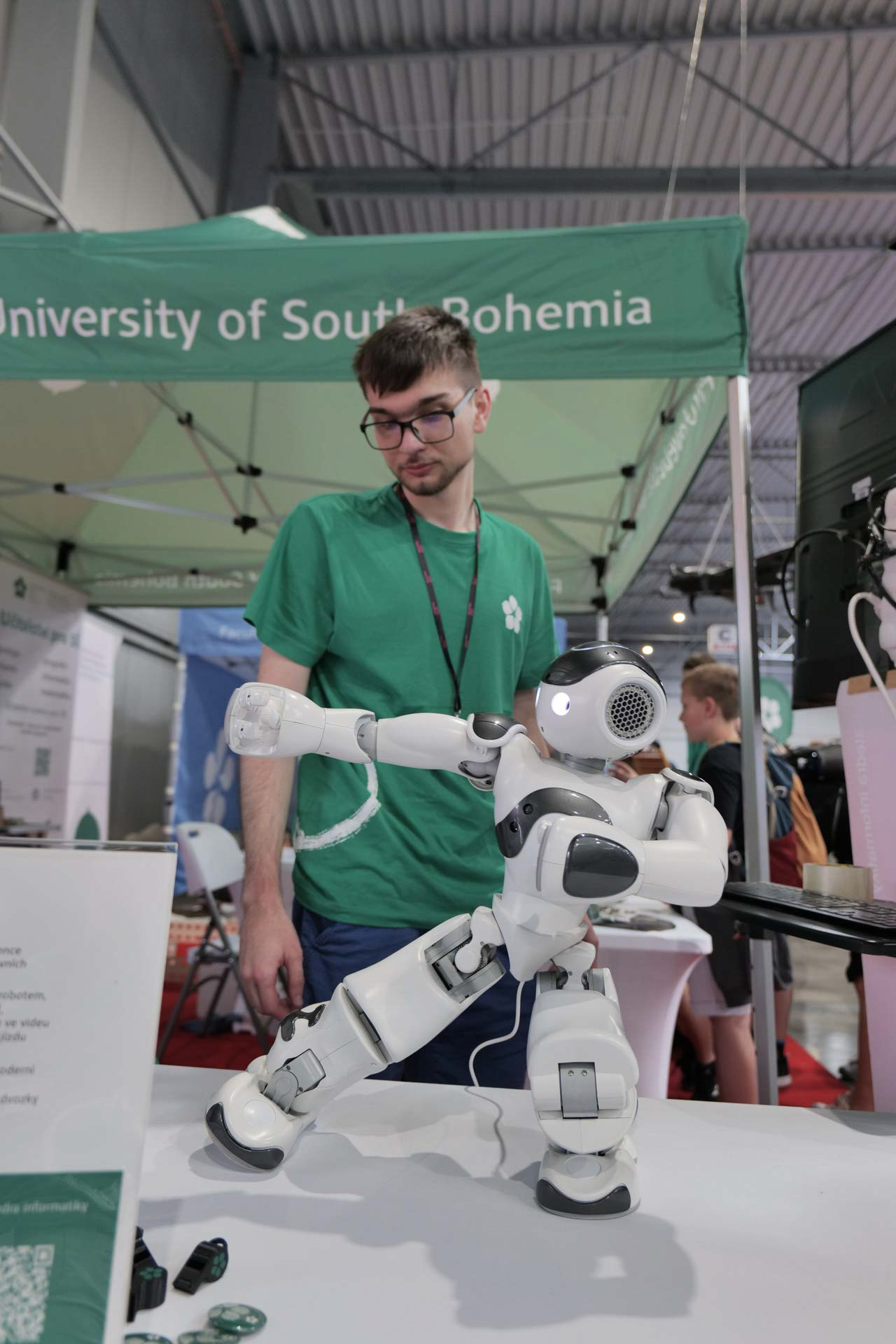
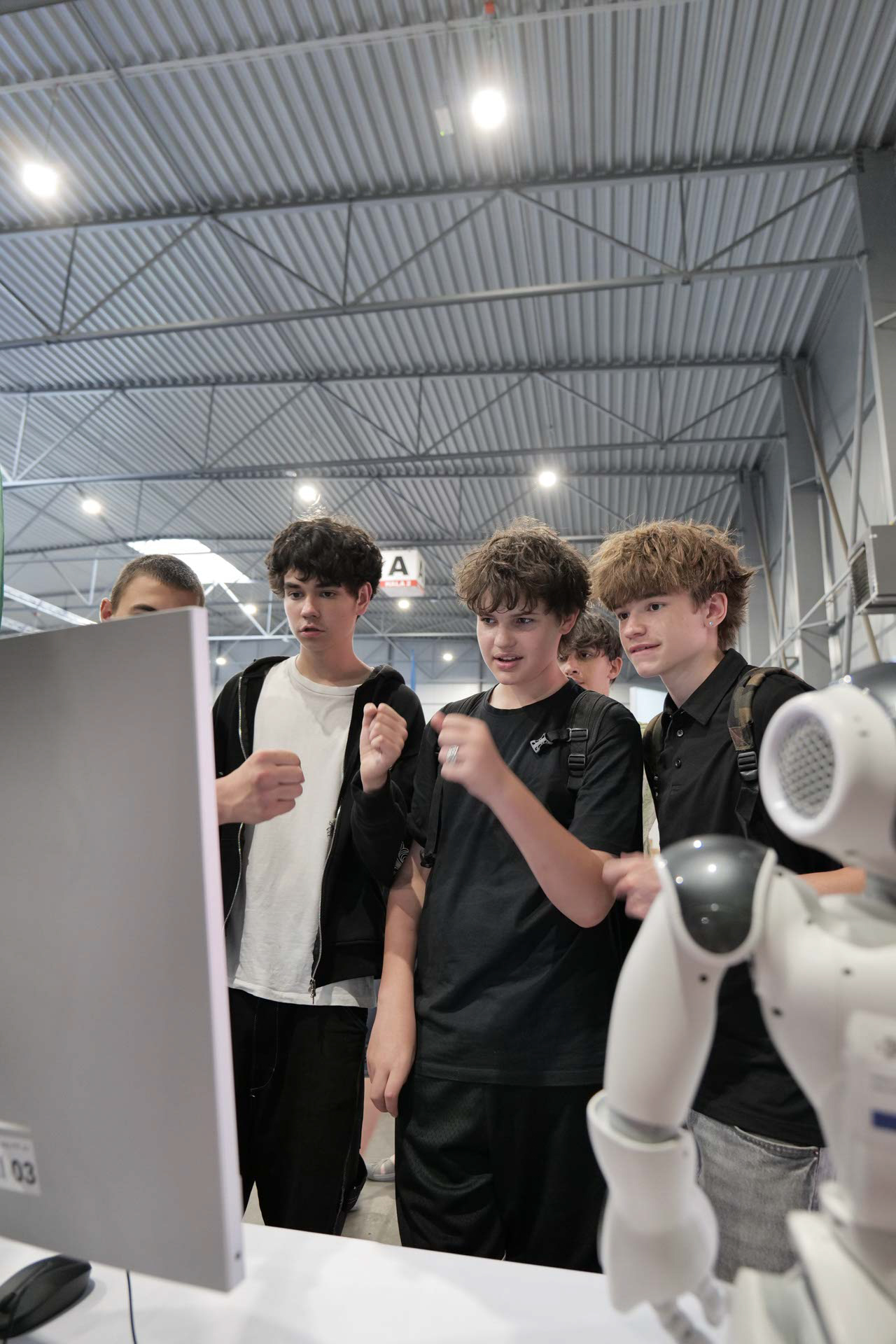
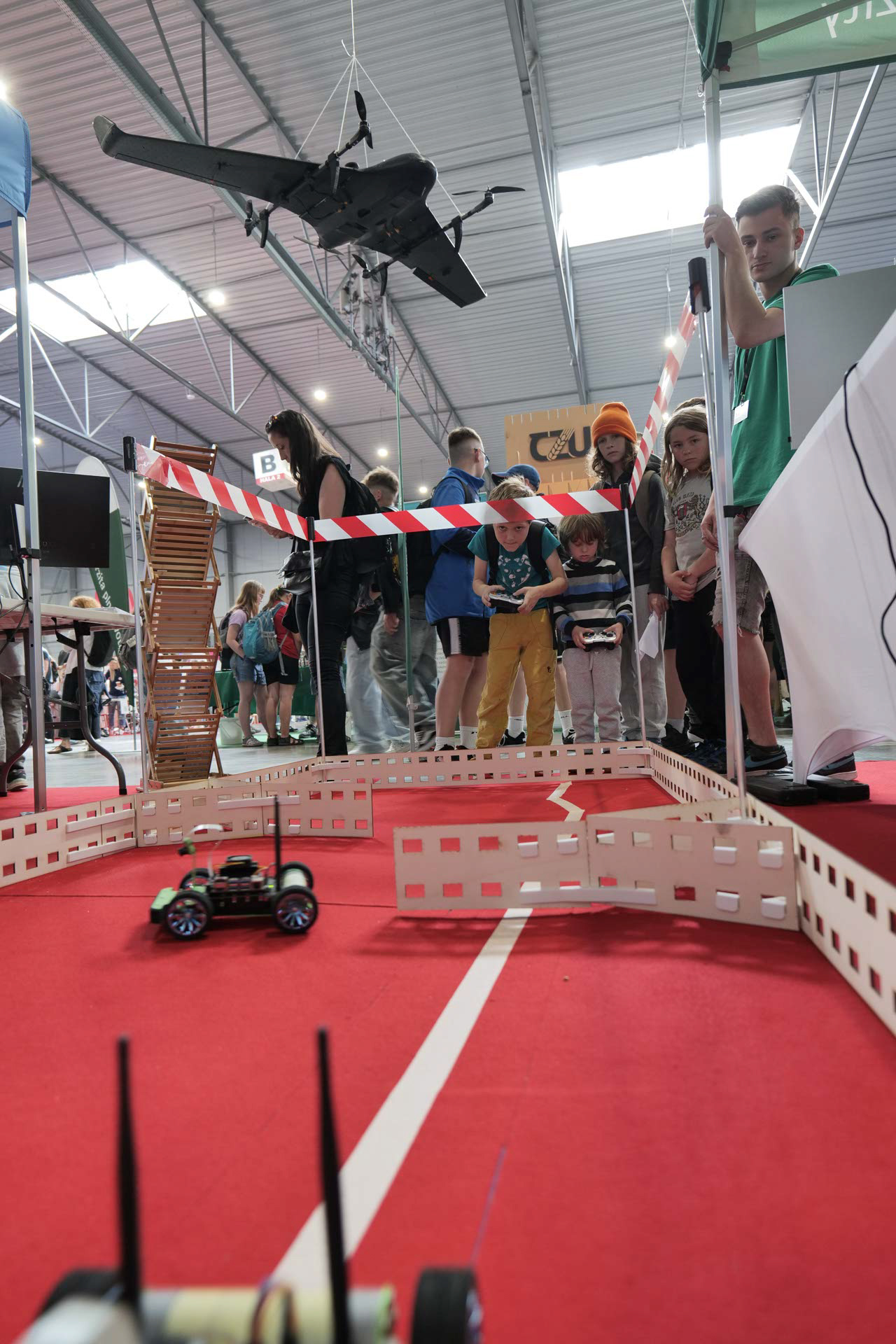
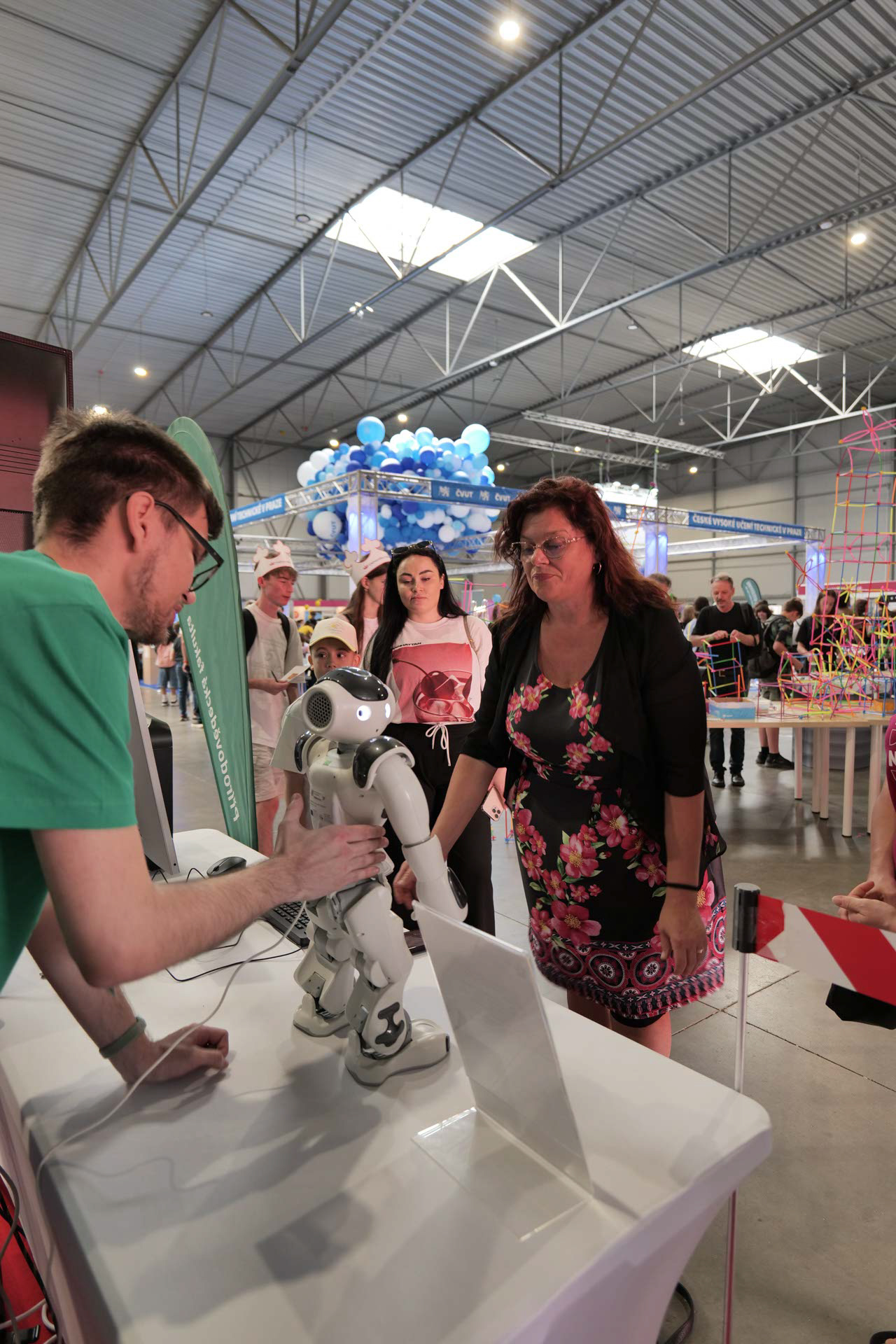
The Department of Computer Science showcased a wide range of technologies and projects in which students can actively participate during their studies. Among the biggest attractions was the humanoid robot Nao, who answered visitors’ questions, as well as Jetbots and Jetracers – small autonomous vehicles equipped with cameras and computational units. Some of them were able to follow a track or respond to their surroundings using artificial intelligence, while others could be driven by visitors themselves, which especially thrilled children.

A face-changing application using a neural network, demonstrating real-time image processing, also drew attention. Another highlight was a rock-paper-scissors game against artificial intelligence, which could react to the player’s behavior – for example, after an inappropriate gesture, it would “get angry” and stop giving chances to win.

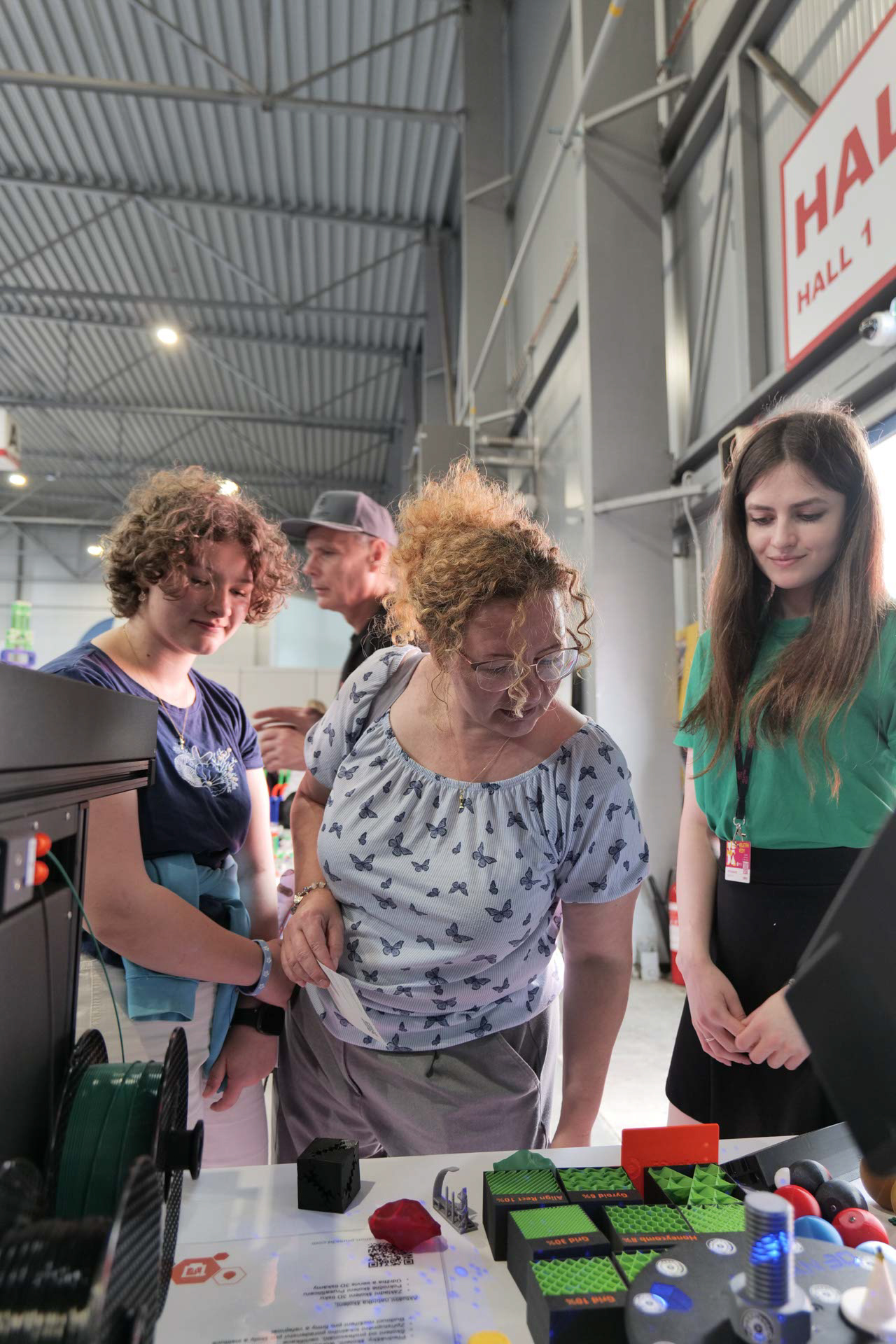
Technically inclined visitors could see demonstrations involving a 3D printer, a 3D scanner, a mobile robotic chassis with a robotic arm, and a UAV (drone).

Faculty of Arts

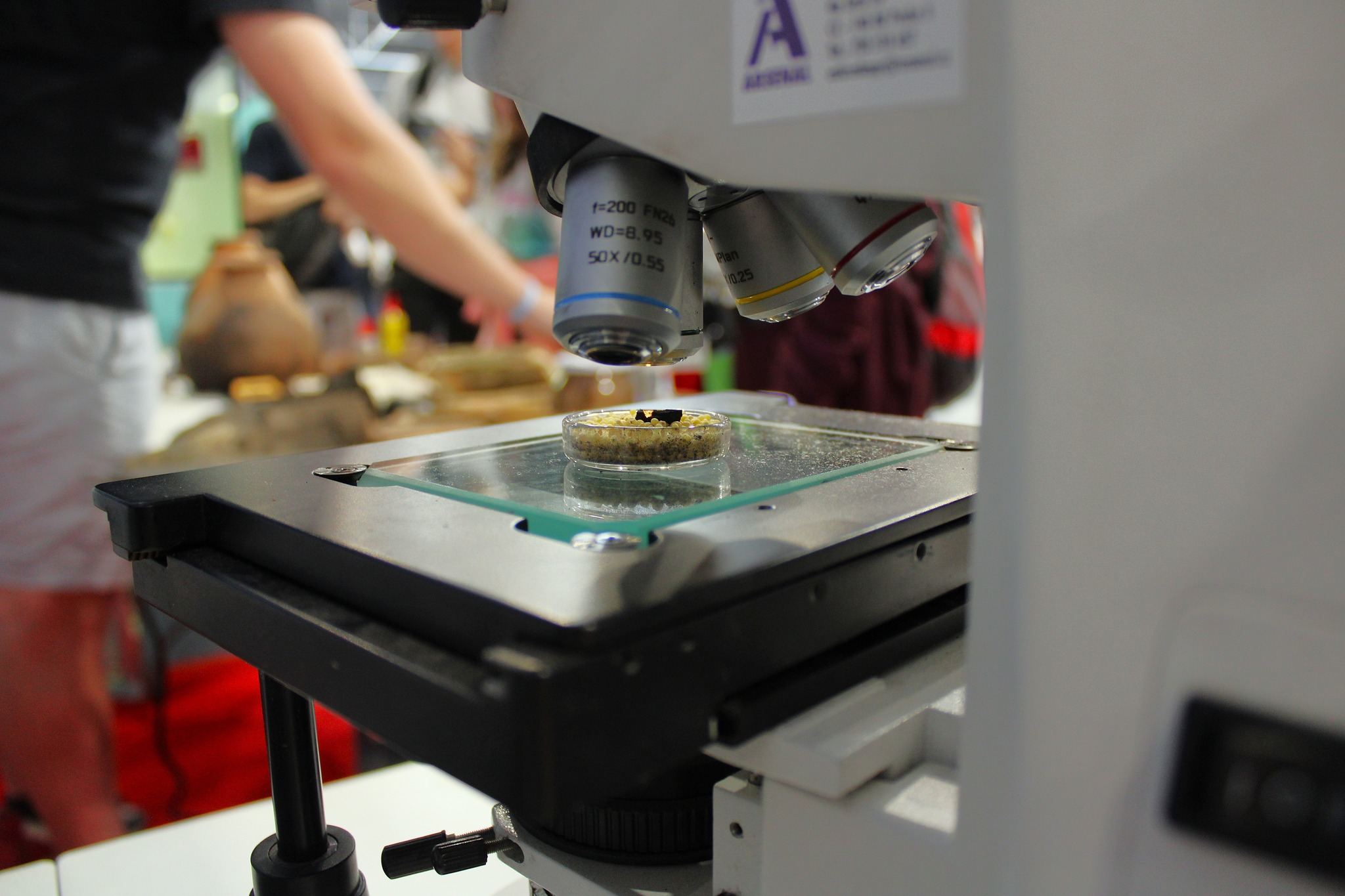
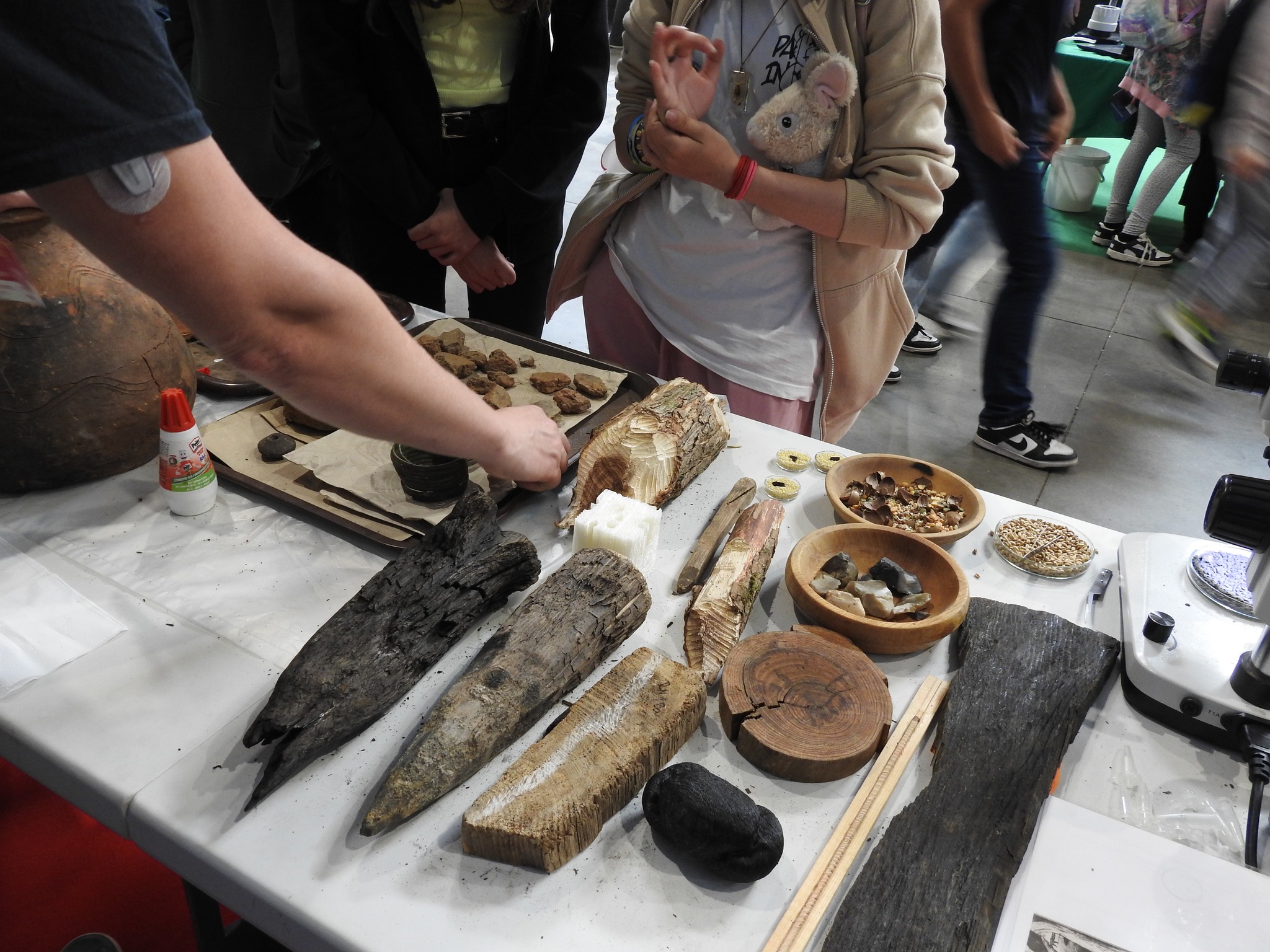
The Archaeological Institute of the Faculty of Arts presented modern and innovative methods in archaeology, allowing the examination of finds with unprecedented precision. Visitors could see instruments such as microscopes or a laser profiler, as well as scientific methods like dendrochronology (dating based on tree rings) and archaeobotany (the study of plant remains and their relationship to humans).

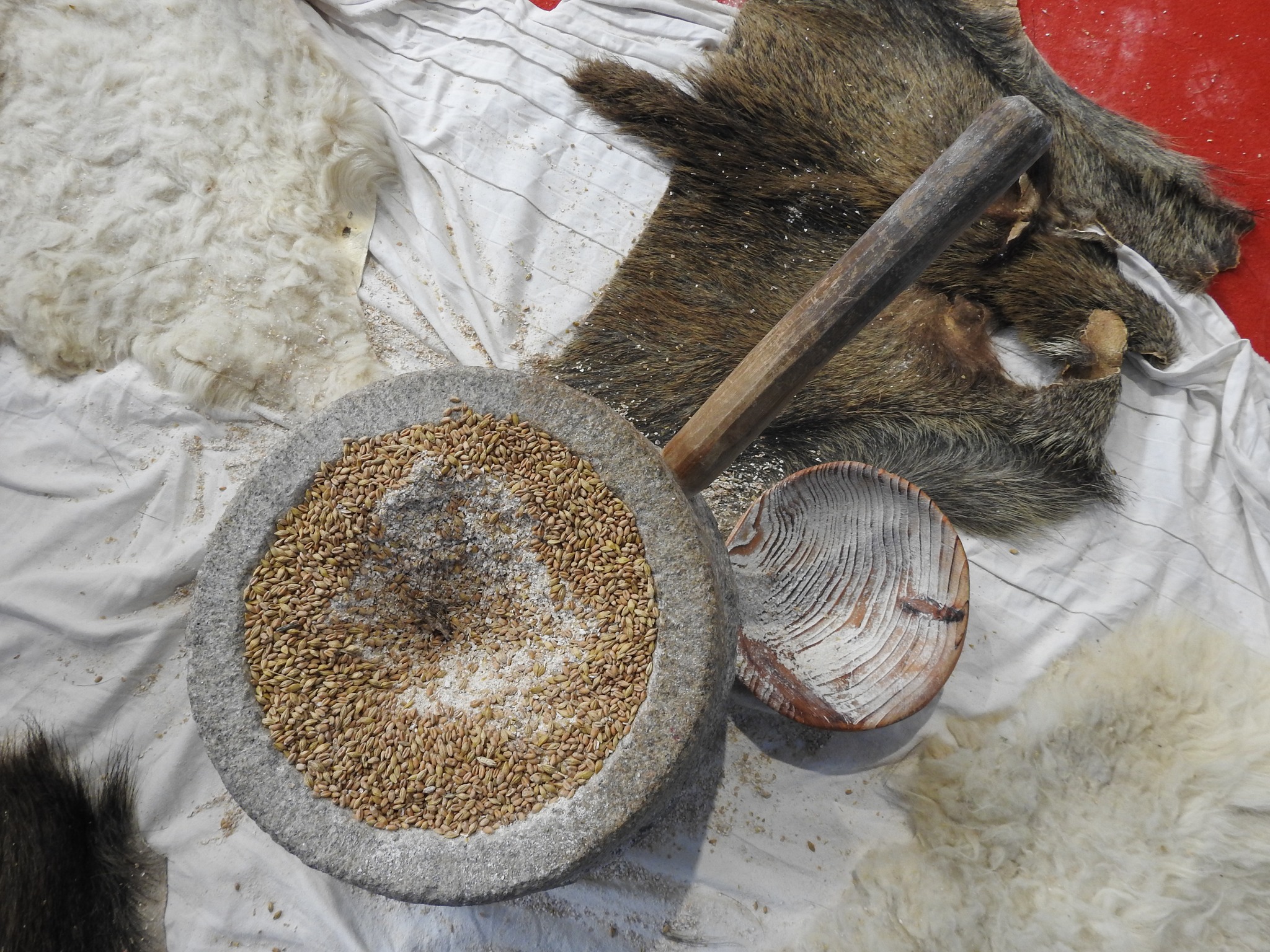
The practical part of the exhibition offered the opportunity to grind grain using a replica of an Iron Age stone mill, which visitors enthusiastically tried.

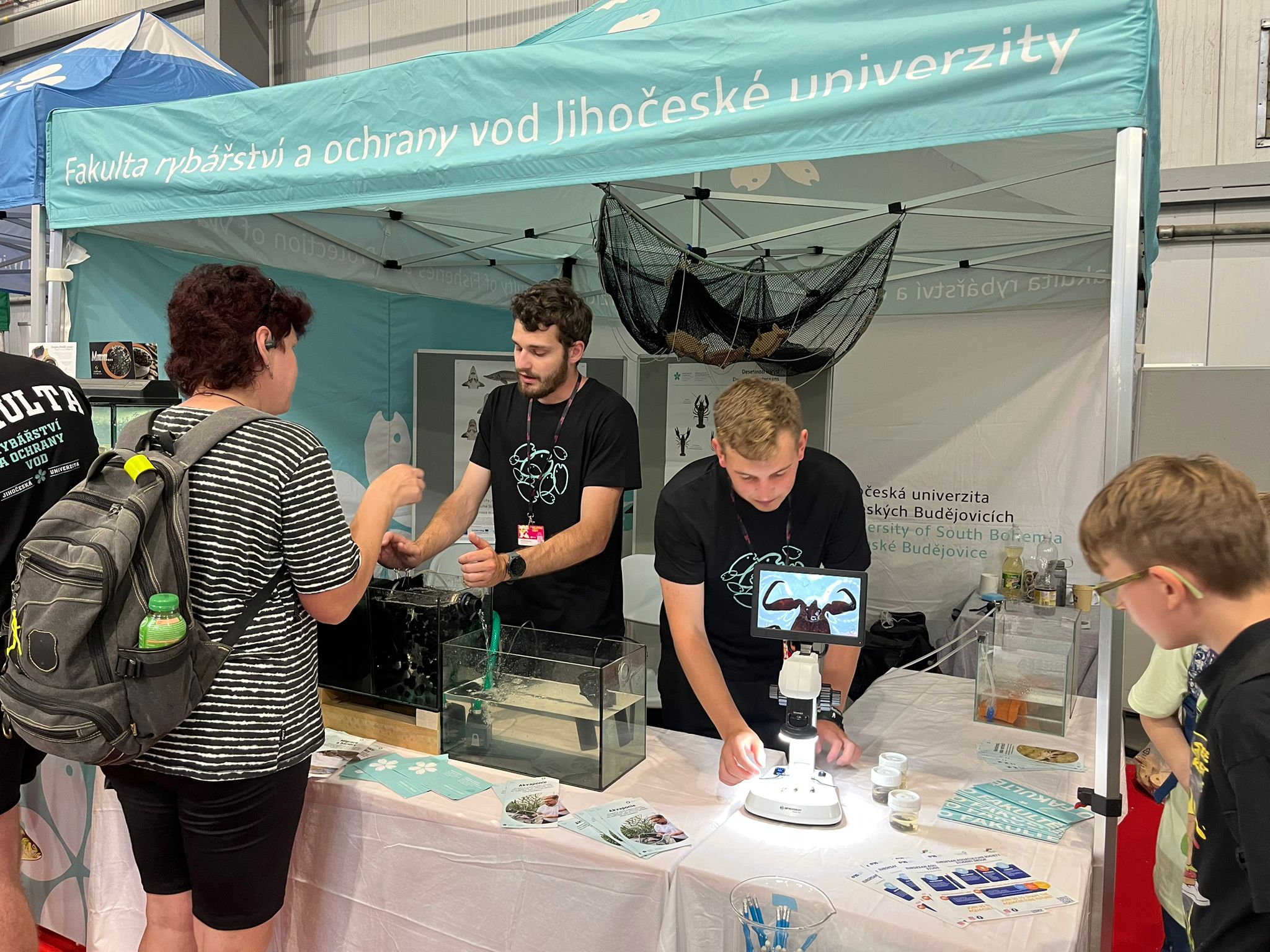
Faculty of Fisheries and Protection of Waters

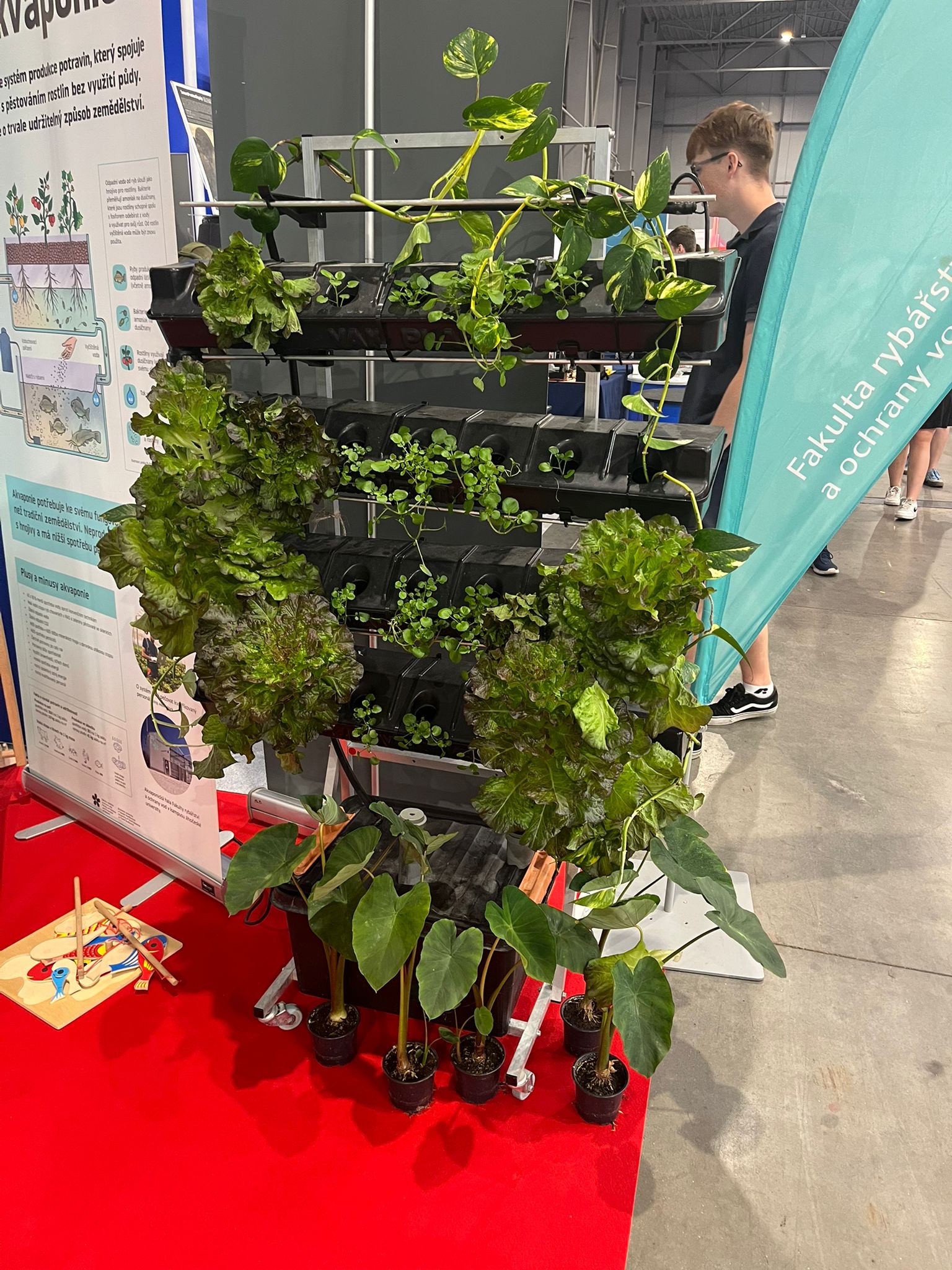
The Faculty of Fisheries and Protection of Waters brought to the Science Fair a model of a recirculating aquaculture system (RAS) and a model of aquaponics, thanks to which people learned how aquaculture works and what chemical processes enable plants to grow in an aquatic environment.

Children could play fun games on a magnetic board called “What’s for Dinner for the Fish?” and “What Does the Aquaponic Farmer Grow and Breed?” for which they received small souvenirs.

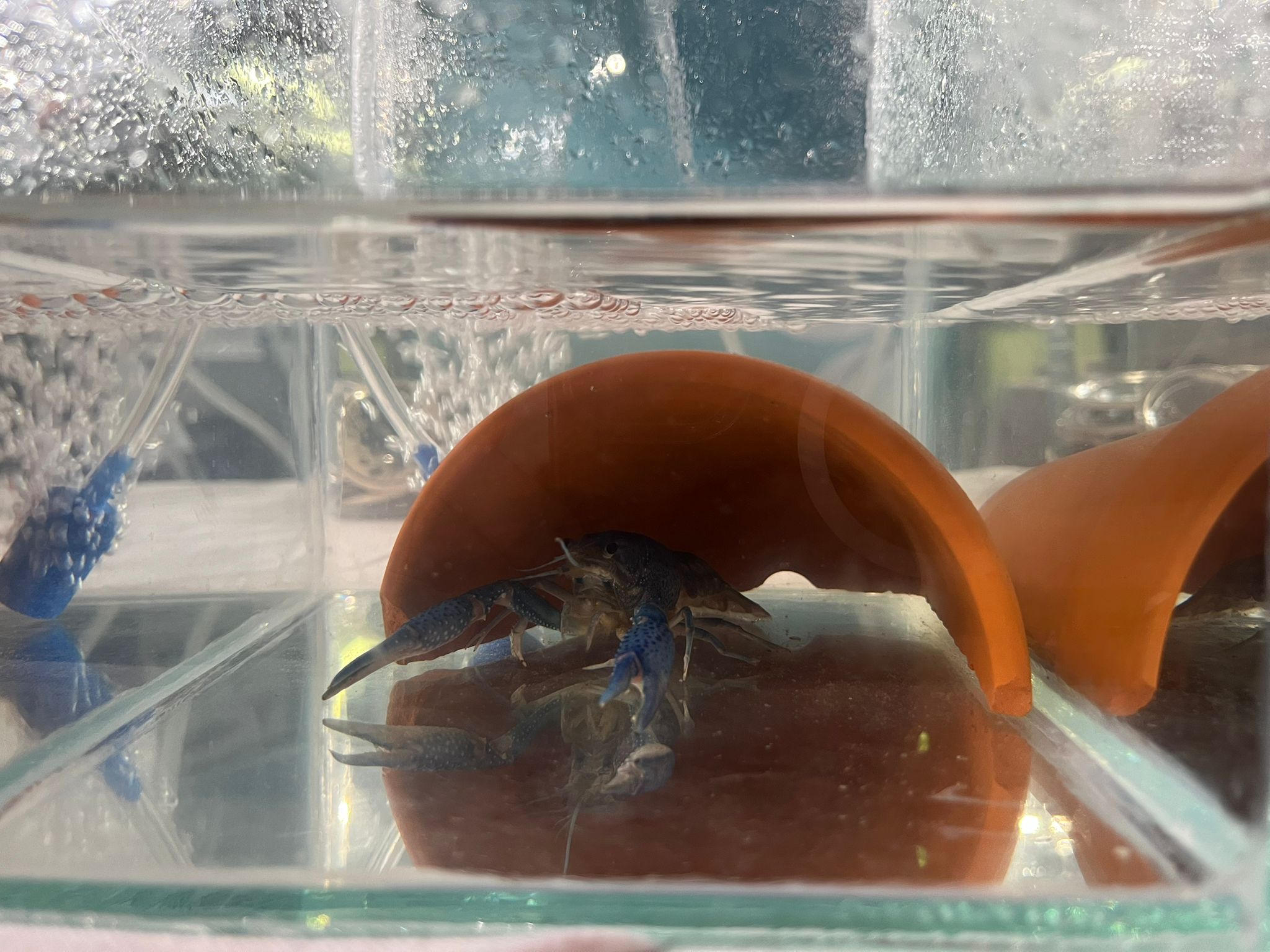
The greatest attention was drawn to the aquariums with sturgeons, where visitors learned more about their return to the wild or the production of so-called Sturgeon friendly caviar. Particularly interesting were also two crayfish, used to illustrate the issue of protecting native species, invasive species, and crayfish plague.

There was also a live broadcast from the Science Fair for Czech Radio Plus – the program Věda Plus. The Faculty of Fisheries and Protection of Waters’ segment started at 13:54 and is available online: Celodenní záznamy | Český rozhlas

Ticks Can Do More Than We Thought: Scientists Describe a Mechanism Important for Their Development

  • Seznam štítků: Publications
  • Galerie:
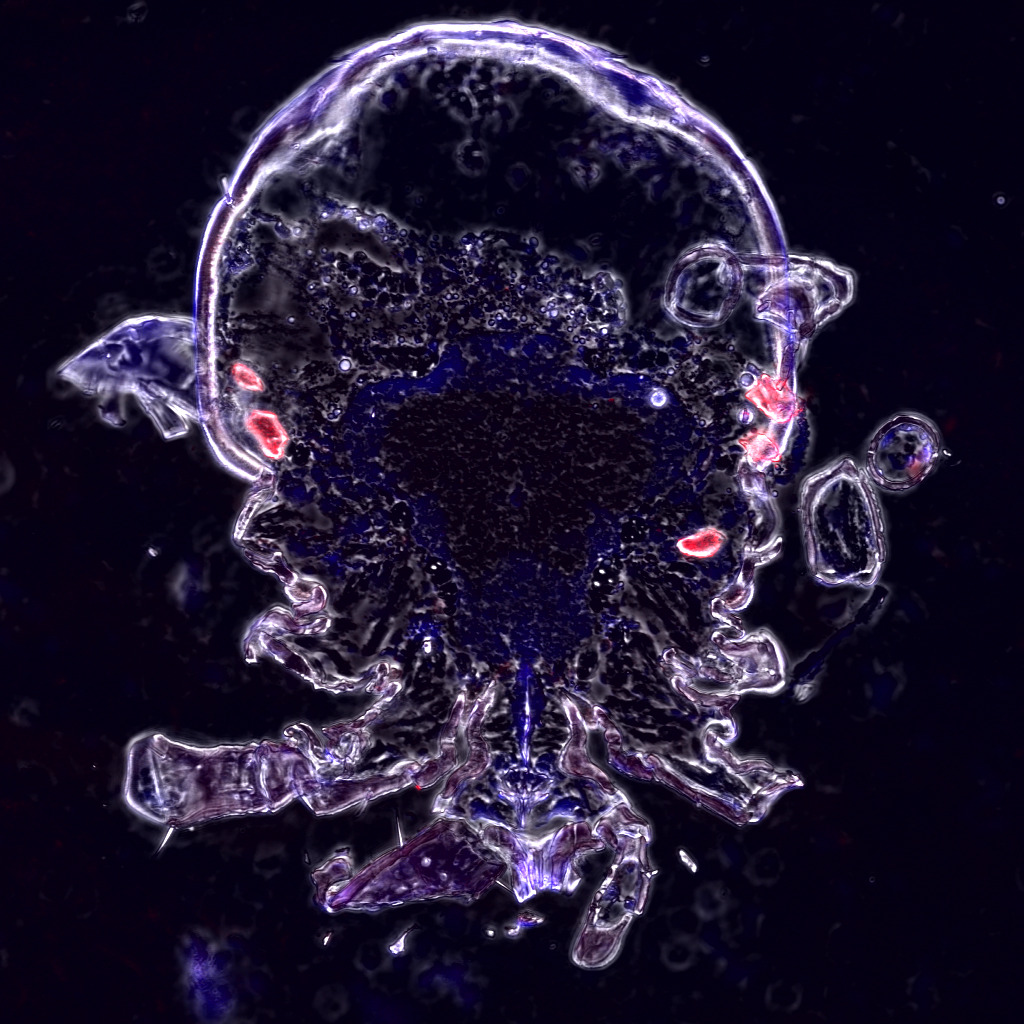
    • Galerie: , Text k fotce: Larva of the tick Ixodes ricinus (common tick), hatched from an egg of a female fed on blood containing a sialic acid precursor. Metabolically produced sialic acid, shown in red, was detected in specific structures on both sides of the larval body. Cell nuclei are shown in blue.
    • Galerie:

A scientific team from the Department of Chemistry at the Faculty of Science, University of South Bohemia, has made a surprising discovery in tick biology. A new study shows that the common tick (Ixodes ricinus) can produce sialic acid on its own—a molecule previously associated mainly with vertebrate cells, including those of humans. This finding significantly changes our current understanding of the biochemistry of these important vectors of infectious diseases.

Sialic acid plays a key role, for example, in the immune system and in cellular development. In invertebrates, however, it occurs only rarely, and its presence in ticks had not been clearly demonstrated until now. The new research provides the first direct evidence that ticks not only contain this compound but also actively produce and utilize it.

The team found that ticks possess the complete genetic machinery required for the synthesis of sialic acid and for its incorporation into so-called sialylated glycoproteins—specific proteins with important biological functions. At the same time, they discovered that ticks use an alternative biosynthetic pathway for their production, which differs from the mechanisms commonly found in vertebrates.

Using a modern method known as “click chemistry,” the team was able to directly visualize these molecules and track their occurrence throughout the entire life cycle of the tick. Sialylated glycoproteins were detected in all examined stages—in adult females, eggs, and larvae, as well as in laboratory-grown tick cells. The highest concentrations were observed in early developmental stages.

“Our results suggest that sialylated glycoproteins may play a key role in tick development,” the authors of the study state. This discovery opens up new questions concerning the biological functions of these molecules and their possible importance for tick survival and adaptation.

The findings are relevant not only for basic research but also for medicine and public health. A better understanding of how ticks function at the molecular level may contribute in the future to the development of new approaches to limit their ability to transmit dangerous pathogens, such as the causative agents of Lyme disease or tick-borne encephalitis.

Publication available at: sciencedirect.com

Contact: Ján Štěrba (Tato e-mailová adresa je chráněna před spamboty. Pro její zobrazení musíte mít povolen Javascript.) 


Tim Flannery – Climate Change

Watch the lecture and discussion by Australian biologist, writer, and climatologist Professor Tim Flannery, who spoke at the Faculty of Science, University of South Bohemia, presenting his current view on climate change in 2024. He clearly explains the basic principles of climate science, trends in greenhouse gas emissions, oceanic processes, the degradation of natural systems, and growing uncertainties in climate modelling.

The core of the video comprises an open discussion with the audience, moderated by Professor Vojtěch Novotný. Its topics include impacts on biodiversity, emerging technologies, the economics of the transition to clean energy, China’s role, carbon removal strategies, the situation in Central Europe, and the question of whether democracy can effectively respond to global challenges.

Science, policy, and a sustainable future – accessible, insightful, and grounded in the latest knowledge.

Lecture available here: Tim Flannery – Climate Change

Tim Flannery – Změna klimatu

Shlédněte přednášku a diskusi australského biologa, spisovatele a klimatologa profesora Tima Flanneryho, který vystoupil na Přírodovědecké fakultě JU s aktuálním pohledem na změny klimatu v roce 2024. Přehledně vysvětluje základní principy klimatické vědy, vývoj emisí skleníkových plynů, roli oceánů, kolaps přírodních systémů i nové nejistoty v klimatických modelech.

Těžištěm záznamu je otevřená diskuse s publikem, kterou moderuje profesor Vojtěch Novotný. Řeší se dopady na biodiverzitu, technologie, ekonomika přechodu k čisté energii, role Číny, možnosti odstraňování uhlíku z atmosféry, situace ve střední Evropě i otázka, zda je demokracie schopná čelit globálním výzvám.

Věda, politika a udržitelná budoucnost – přístupně, s nadhledem a nejnovějšími poznatky.

Přednáška dostupná zde: Tim Flannery – Změna klimatu

Tým Laboratoře aplikované biochemie se bude od roku 2024 podílet na projektu Vývoj diagnostických multiplex testů

Tým Laboratoře aplikované biochemie se bude od roku 2024 podílet na projektu Vývoj diagnostických multiplex testů relevantních pro emergentní infekce přenášené klíšťaty, řešeným ve spolupráci s kolegy z firmy Gentrend, s.r.o. Výstupem předkládaného projektu budou tři diagnostické technologie, které především na českém trhu vytvoří zcela unikátní produkty. Spolu s Přírodovědeckou fakultou jihočeské univerzity, která zaměstnává odborníky v oblasti genetiky, výzkumu klíšťat a klíšťaty přenášených onemocněních – budou přesně a správně interpretovány výsledky těchto inovovaných genetických i molekulárně-biologických produktů.

Udržitelnost i na praktických cvičeních

  • Seznam štítků: PŘF

Na PřF se snažíme vnímat udržitelnost, resp. dlouhodobou snahu snížit spotřebu materiálu na různých úrovních, a to i na maličkostech – pokud to je možné. Jedním z příkladů v poslední době byl nákup kalkulaček pro využití při praktických cvičeních. Z hlediska cenového vycházejí levněji samozřejmě běžné kalkulačky napájené bateriemi, které je ale potřebné po určité době vyměnit a v případě desítek kusů kalkulaček to znamená nejenom dodatečný finanční náklad, ale také nákup nových baterií, které se musí vyrobit, dopravit a použité baterie znovu recyklovat (v tom lepším případě, kdy je někdo jen tak nevyhodí do běžného odpadu). I proto jsme se na Katedře chemie rozhodli nakoupit sice o něco dražší, ale z hlediska udržitelnosti vhodnější kalkulačky se solárním napájením. Do budoucna budeme tento přístup aplikovat i u jiných elektronických zařízení – již teď používáme několik externích klávesnic napájených solárně. V rámci možností také plánujeme nákup laboratorního plastu vyrobeného z recyklátu.

Hana Tykalová, Ján Štěrba

Přihlaste si
odběr newsletteru

Zůstaňme v kontaktu na
sociálních sítích

Branišovská 1645/31a, 370 05 České Budějovice Tel. 387 776 201 | Tato e-mailová adresa je chráněna před spamboty. Pro její zobrazení musíte mít povolen Javascript.

Branišovská 1645/31a, 370 05 České BudějoviceTel. 387 776 201 | Tato e-mailová adresa je chráněna před spamboty. Pro její zobrazení musíte mít povolen Javascript.

© 2026 Jihočeská univerzita v Českých Budějovicích
Cookies

1

0